Pomegra
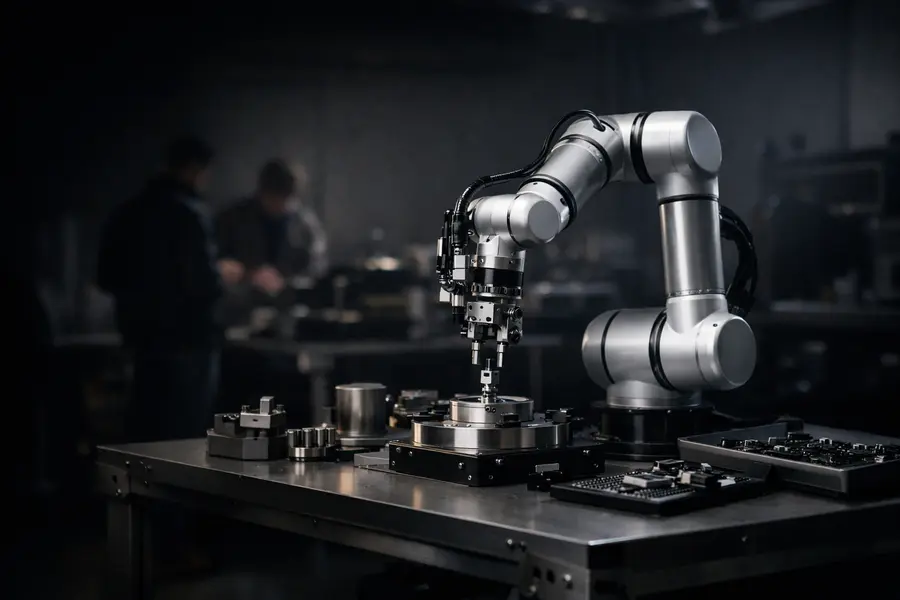
Zurich-based Enact Intelligence raised a $30 million pre-seed led by redalpine, with Mistral's Arthur Mensch and Yann LeCun investing as angels in robots that feel force.
Key Takeaways
- Enact Intelligence announced a $30M pre-seed on October 22, 2026, led by redalpine.
- Arthur Mensch and Yann LeCun invested as angels; valuation was not disclosed.
- The 12-person Zurich team plans to grow fivefold by the end of 2027.
Lead
Enact Intelligence, a Zurich robotics startup founded in March 2026, came out of stealth on October 22 with a $30 million pre-seed round. redalpine led the round, with Notion Capital and firstminute capital also investing. Angels include Arthur Mensch, CEO of Mistral AI, Yann LeCun, the former chief AI scientist at Meta, and Andrew Lonsberry, founder of Path Robotics. Hugging Face's Thomas Wolf is also reported as an angel.
The company describes the round as the largest pre-seed in Swiss history, and it ranks among the largest pre-seed rounds raised in Europe. Enact did not disclose a valuation.
What Does Enact Intelligence Build?
Enact is building robots that sense force and touch through their own actuators rather than relying mainly on cameras. Most of today's robot-learning systems depend on vision, with force sensing added through single-point sensors at the wrist or fingertip. Enact instead distributes sensing throughout the actuators, so the machine registers contact as it happens.
Chief executive and co-founder Manuel Yves Galliker puts the claim this way: the robots "feel what's happening in real time" and learn more data-efficiently, while improving reliability and performance. The company says it is rethinking the full stack, from model architectures that handle multiple frequencies and scales of intelligence, through data pipelines, down to actuators and sensors.
That is a hardware and software bet at once, which is expensive for a company this young. It also explains the size of the cheque.
Who Is Behind Enact?
Galliker previously led the software team for the humanoid NEO at 1X, helped build 1X's AI team in Silicon Valley, and later worked at robotics lab Physical Intelligence. The founding team of 12 includes engineers from DeepMind, 1X, Amazon Robotics, Helsing and Physical Intelligence.
A $30 million round for a company roughly seven months old is a bet on that résumé more than on a product. No robot has been deployed with a customer, and Enact has published no performance benchmarks.
Why Would Touch Matter for Industrial Robots?
Touch matters because vision alone struggles with tasks where contact decides the outcome, such as inserting a part, handling a deformable object or adjusting grip under load. Investors in the round framed it as a missing layer. A redalpine partner called dexterity "the next frontier in robotics," and a Notion Capital partner said robots "won't generalise until they have a nervous system."
Those are the backers' own arguments, and they should be read as such. Whether distributed force sensing produces measurable gains over vision-first systems paired with conventional torque sensors remains unproven in public. Enact's pitch depends on the answer being yes, at a cost industrial buyers will accept.
What Will the Money Fund?
The funding will go toward growing the team fivefold by the end of 2027, which implies about 60 people, and toward accelerating hardware and R&D pipelines. Enact also intends to place its first robots with industrial partners. The company says it is in discussions with large European manufacturers, as well as groups in infrastructure, retail and food processing.
The customer list is not named, and the timeline for first deployments was not given. For a pre-seed company, that is normal, but it leaves the commercial case open.
How Does This Fit the Wider Robotics Funding Picture?
The round lands in a market where well-funded US labs such as Physical Intelligence have set the pace in robot foundation models, and humanoid makers like 1X have drawn large rounds. Enact's investor list suggests European capital is looking for its own entry point, and the presence of Mensch and LeCun connects the company to the region's wider push for homegrown AI.
The angels' involvement signals interest in physical AI beyond language models. It is not evidence that the technology works. A pre-seed of this size also raises the bar for the next round, where investors will expect hardware prototypes and a named pilot customer rather than a team and a thesis.
Outlook
Enact enters the market with $30 million, a 12-person team and a clear technical thesis: robots that feel will outperform robots that only see. The next 12 to 18 months should show whether prototypes and industrial pilots support that claim. If they do, a priced seed or Series A at a disclosed valuation would follow, and the round's Swiss record would matter less than its results.