Pomegra
Paris-based Rivercell exited stealth with a €22M seed round led by HV Capital to build a lab-fed AI model that predicts how human cells respond to drugs.
Key Takeaways
- Rivercell raised a €22M (about $25M) seed round, led by HV Capital, in October 2026.
- HCVC, Alven and Bpifrance Digital Venture also joined; valuation is undisclosed.
- Founded in summer 2025, the company pairs an automated Paris wet lab with an AI Virtual Cell model.
Lead
Rivercell, a Paris biotech and AI startup founded in the summer of 2025, came out of stealth in early October 2026 with a €22M seed round. German investor HV Capital led the financing. HCVC, Alven and Bpifrance Digital Venture participated. The company did not disclose its valuation.
The money will go to three things: scaling a proprietary data generation platform, expanding an automated wet lab in Paris, and launching what Rivercell calls its AI Virtual Cell programme. The target is a model that simulates in silico how a human cell reacts to a drug or a genetic change.
What Does Rivercell Actually Build?
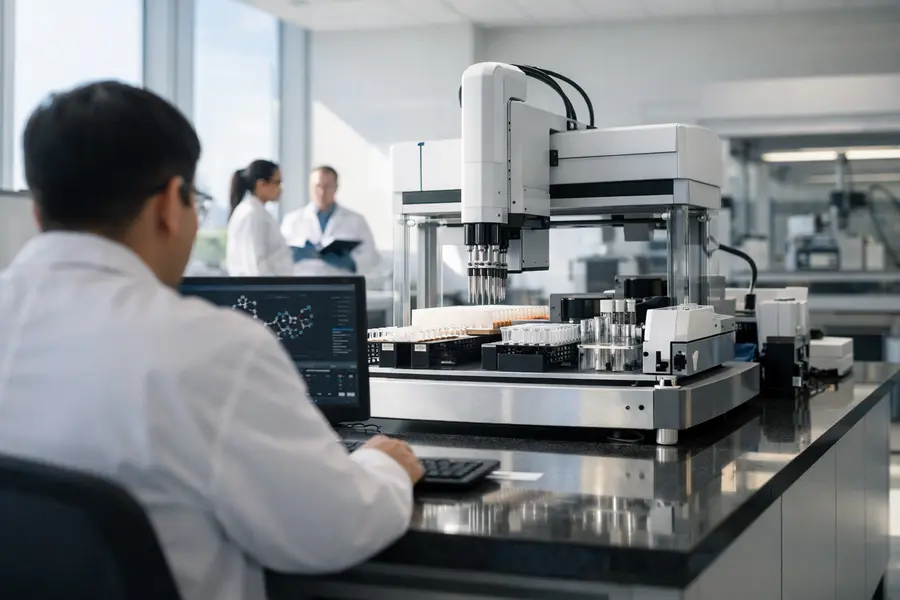
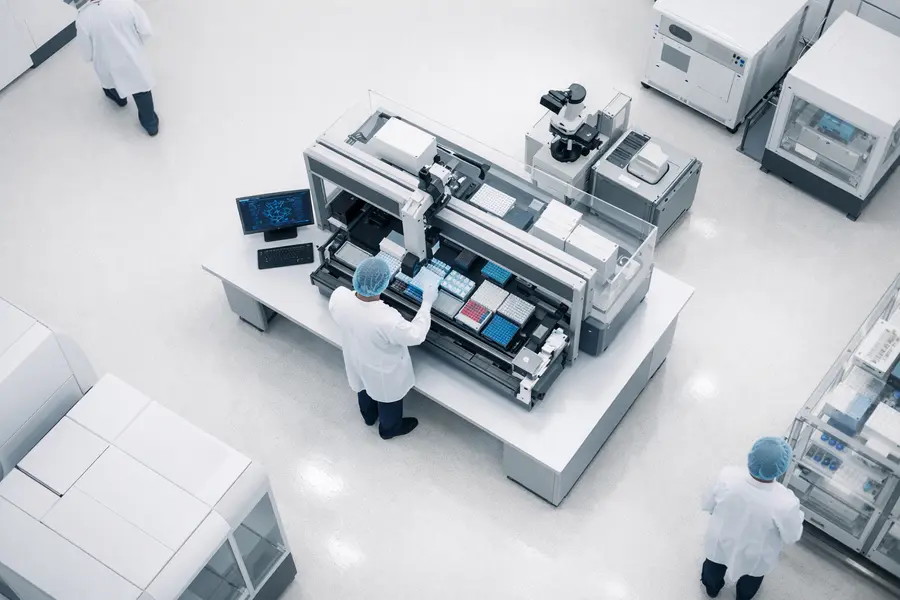
Rivercell builds two linked systems: a robotic lab that produces cell-response data, and a model trained on that data to predict treatment effects. The lab runs perturbation experiments, live-cell imaging and gene-expression measurements. The model then chooses which experiments to run next, so the lab and the software feed each other.
The company wants the model to hold across disease areas, including oncology, immunology, rare diseases and cardiometabolic conditions. That breadth is ambitious for a company barely a year old. Most virtual-cell efforts so far have been narrower, built around a single cell type or a single assay.
CEO Yann Fleureau frames the lab as the core asset. "A world model of the cell is the opportunity of the century in medicine. The missing piece is data," he said at launch. The automated lab is described internally as a "GPU for the bio data centre," a comparison that casts wet-lab throughput as the scarce input, in the way chips are for language models.
Who Is Behind the Company?
Fleureau co-founded Cardiologs, the AI cardiac diagnostics company that Philips acquired in 2021. Chief scientific officer Eric Durand joined in 2026 and previously led oncology data science at Novartis, served as chief data science officer at Owkin, and co-founded Bioptimus. Both of those French AI-biology names are now in his résumé, which gives Rivercell an unusually dense local network for a seed-stage company.
The scientific advisory board includes Charlotte Bunne of EPFL and Fabian Theis of Helmholtz Munich, two researchers known for machine learning applied to single-cell biology. Team size and any earlier funding were not disclosed.
Why Is a €22M Seed Round Notable?
The round is large for a French seed financing, and it reflects a bet that proprietary data, not model architecture, decides who wins in biological AI. Public datasets have limits: they are assembled from different labs, protocols and cell lines, and they rarely capture the response of a cell to a controlled intervention. A company that generates its own perturbation data under uniform conditions can train on cleaner inputs.
The skeptical reading is that the capital intensity looks closer to a Series A business than a seed one. Robotic labs depreciate, consumables are expensive, and a virtual cell that predicts well in the lab's own conditions may still fail against patient biology. A €22M cheque buys perhaps a few years of runway for a facility plus a research team, not a clinical asset. Investors are paying for the data flywheel thesis before any validation has been published.
The investor mix points to a hybrid case. HV Capital is a generalist technology investor, while Alven and HCVC have backed deep-tech and science-heavy companies in France. Bpifrance's presence adds public-sector backing to a field the French state has treated as strategic.
How Does Rivercell Fit the Wider Virtual Cell Push?
Rivercell enters a field where large technology and biotech groups, along with several well-funded startups, are racing to model cells computationally. The common argument is that better cell models could cut the failure rate in early drug discovery, where most candidates fall out before reaching patients. No one has yet shown that a virtual cell reliably outperforms conventional screening in a way that changes program decisions.
That is the test Rivercell will face. Its pitch is that infrastructure comes first: build the data engine, then the model, then partnerships with pharmaceutical companies that want predictions on their own targets. The company has named no pharma partners so far.
What Comes Next?
The near-term milestones are operational. Rivercell has to expand the Paris lab, show that its automated experiments are reproducible, and release evidence that the AI Virtual Cell predicts held-out perturbations better than existing methods. Pharma collaborations would be the first external check on commercial demand.
A Series A, if the data holds up, would likely be priced on those results rather than on the team's track record. If the model underperforms, the lab still has value as a data service, though at a lower multiple than a platform company.
Outlook
Rivercell starts with a credible founding team, four established backers and a clear thesis that cell-response data is the bottleneck in AI drug discovery. What it lacks is published validation and a named commercial partner. Over the next 12 to 18 months, results from the expanded Paris lab will determine whether the seed round reads as an early lead in a new category or an expensive bet on an unproven premise.