Pomegra
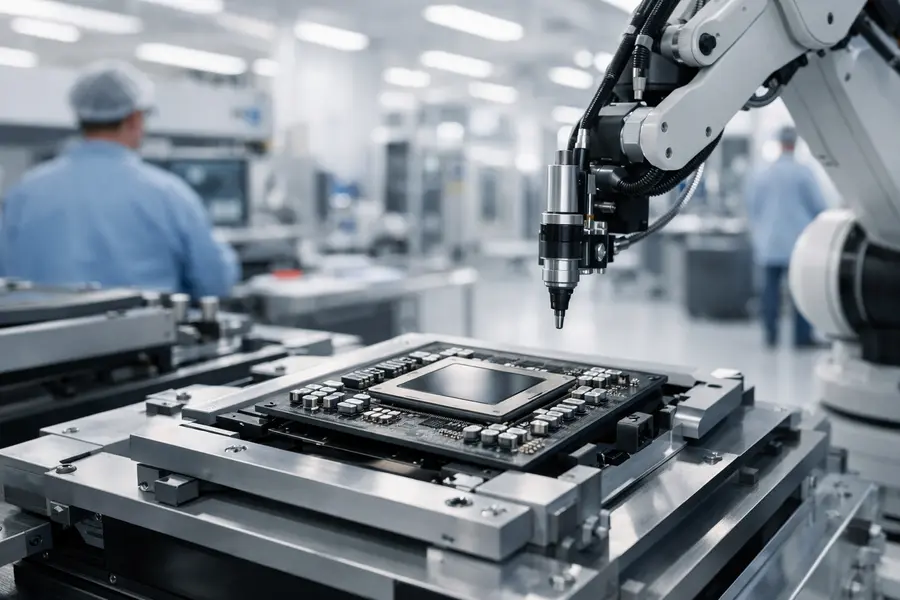
Tenstorrent raised $1.5 billion at a $6.2 billion post-money valuation to ramp production of its Galaxy AI servers, more than double its 2024 mark.
Key Takeaways
- Tenstorrent closed a $1.5B Series E at a $6.2B post-money valuation, announced October 19, 2026.
- Trace Capital and Innovation X led the round. Fidelity, T. Rowe Price, Morgan Stanley and ARK Invest also participated.
- The valuation is up from $2.6B after the company's 2024 round, with no revenue figures disclosed.
Lead
Tenstorrent, the AI chip company led by chip architect Jim Keller, announced on October 19, 2026 that it closed a $1.5 billion Series E at a $6.2 billion post-money valuation. Trace Capital and Innovation X led the round, which the company says will pay for volume manufacturing and global commercial expansion. The valuation is more than twice the $2.6 billion set by its 2024 financing.
The company sells AI hardware and licenses chip designs. It plans to deploy its Galaxy servers at scale, serve open-weight models including large language models and video generation, and push forward the AI and CPU intellectual property it licenses to customers building their own silicon.
Who Invested in the Round?
Trace Capital and Innovation X co-led, joined by a long list of new and existing backers. The roster includes Agostinelli Group, ARK Invest, Brett Barna, Cadence Ventures, Eclipse, Fidelity Management & Research Company, Maverick Silicon, Morgan Stanley, Protagonist, Sandisk, T. Rowe Price, Tether Investments, Troluce Capital, Virtu Financial and XTX Markets.
The mix is notable. Mutual fund managers such as Fidelity and T. Rowe Price typically appear in late-stage rounds of companies that are candidates for public listings. Sandisk and Cadence Ventures add strategic ties to memory and chip design. Tenstorrent has not announced an IPO timeline.
What Does Tenstorrent Actually Sell?
Tenstorrent sells AI compute in two forms: finished hardware and licensable designs. The hardware range runs from single cards and workstations to racks and superclusters, with Galaxy servers combining dozens of its chips for workloads such as chatbots, coding assistants and video generators. The licensing arm offers the TT-Ascalon RISC-V CPU and Tensix AI cores to customers that want to design their own chips. Samsung and LG are among those licensees.
The architecture is built on RISC-V, an open instruction set, and the company publishes its software stack as open source. Keller, who previously worked on Apple's A4 and A5 chips, AMD's Zen architecture and Tesla's Full Self-Driving chip, has framed the pitch around openness. "The future of compute is open, scalable, and owned by the people building on it," he said.
Why Is the Valuation Jump Worth Scrutinizing?
The step from $2.6 billion to $6.2 billion is large, but the company has disclosed no revenue, shipment volumes or customer counts to support it. That leaves investors pricing the round on the strength of the team, the licensing relationships and the scarcity of credible alternatives to Nvidia, rather than on published financials.
The comparison to the 2024 round also shows how much capital the segment now demands. Raising $1.5 billion in one round is a bet that Tenstorrent can fund fabrication commitments, board and system manufacturing, and software work simultaneously. Chip startups have historically struggled when volume production ramps outpace customer orders.
Keller also turned down acquisition offers from Intel and Qualcomm this year, choosing to raise capital instead. That decision raises the stakes for the independent path: the company now has to show it can build a standalone business rather than a design house for larger players.
How Does Tenstorrent Compete With Nvidia?
Tenstorrent competes by undercutting on price and chasing orders that may be too small for the incumbents. Nvidia, AMD and Broadcom dominate AI chip supply, and each has software ecosystems and customer relationships that a company of roughly 1,150 employees cannot match directly.
The open-weight angle is the company's wedge. Customers running models they can inspect and modify have less reason to be tied to a single vendor's software stack. Whether that translates into purchase orders at the scale needed to justify a $6.2 billion valuation is the open question. The company operates from Santa Clara, Austin, Toronto, Belgrade, Tokyo and Bangalore.
What Comes Next for Tenstorrent?
The next milestone is delivery. Tenstorrent has to turn $1.5 billion into shipped Galaxy systems and publicly visible customer deployments, and the licensing business needs to show recurring revenue beyond its current partners. Undisclosed revenue makes the next round, or an IPO filing, the likely moment when the numbers become public.
Two scenarios stand out. If open-weight inference demand keeps growing, a cheaper alternative with open software could take a durable share of workloads that Nvidia treats as secondary. If hyperscalers keep building their own silicon and buyers consolidate on incumbents, Tenstorrent's licensing business may prove more valuable than its hardware.
Outlook
Tenstorrent has doubled its valuation to $6.2 billion with $1.5 billion in new capital, led by Trace Capital and Innovation X and backed by major public-market asset managers. The money buys time and manufacturing capacity, not proof of demand. Revenue disclosure and named customer deployments will determine whether the 2026 valuation holds.