Pomegra
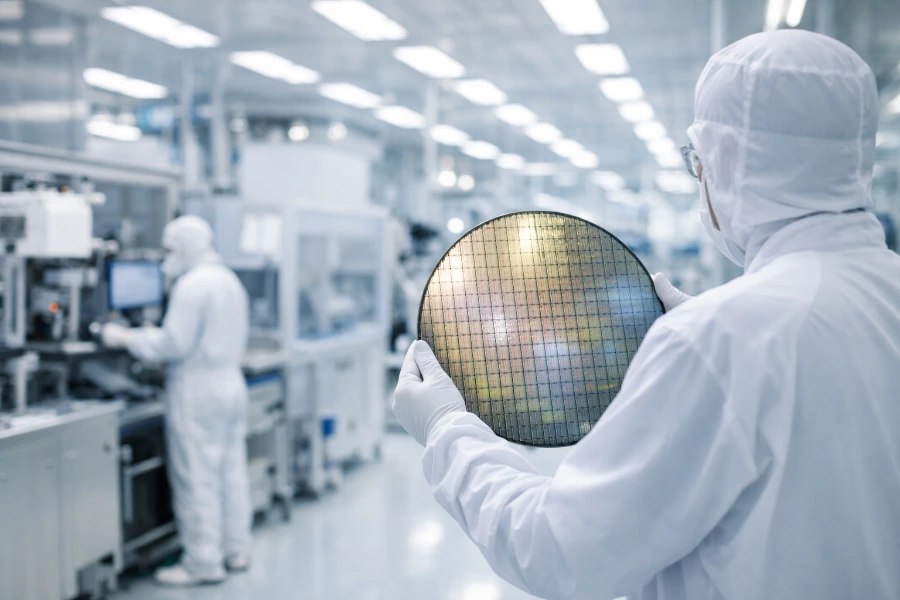
Nebius bought 10-month-old Israeli startup Inferize for an estimated $100-150M to cut GPU idle time and speed up inference on its Token Factory platform.
Key Takeaways
- Nebius announced the Inferize acquisition on October 1, 2026; terms were undisclosed, and Israeli press estimates $100-150M.
- Inferize raised a $10M seed round led by TLV Partners and employs 17 people in Tel Aviv.
- The deal follows Nebius's $643M purchase of Eigen AI, closed June 10, 2026.
Lead
Nebius (Nasdaq: NBIS) acquired Inferize, a Tel Aviv startup that spent its short life in stealth, on October 1, 2026. Nebius did not disclose the price. Israeli business press put it between $100M and $150M, with one outlet narrowing the range to $100-130M. The startup was founded in early 2026, built a working prototype within three months, and was sold before it had launched a commercial product.
The buyer is paying for a narrow technical fix. Inferize shortens the time it takes to load an AI model onto GPUs, which cuts the period when expensive hardware sits idle.
What Does Inferize Actually Do?
Inferize builds software that reduces "cold starts," the delay between a request to run a model and the moment that model can answer. During that gap, a cloud operator either pays for GPUs that are doing nothing or makes users wait. CEO Guy Bortnikov has said the system can bring up models across different architectures in seconds rather than tens of minutes.
The practical result is elastic capacity. Inference traffic swings sharply through the day, and faster loading lets a provider shrink or grow its GPU footprint to match demand instead of holding spare machines in reserve. Nebius framed the benefit as serving a larger volume of requests on the same hardware, which improves the unit economics of generating tokens.
Who Is Behind the Startup?
Bortnikov and CTO Lior Gorbonos were part of the founding team of Granulate, the infrastructure-optimization company that Intel bought in 2022 for about $650M. They chose TLV Partners, an earlier Granulate backer, to lead Inferize's $10M seed round. No other investors have been named, and no valuation was published for the round.
That makes the arithmetic simple. If the price landed in the reported range, the seed investors saw a return of roughly 10x to 15x on the capital raised in under a year, before accounting for dilution and any employee retention packages.
Why Did Nebius Pay This Much for an Unlaunched Product?
Nebius paid for talent and a time advantage, not revenue. Inferize has no disclosed customers, so the price reflects what a seven-figure monthly GPU bill looks like when a few percent of it is idle. Nebius forecasts 2026 revenue of $3.0-3.4B and names inference as its fastest-growing segment, so even small gains in utilization carry weight at that scale.
This is closer to an acquihire with a product attached than a pure strategic buy of a going concern. The 17 engineers join the inference team, and the technology goes into Nebius Token Factory, the managed platform that serves open models such as DeepSeek, Nvidia Nemotron and Llama. The sale also confirms that the founders' track record carried most of the valuation.
How Does It Fit Nebius's Acquisition Pattern?
It fits a sequence of inference-layer purchases. In May, Nebius agreed to buy Eigen AI for about $643M in cash and stock, and the deal closed on June 10 after regulatory approval. Eigen supplied optimization and post-training layers for Token Factory. Inferize adds a different piece: the speed at which capacity can be started and stopped.
The comparison to Eigen is also a check on price. Inferize cost a fraction as much, and it adds a feature rather than a platform layer. Nebius competes with AWS, Google Cloud and CoreWeave, and each of them is chasing the same goal of getting more paid output from each GPU.
What Comes Next?
Integration risk is the near-term question. Startups sold at ten months, before a commercial launch, often lose some of their engineers within a year, and the technology has not been tested at Nebius's production scale. Nebius has not published a timeline for when Inferize's loading speeds will reach Token Factory customers.
The larger signal is for Israeli founders. A sale of this size so soon after founding shows that infrastructure buyers will pay for experienced teams ahead of revenue. If Nebius reports a measurable utilization gain in coming quarters, expect more bids for small inference-optimization teams. If not, the deal will read as an expensive hire.
Outlook
Nebius bought a 17-person team and an unlaunched cold-start technology for an estimated $100-150M, its second inference-focused acquisition in 2026. The case rests on utilization: every second of idle GPU time removed lowers the cost of a token. Results will show up in Token Factory margins, not in Inferize's own sales.