Pomegra
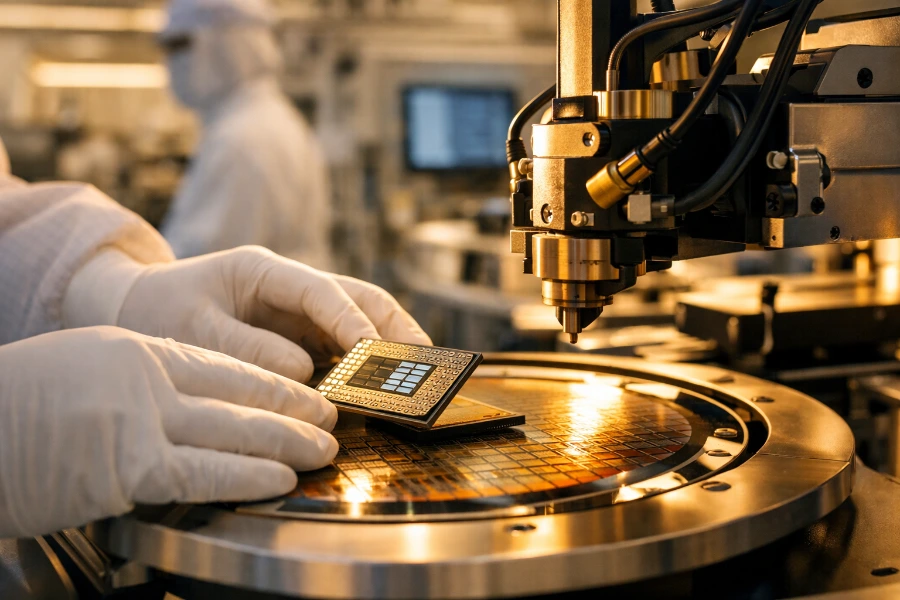
Fractile raised $720M in a Series C at a $7B valuation, backed by Thrive, Founders Fund and Britain's Sovereign AI Fund, to build AI inference chips by 2027.
Key Takeaways
- Fractile raised $720M in a Series C at a $7B valuation, announced November 11, 2026.
- Thrive Capital, Founders Fund, Lightspeed and Redpoint led; the UK Sovereign AI fund joined.
- Valuation rose about sixfold from roughly $1.1B in May, with no commercial chip shipped yet.
Lead
Fractile, the London- and Bristol-based AI chip designer, raised $720M in a Series C round on November 11, 2026, valuing the company at $7B. Thrive Capital, Founders Fund, Lightspeed and Redpoint led the round. The UK government's Sovereign AI fund and the British Business Bank also invested, which gives the deal a state-backed element rare among European chip startups. In sterling, the round comes to roughly £540M.
What Is Fractile Building?
Fractile is building chips for AI inference, the stage at which a trained model generates answers, rather than for training. Founder Walter Goodwin, an Oxford PhD who started the company in 2022, argues that memory bandwidth, not raw compute, is the main limit on inference speed.
The company's design stacks custom DRAM and logic in three dimensions, keeping data close to the processor. Goodwin has cited a 25,000-fold gap between the growth of compute and the growth of memory bandwidth over 25 years. He claims the architecture could run inference up to 10 times faster than systems built on high-bandwidth memory. Other coverage of the round cites figures as high as 100 times faster and 90% lower operating costs. Fractile has shown prototypes only, so none of these numbers has been tested against a commercial product.
Who Invested in the Round?
Beyond the four leads, the round drew Alphabet's CapitalG, BlackRock, DST Global, Balderton, Dragoneer, Shopify, Elad Gil and SV Angel. Bain Capital Ventures and T. Rowe Price are also reported among the participants. The Sovereign AI fund and the British Business Bank bring public money into a round dominated by US growth investors.
That mix matters for control. Government participation signals a policy interest in keeping a domestic chip design company in Britain, but the leads are American funds that set pricing and terms.
Why Did the Valuation Jump So Fast?
The valuation rose from roughly $1.1B in May, when Fractile closed a $220M Series B, to $7B six months later. A sixfold step-up with no product on the market reflects demand for any credible alternative in inference hardware, not revenue or deployment milestones.
Cheap capital and scarce supply explain part of it. Inference now accounts for a growing share of data center spending, and operators face power and grid constraints that make performance per watt a purchasing criterion. The skeptical reading is that the round prices in a successful 2027 launch. If the first chip slips or underperforms its claims, a $7B mark leaves little room for a down-round to stay quiet.
How Crowded Is the Inference Chip Market?
The field is crowded and dominated by one company. Nvidia launched an inference-focused chip in March 2026 and acquired Groq, an earlier inference specialist. Startups including Etched, MatX and Olix are pursuing similar territory with different architectures.
Fractile's wager is that a memory-first design can beat general-purpose GPUs on latency and power. Nvidia's software ecosystem and manufacturing relationships remain a hard barrier for any newcomer. A challenger must match the hardware and also persuade customers to port workloads to a new platform.
What Comes Next for Fractile?
Fractile plans to deliver its first commercial chip for data center deployment in 2027. The company has not disclosed how it will split the $720M between chip fabrication, packaging, software and hiring. Early customer commitments, which the company has not announced, will be the first real test of the performance claims.
Three scenarios stand out. If the chip meets its targets, Fractile becomes one of Europe's most valuable hardware companies. If performance lands well below the headline multiples, the valuation faces pressure, as it would for any pre-revenue company. A third path is acquisition by a larger chip or cloud company, which the CapitalG and BlackRock stakes make plausible but which nothing in the round suggests is imminent.
Outlook
Fractile has moved from a $1.1B Series B valuation in May to $7B in November on the strength of a memory-centric design and a 2027 delivery target. The Sovereign AI fund's participation adds a UK policy angle, though US venture firms lead the round. Execution on silicon, not capital, is now the constraint, and customer results from the first chip will determine whether the valuation holds.