Pomegra
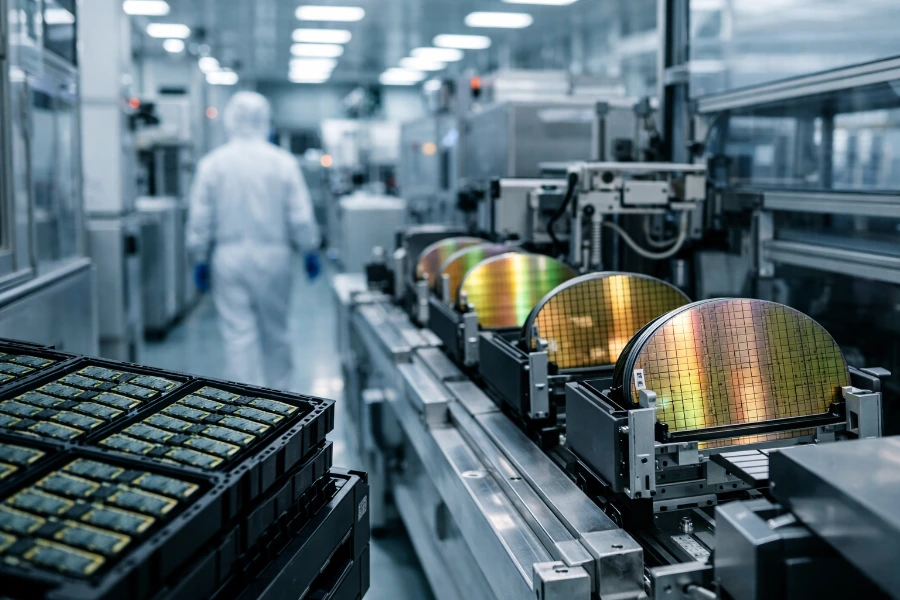
Micron technology stock rose about 12% as SanDisk and Seagate also surged after CoreWeave said AI demand outpaces capacity and Morgan Stanley backed the dip.
- SanDisk gained about 14-17%, Micron about 11-14% and Seagate about 10-12% on Wednesday, November 11, 2026.
- CoreWeave said AI infrastructure demand outpaces the world's capacity to deliver it, with 2028 capacity oversubscribed several times over.
- Morgan Stanley described the recent valuation pullback in memory makers as an opportunity.
Lead
Memory and storage shares led the market higher on Wednesday. SanDisk (SNDK) rose roughly 14% to 17%, Micron (MU) gained about 11% to 14%, and Seagate (STX) advanced about 10% to 12%. The move followed third-quarter results from CoreWeave (CRWV), which raised its full-year revenue guidance and said customer demand exceeds the computing capacity it can bring online. The rally reversed part of a recent slide in ai stocks tied to data-center hardware.
What Drove the Memory Stock Rally?
CoreWeave's earnings report drove the rally, because it eased concern that AI spending is peaking. The cloud provider, which rents graphics-processing capacity to AI developers, lifted its full-year revenue outlook. Its chief executive said demand for the infrastructure "outpaces the world's capacity to deliver" it.
CoreWeave said it has about ten times as much customer demand as its remaining capacity for 2027. Capacity for 2028 is already oversubscribed several times over. For investors, those figures point to a multi-year order pipeline rather than a single-quarter surge.
The reaction spread quickly through the hardware supply chain. Memory chips and storage drives sit directly in the path of AI buildouts, since each new cluster requires high-bandwidth memory, flash storage and high-capacity disk drives. South Korean memory maker SK Hynix also climbed in overseas trading.
Why Does CoreWeave's Capacity Warning Matter for Memory?
CoreWeave's warning matters because capacity constraints at the cloud layer translate into orders for memory and storage suppliers. When an AI infrastructure provider cannot build fast enough, it buys more servers, accelerators and storage as soon as power and facilities allow. Component suppliers are the first to see that demand.
Each of the three companies has a different exposure:
- Micron supplies DRAM and high-bandwidth memory, which sits next to AI accelerators and is among the scarcest components in the supply chain.
- SanDisk makes NAND flash, used in the solid-state drives that feed training data and serve AI inference workloads.
- Seagate builds high-capacity hard disk drives, which hold the large datasets that AI systems generate and retain.
The pattern is a familiar one for the memory industry, where tight supply lifts pricing and margins before new factory capacity arrives. For investors tracking Micron technology stock, the question is how long that tightness lasts.
How Did Morgan Stanley Frame the Valuation Pullback?
Morgan Stanley told clients that the recent decline in memory shares had improved the risk-reward profile for the sector. The bank (MS) characterized the pullback as an opportunity rather than a change in fundamentals.
The view fits the sequence of recent trading. Memory and storage names had run sharply higher through the year, then retreated as questions grew over whether hyperscale spending could keep rising. CoreWeave's results addressed that concern directly. Wednesday's gains recovered a meaningful share of the earlier drop, though the stocks remain volatile and highly sensitive to any change in capital spending plans at large AI customers.
Market Reaction and Positioning
The one-day moves were large for companies of this size. SanDisk posted the biggest gain of the three, which reflects its sensitivity to flash pricing and its relatively recent status as a standalone public company. Micron's rise took it back toward recent highs. Seagate's advance extended a recovery in storage hardware that began earlier in the autumn.
The gains also lifted the broader semiconductor group and supported technology indexes. Trading volumes in all three names ran well above recent averages, a sign that institutional investors repositioned into the sector after the earnings release.
What Are the Risks to the Rally?
The main risk is that a one-session rally rests on a single customer's forecast. CoreWeave's demand figures are strong, but the company depends on financing, power availability and data-center construction timelines to convert orders into revenue. Delays in any of those areas would push memory demand further out.
Cyclicality is the second risk. Memory makers have historically expanded production when prices rise, which can lead to oversupply. Capital spending plans at Micron, SanDisk and Seagate over the next several quarters will show whether the industry stays disciplined.
Outlook
Wednesday's session strengthened the case that AI infrastructure demand remains ahead of supply. CoreWeave's raised guidance and capacity figures gave the memory and storage trade fresh support, and Morgan Stanley's view reinforced that sentiment. Over the next three to twelve months, attention will turn to hyperscaler spending updates, memory pricing data and supply additions, which will determine whether the rally extends or fades.
Mentioned tickers: MU, SNDK, STX, CRWV, MS