Pomegra
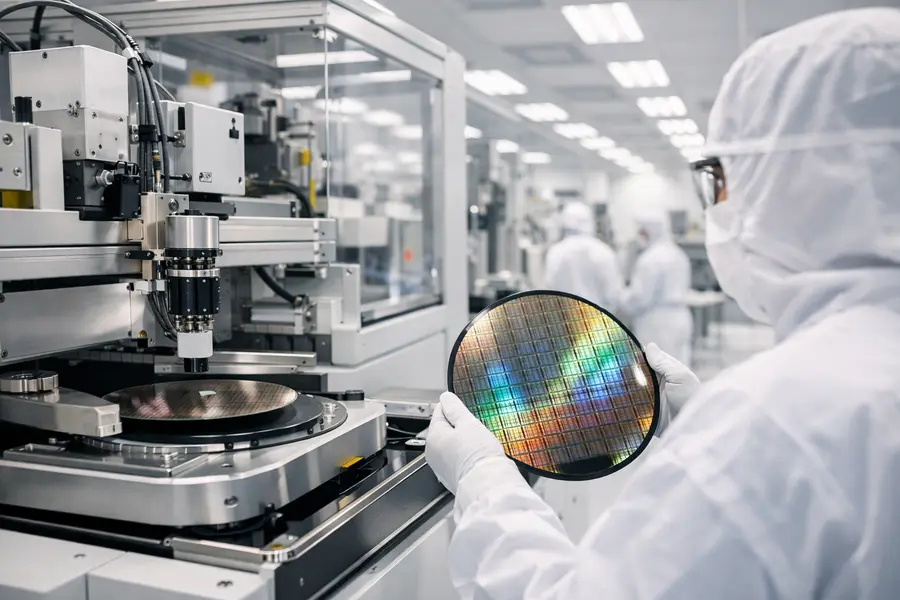
Fractile, the London AI inference chip startup, allotted £577M of Series C shares by October 2026, five months after a $220M round and before shipping a chip.
Key Takeaways
- Fractile issued £577M (about $774M) of Series C shares between 9 September and 23 October 2026, per UK filings.
- Pre-round talks put the pre-money valuation at $6.5B, over six times the roughly $1B set in May.
- The company has shipped no chip and disclosed no revenue. An initial $250M Anthropic order is due for delivery in 2027.
Lead
Fractile, the British developer of AI inference chips, has raised £577M in a Series C, according to Companies House filings dated 15 and 28 October 2026. The shares were allotted between 9 September and 23 October. The company has not publicly announced the round.
The sum is roughly 3.5 times the $220M Series B that closed in May. It lands at a company founded in 2022 that has not yet put a production chip in a customer's data center.
How Is the Round Structured?
The filings show three share classes at sharply different prices. Series C-1 raised £147.8M at £801.54 per share, C-2 raised £37.4M at £707.25, and C-3 raised £392.2M at £1,452.35. The C-3 tranche accounts for about 68% of the total.
A price near double that of the earlier tranches suggests the round priced up as it filled, or that different investors negotiated different terms. The filings do not say which. An earlier report of the same filings put the figure at £540M, so the £577M total reflects the later submission.
What Valuation Does This Imply?
Bloomberg reported in August that Fractile was in talks to raise about $600M at a $6.5B pre-money valuation. That figure has not been confirmed by the company, and the filings carry no valuation. If it held, the May round's roughly $1B valuation was surpassed more than sixfold in about three months.
Such a jump rarely reflects operating progress. Fractile has no disclosed revenue and no shipped silicon. What changed between May and August was the customer: Anthropic agreed an initial deal to buy about $250M of chips, with both sides open to expanding it, according to Bloomberg.
Who Backed Fractile?
The filings do not name Series C investors. Earlier reports of the talks said Redpoint Ventures and Lightspeed Venture Partners were lined up to co-lead, with Thrive Capital and Founders Fund also in discussions. None of that has been confirmed.
The May round was led by Accel, Founders Fund and Factorial Funds, with former Intel chief executive Pat Gelsinger investing as an angel. The seed round, £12M in 2024, was led by Kindred Capital, the NATO Innovation Fund and Oxford Science Enterprises.
What Does Fractile Build?
Fractile designs chips for inference, the stage where a trained model generates answers. Its architecture places memory next to the processing units that do the arithmetic. The aim is to ease the memory bandwidth limit that constrains GPU-based systems from Nvidia.
CEO Walter Goodwin, an Oxford-trained AI researcher, founded the company with Yuhang Song. It is headquartered in London, with offices in Bristol, San Francisco and Taipei. It has also outlined plans to invest £100M in a hardware engineering facility and software testing lab in Bristol.
Can a Pre-Revenue Chipmaker Justify This Price?
The case rests on one order and one delivery date. The Anthropic chips are expected in data centers in 2027, and a single anchor customer is a thin base for a valuation in the billions. Chip programs also slip, and the gap between a working design and volume manufacturing has sunk well-funded rivals.
The competition is concrete. Cerebras Systems and Etched are also pursuing inference-specific silicon, and Nvidia, valued above $5 trillion, sells the incumbent product. Inference demand is growing, and buyers like Anthropic have reason to cultivate suppliers beyond a single vendor. That is the argument investors appear to be paying for.
Outlook
Fractile has gone from a £12M seed round in 2024 to more than £577M in a Series C in two years, with the Series B and C landing five months apart. The next test is technical: delivering working chips to Anthropic in 2027 and showing that the memory-adjacent design performs outside the lab. Confirmation of the investor list and the final valuation would clarify who set the price. Until silicon ships, the round measures confidence in the team and the anchor order rather than commercial results.