Pomegra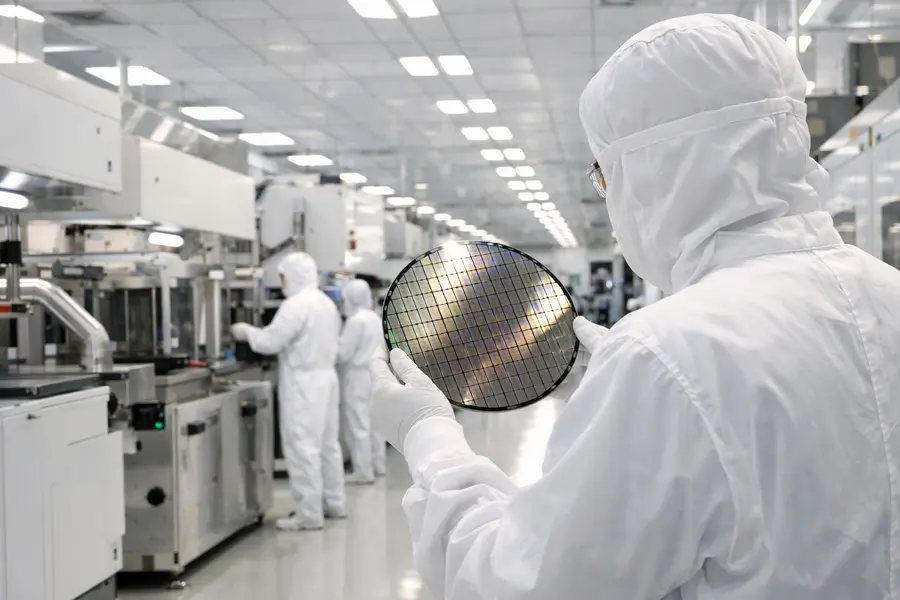
Pittsburgh chip startup Efficient Computer raised more than $97M in a Series B led by TQ Ventures, valuing it at $650M as it targets data-center computing.
Key Takeaways
- Efficient Computer raised over $97M in Series B at a $650M valuation, led by TQ Ventures.
- The round arrives seven months after a $60M Series A and lifts total funding to $173M.
- Its Electron E1 chip is in volume production; data-center silicon is the next target.
Lead
Efficient Computer, a Pittsburgh semiconductor startup, announced on September 29, 2026 that it has entered agreements for more than $97M in Series B financing at a $650M valuation. TQ Ventures led the round. The company says it will use the money to ship its Electron E1 processor in volume to lead customers and to scale its Fabric architecture toward data-center-class performance.
Who Else Is in the Round?
Ten other investors joined TQ Ventures: Eclipse, Union Square Ventures, Giant Ventures, Triatomic Capital, TO Capital, TF Capital, Mana Ventures, Toyota Ventures, Overmatch and Borderless. Triatomic Capital led the February 2026 Series A, and Eclipse, Union Square Ventures, Toyota Ventures and Overmatch Ventures also took part in that round.
The repeat names matter. Four of the Series A backers returned within seven months, which is a cleaner signal than a new lead writing a large check. Total funding now stands at $173M.
What Does Efficient Computer Actually Build?
Efficient Computer builds general-purpose processors on a spatial dataflow design, in which a program's operations are laid out across the chip and data moves between them directly. A conventional CPU instead fetches and decodes instructions one after another. The company says this cuts the energy spent on overhead and delivers 10x to 100x better energy efficiency for general-purpose computing.
The Fabric architecture is paired with a compiler called effcc, which accepts C and C++ code and common AI model formats such as LiteRT and ONNX. The company positions it as a drop-in replacement for GCC and Clang, which matters because new silicon usually fails on software adoption before it fails on physics.
The company was co-founded by CEO Brandon Lucia, a Carnegie Mellon University professor, along with Chief Architect Nathan Beckmann and CTO Graham Gobieski.
Is the Electron E1 Really Shipping?
Yes, according to the company, which describes the Electron E1 as in volume production and shipping to customers. Andrew Marks of TQ Ventures said the team has "taped out four times" and is "already shipping chips to customers at volume."
Shipped unit counts and revenue are undisclosed. The claimed efficiency gains come from the company itself, and independent benchmarks against Nvidia or Intel parts have not been published. The E1 targets battery-powered and power-limited products: drones, robots, wearables, critical-infrastructure sensors, and space and defense systems. The company says it offers roughly 10x less energy use than the embedded GPUs common in robotics.
"Every customer we meet has a version of their product they cannot build, because the compute power budget makes the new capabilities they want infeasible," Lucia said.
Why Is a Data-Center Pivot on the Table?
Power has become the binding constraint on data-center growth, which gives an efficiency-first chip company a larger market than embedded devices alone. Efficient Computer says Fabric can be extended to "varied and irregular datacenter workloads" that suit neither AI accelerators nor GPUs well, and it is aiming for a more than 10x reduction in energy use compared with current systems.
That is a separate and far harder project than shipping an embedded part. Data-center buyers demand software maturity, supply-chain scale and multi-year roadmaps, and incumbents such as Nvidia, Intel and AMD have all three. The company has not given a date for data-center silicon, though the statement says production scaling continues through 2027.
What Does the Valuation Imply?
A $650M valuation seven months after a $60M Series A implies investors are paying for the roadmap as much as for current sales. The Series A valuation was not disclosed, so the size of the step-up cannot be measured. With no revenue figure, the price rests on the credibility of the four tape-outs and the customer list, not on multiples.
The upside case is that a working product already in customers' hands reduces the execution risk that usually sinks chip startups before they reach production. The skeptical case is that embedded wins do not automatically transfer to data centers, where the benchmark is a rapidly improving GPU ecosystem. Both readings are consistent with the round.
Outlook
Efficient Computer enters its next phase with $173M raised, a chip it says is in volume production, and an ambition that now extends well beyond drones and sensors. The next milestones to watch are disclosed customer volumes, independent efficiency measurements and a timeline for data-center-class silicon. Until those arrive, the $650M valuation stays a bet on a architecture that has proven itself in embedded systems and not yet in the data center.