Pomegra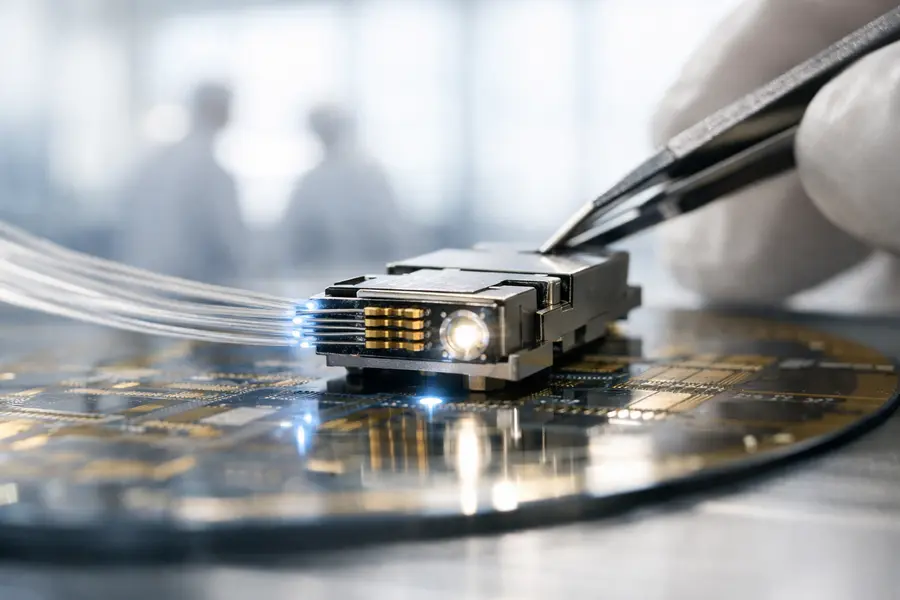
Palo Alto startup CScale exited stealth on Sept. 30 with a $145M Series C backed by Nvidia and Intel Capital to build optical interconnects for AI data centers.
Key Takeaways
- CScale raised a $145M Series C, lifting its total funding to $188M; Atreides Management led, with Valor and Premji Invest as co-leads.
- Nvidia and Intel Capital joined as the startup's first strategic investors.
- CScale is building a light engine meant to contain laser failures without interrupting AI compute. Valuation was not disclosed.
Lead
CScale, a Palo Alto company founded in 2023, came out of stealth on September 30, 2026 with a $145 million Series C round. The company develops optical interconnect for AI scale-up, the links that let thousands of accelerators behave as one larger machine. The round brings its total funding to $188 million. It will go toward technology development and commercialization, and the company has not disclosed a valuation.
Who Is Backing CScale?
Atreides Management led the round, with Valor Equity Partners and Premji Invest as co-leads. Sutter Hill Ventures, which has backed CScale since its founding, and Maverick Silicon also participated. Nvidia and Intel Capital came in as the company's first strategic investors.
The arithmetic is worth noting. A $145M Series C on $188M in total capital means roughly $43M was raised before this round, which suggests a stealth period funded by a small group and a large step up in scale. The strategic names matter more than the cheque sizes, which were not disclosed. Both chipmakers have a direct interest in how accelerators are wired together.
What Does CScale Actually Build?
CScale is developing an integrated light engine, an optical component that moves data between accelerators using light rather than copper. Its design goal is containment: when a laser fails, the failure should not take compute offline. CEO Martin Lund put the position plainly: "We're designing the interconnect for continuity. Lasers will fail. Compute shouldn't."
The company frames the need around gigawatt-class AI data centers, where one scale-up domain may span thousands of closely linked accelerators across dozens of racks. Those systems require high bandwidth, low and predictable latency, and uninterrupted communication. CScale has not named customers or published a shipping date for its product.
Why Does Laser Reliability Matter for AI Clusters?
Laser reliability matters because a single failed link can stall a synchronized training job that spans an entire cluster. As optics move closer to the processor, a dead laser stops being a swap-out transceiver and becomes a component embedded in expensive silicon. That raises the cost of every failure.
This is the gap CScale is targeting. Its pitch is resilience rather than raw speed, a narrower claim than most optical rivals make. Whether customers pay for that distinction will depend on measured failure rates at scale, which the company has not yet published.
Who Is Running the Company?
Lund previously led Broadcom's switching business and Cisco's Common Hardware Group, and held earlier roles at Microsoft and Cadence. CTO and founder Sanjai Kohli co-founded GPS chip maker SiRF and later founded Inovi, which Facebook acquired in 2014. The company employs about 85 people.
Both executives have shipped networking and semiconductor products in volume. That record is a point in CScale's favor in a field where many startups have shown demos but few have reached production.
How Crowded Is the Optical Interconnect Field?
The field is crowded and well funded. Lumilens has raised $700M, Celero closed a $275M Series C, and Eliyan raised a $145M Series C, matching CScale's round size. Established optics suppliers are also pushing co-packaged designs into the same data centers.
CScale's $145M therefore buys a seat rather than a lead. Its differentiation rests on the reliability argument and on Nvidia's participation, though a minority strategic stake does not amount to a purchase commitment.
What Comes Next?
The next test is product evidence. Investors and prospective buyers will want silicon samples, reliability data and a named design win with an accelerator vendor. A credible customer announcement would show that the strategic investors are buyers as well as shareholders.
If the containment design works as described, CScale could sell into cluster operators who are already planning gigawatt-scale builds. If it does not, the company faces larger competitors with more capital and existing supply relationships.
Outlook
CScale left stealth with $188M raised in total and a pitch built on fault tolerance in optical links. The backing from Nvidia and Intel Capital gives it visibility, but the valuation, customers and timelines remain undisclosed. The coming year will show whether reliability is a purchasing criterion or a feature that larger rivals can copy.