Pomegra
Cologne-based Cellbox Solutions has closed its €5M Series A, adding €1.5M to a March first close to fund warm-chain logistics for living cells and tissues.
Key Takeaways
- Cellbox Solutions closed its Series A at €5M on October 20, 2026, adding €1.5M to a €3.5M first close.
- Companisto led the March first close; Baltic Business Angels members and a Canadian family office joined the final close.
- The company reports more than 400 systems deployed worldwide.
Lead
Cellbox Solutions GmbH, a Cologne-based maker of portable incubators for living biological material, announced on October 20, 2026 that it completed the final closing of its Series A, bringing total proceeds to €5M. The final tranche of roughly €1.5M followed a first close of about €3.5M in March 2026, led by the crowdinvesting platform Companisto. The company did not disclose a valuation.
Who Invested in the Final Closing?
The final close drew members of Baltic Business Angels Invest GmbH, a Canadian family office and an undisclosed investor with experience in pharmaceutical logistics. Existing backers NRW.BANK and Fraunhofer Venture also took part.
The investor list is mostly angels, a family office and public-sector money. No institutional venture fund appears among the new names, and the lead of the first close was a crowdinvesting platform rather than a traditional VC. That is a modest syndicate for a company selling into pharma and biotech.
What Does Cellbox Actually Sell?
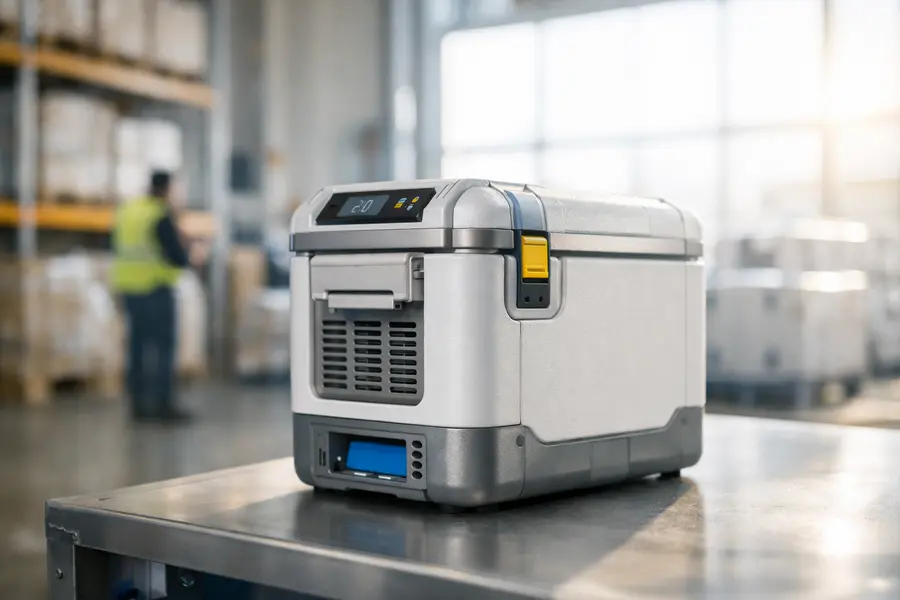
Cellbox sells warm-chain transport: portable incubators that hold temperature and CO2 levels for cells, tissues and organoids that cannot be frozen. Its Cellbox Go and Cellbox Shipper systems keep samples at physiological conditions for up to 48 hours and carry IATA certification for air transport. The company has established Drug Master Files for the product family, a regulatory asset that matters to pharmaceutical customers.
Cellbox reported more than 400 systems deployed in the field at the final close. At the March first close it cited more than 300, which implies roughly 100 more units in about seven months. Customers include pharmaceutical and biotech companies, research institutions and universities.
How Does This Round Compare With Cellbox's Earlier Funding?
The €5M Series A is smaller than the €6.5M Series A1 the company announced in March 2023. That earlier round was led by CK Ventures, with Fraunhofer Ventures, NRW.Venture and Fil Bros participating, and it funded US expansion through an office in Woburn, Massachusetts.
A new Series A labelled after an A1, at a lower total, points to a reset rather than a step up. The company has since added leadership: Dr. Bernd Muehlenweg, a former senior vice president at Evotec with more than 20 years in life sciences, joined as Chief Business Officer and Chief Financial Officer. Founder and CEO Prof. Dr. Kathrin Adlkofer remains at the helm.
Where Will the Money Go?
The company plans to widen its offering from hardware into what it calls physiological logistics: transport combined with rental and monitoring services. It also intends to grow in Europe, Asia and North America.
"With successful completion of our Series A round, we are now expanding our established warm-chain technology platform into a broader offering for physiological logistics," Adlkofer said. Muehlenweg added that the focus is on "translating the strength of the Cellbox platform into sustainable commercial growth."
The shift matters commercially. Selling a box is a one-time transaction, while rental and monitoring would produce recurring revenue, which is what investors in logistics-tech typically want to see. Cellbox has not published revenue, margins or unit pricing, so the economics of that shift cannot yet be checked.
Why Does Warm-Chain Logistics Matter for Cell Therapy?
Cell and gene therapies, and increasingly lab-grown tissue models, depend on material that degrades if conditions drift in transit. Cryogenic shipping handles frozen products, but live samples need stable warmth and gas mixtures, and delays at customs or airports can ruin a shipment. Cellbox argues this is a structural gap in the life sciences value chain, a view Companisto's Dr. Robin Ghosh echoed at the first close.
The addressable demand rests on the pace at which therapies and research programs move from freezing to shipping live material. That pace is uneven, and Cellbox's growth depends on pharma customers choosing a dedicated incubator over in-house or courier solutions.
What Comes Next for Cellbox?
The next test is whether the rental and monitoring model converts the installed base of 400-plus systems into repeat revenue. A €5M round gives a small company limited room for expansion across three continents at once, so a further raise or a strategic partner is plausible within a couple of years. If the physiological logistics offering gains traction with pharma, larger logistics operators may become partners or acquirers.
Outlook
Cellbox closed a €5M Series A in two steps, led by Companisto at the first close and rounded out by angels, a family office and existing public investors. The funding is modest and below its 2023 round, with no valuation disclosed. The coming year will show whether service revenue from rental and monitoring can build on a base of more than 400 deployed systems.