Pomegra
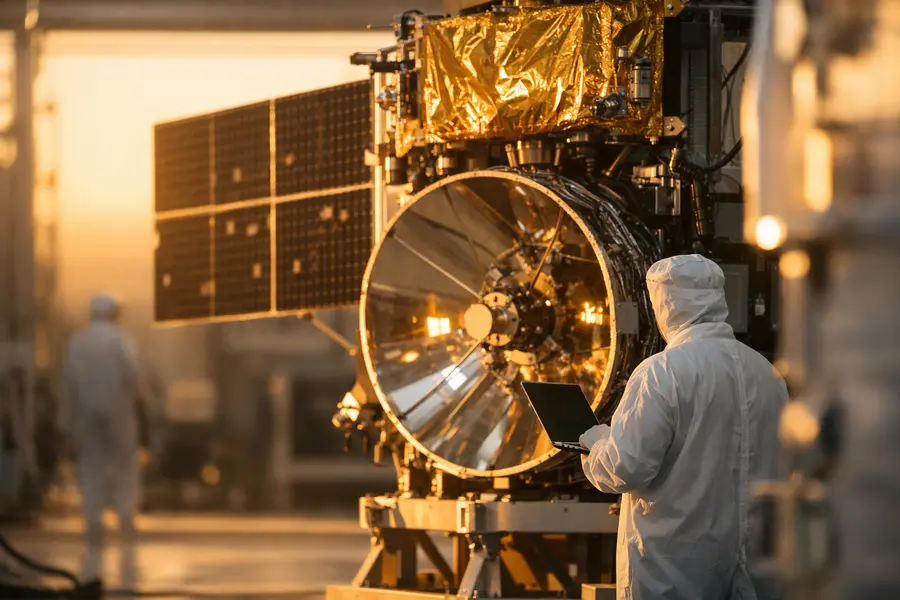
ASI, formerly Air Space Intelligence, raised a $325M Series C at a $3B valuation to expand its AI for air traffic, power grids and military logistics.
Key Takeaways
- ASI raised $325M in a Series C at a $3B valuation, announced October 20, 2026.
- Spark Capital led. Andreessen Horowitz, which led the 2023 Series B, participated.
- The round follows an $875M, 12-year FAA contract and a $99M Army deal.
Lead
ASI, the Boston company that builds AI models of air traffic, energy grids and military operations, announced a $325M Series C on October 20, 2026. The round values the company at $3B. Spark Capital led, and Andreessen Horowitz (a16z), Citadel Securities affiliates, Craft Ventures, Meritech Capital and Energy Impact Partners also invested.
The company says it will use the money to move into energy, logistics and military field operations, and to hire more research and engineering staff in Boston. Founder and CEO Phillip Buckendorf framed the pitch as a contrast with language models: the tech industry spent hundreds of billions teaching AI to generate text, while ASI builds systems that manage and control physical assets.
Who Led the Round, and Where Does a16z Fit?
Spark Capital led the Series C, and a16z took part as a returning backer rather than as lead. Andreessen Horowitz led the company's $34M Series B in December 2023, when it was still called Air Space Intelligence, and Spark was an existing investor in that round. The Series C therefore keeps both firms on the cap table and adds Citadel Securities affiliates, Meritech and Energy Impact Partners.
Energy Impact Partners invests heavily in utilities and grid technology. Its presence matches ASI's stated push beyond aviation.
What Does ASI Actually Sell?
ASI sells software that forecasts and plans the operation of physical systems hours to weeks ahead. Its customers include United Airlines, Delta Air Lines and Alaska Airlines for flight operations, the U.S. Army and U.S. Air Force for command and control, and National Grid for electricity management. Joby, the electric air taxi developer, uses it to coordinate flights.
The pitch is simulation first, control second. The models run future scenarios so operators can choose a plan before disruption hits, rather than reacting to it afterward. That makes it a planning layer on top of existing infrastructure, not a replacement for it.
Why Is the Valuation So High?
The $3B figure rests mostly on government contracts that are signed rather than projected. In June 2026 the Federal Aviation Administration awarded ASI a contract worth up to $875M over 12 years to modernize U.S. air traffic management. ASI beat bidders including Palantir and Thales. Deployment began in September 2026 around Washington, D.C., starting at Dulles International Airport, with national expansion planned.
In October 2026 the U.S. Army added a five-year, $99M contract for next-generation command-and-control software. ASI also supported more than 4,000 U.S. Air Force operators during Operation Epic Fury.
Those awards are ceilings and multi-year schedules, not booked revenue. A $875M ceiling over 12 years averages under $73M a year, and actual payments depend on deployment milestones and appropriations. Revenue, headcount and profitability were not disclosed. A $3B price is a bet that the FAA deployment works at national scale and that the same models transfer to other sectors.
Can the Models Move From Air Traffic to Power Grids?
The transfer is plausible but unproven at scale. Air traffic, grids and logistics share structure: constrained networks, uncertain demand, and costly failures. A forecasting and optimization engine built on aviation data can in principle be retrained for another network. Each sector still brings its own regulators, data access problems and safety certification, and utilities buy slowly.
The counterargument is competition. Palantir already sells operational software to defense customers, and large utilities and airlines run in-house or vendor-built planning tools. ASI's advantage is a federal reference deployment in the most scrutinized airspace in the world. If Dulles and the surrounding rollout perform, that credential carries weight in every other sector it targets.
What Comes Next?
The near-term test is the FAA rollout beyond the Washington area. Delays or cost overruns there would affect the Series C story directly, because the contract is the company's largest single proof point. Success would make the energy and logistics expansion easier to fund and to sell.
A second marker is customer mix. Today the revenue base leans on aviation and defense, both dependent on federal budgets. Wins in utilities or commercial logistics would reduce that concentration.
Outlook
ASI has moved from a $34M Series B in 2023 to a $3B valuation in under three years, backed by an $875M FAA ceiling and a $99M Army contract. Spark Capital led, and a16z stayed in. The company now has to prove that its planning models work across air traffic, grids and logistics, and that contract ceilings turn into recognized revenue.