Pomegra
Los Angeles satellite bus maker Apex is in talks to raise $500M at a $4B valuation led by Washington Harbour Partners, nearly double its June mark of $2.3B.
Key Takeaways
- Apex is reportedly raising $500M at about a $4B valuation, with Washington Harbour Partners leading.
- Andreessen Horowitz and XYZ Venture Capital are expected to join the round.
- The valuation is up from $2.3B in June, when Apex raised $200M.
Lead
Apex, a Los Angeles maker of standardized satellite buses, is in talks to raise $500M at a valuation of roughly $4B, Bloomberg reported on October 22, 2026. Washington Harbour Partners is set to lead the round. Andreessen Horowitz and XYZ Venture Capital are expected to participate. Neither Apex nor the investors have confirmed the terms, and the final figures could change before the round closes.
The valuation would be about 1.7 times the $2.3B set in June 2026, when Apex raised $200M in a round led by Glade Brook Capital Partners. Washington Harbour Partners took part in that round too, and it was also a new investor in Apex's $200M Series C in April 2025.
What Does Apex Actually Sell?
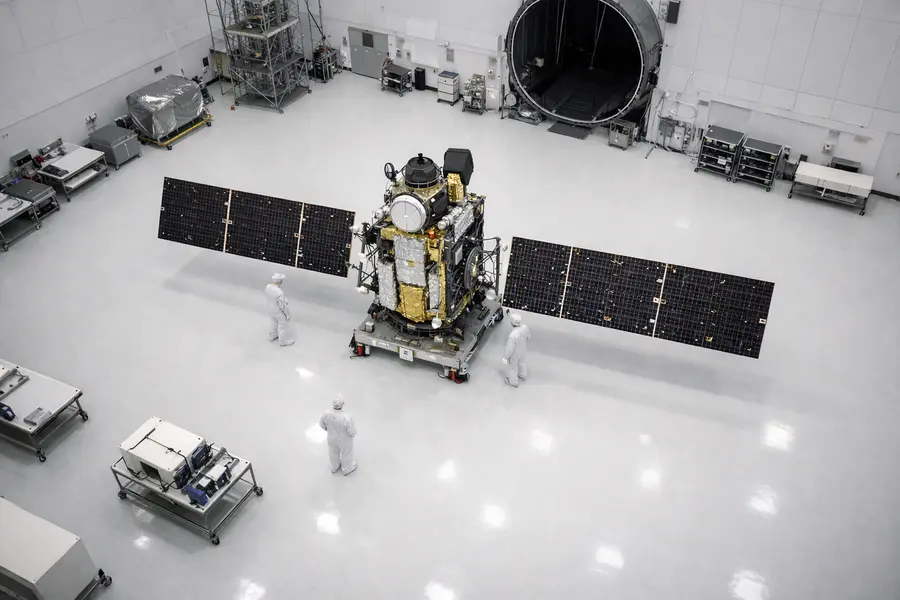
Apex sells satellite buses, the chassis that supplies power, propulsion, attitude control and communications to a satellite's payload. Customers bolt their cameras, sensors or defense hardware onto the bus rather than commissioning a custom spacecraft. Apex builds these as catalog products and sells them to government and commercial buyers.
The company's Factory One in California is designed to turn out about 200 bus platforms a year. The June round was earmarked for a 30,000-square-foot factory expansion, more in-house subsystem manufacturing, and building satellites ahead of customer orders. That last item matters: it moves inventory risk onto Apex's balance sheet in exchange for shorter delivery times.
Why Is the Valuation Climbing So Fast?
The valuation is climbing because Apex has tied itself to US missile defense spending, which is large and arrives through multi-year programs. The company is working with Northrop Grumman on space-based interceptors for the Golden Dome missile defense initiative. It has also planned a commercial interceptor demonstration, called Project Shadow, on its mid-size Nova bus.
The pace of fundraising is the other half of the explanation. A $500M round would bring Apex's recent raises to $1.1B across four rounds in about 18 months. Three of those, the Series C, the Series D in September 2025 and the June round, were $200M each. CEO Ian Cinnamon said at the time of the June round that Apex raises capital as investor interest appears, and the company stopped labeling rounds by series.
That framing raises a fair question about the last round. A valuation that rises 74% in four months suggests either that the June price was set well below what investors would pay, or that the Golden Dome pipeline has firmed up since. Apex has not disclosed revenue, backlog or the number of buses delivered, so outsiders cannot check which explanation holds.
How Does Washington Harbour Fit the Pattern?
Washington Harbour Partners has moved from participant to expected lead. It entered as a new investor in the 2025 Series C, joined the June round and now sits at the front of a round more than twice that size. A repeat investor leading a step-up is common in defense-adjacent hardware, where insiders have the best view of contract timing.
It also gives Apex a lead investor with a Washington focus at a moment when its growth depends on federal procurement decisions. Andreessen Horowitz is an existing investor, so its participation reads as a pro-rata follow-on rather than a new vote of confidence.
What Are the Risks?
Government demand for satellite buses is real but lumpy. Golden Dome is a program with a large headline budget, and its allocation among primes, subcontractors and bus suppliers has not been settled. Apex's role as a supplier to Northrop Grumman means its revenue depends on a prime contractor's decisions.
Competition is also growing. Other US manufacturers are building standardized buses for the same agencies, and large aerospace primes keep their own in-house options. Building satellites before orders arrive only pays off if buyers show up on schedule.
Outlook
If the round closes near the reported terms, Apex will have raised about $1.1B in 18 months and will hold one of the highest private valuations among US satellite manufacturers. The next data points to watch are the final close, any disclosure of revenue or backlog, and how Golden Dome awards are allocated. A delay in that program would test whether a $4B price rests on contracts or on expectations.