Pomegra
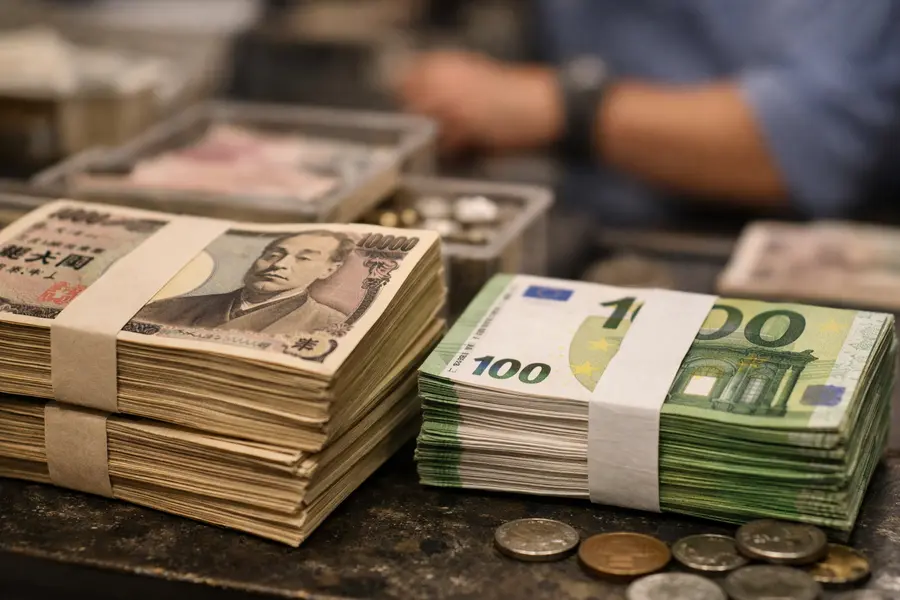
The yen is regaining safe-haven status as risk-off moves spread, with euro-yen eyeing 175 and dollar-yen 155 as France's fiscal and social strains weigh on the euro.
- Euro-yen touched 175.42 on Oct. 23, its lowest since October 2025, with a break below 175 in view.
- French 10-year yields topped 5% for the first time since 2002 as unrest complicates deficit cuts.
- The yen rose 0.9% against the dollar in one session during the tech rout, with dollar-yen near 155.
Lead
The Japanese yen is reclaiming its traditional role as a refuge in turbulent markets, and the move is reshaping the leading yen crosses. In financial markets today, euro-yen is positioned for a drop below 175 and dollar-yen for a slide beneath 155. The euro fell to 175.42 yen on Friday, Oct. 23, its weakest level in a year. The dollar also lost its usual haven appeal during a technology-led selloff. The common thread is a broad shift away from risk, in which the yen is the main beneficiary.
Why Is the Yen Rallying as Risk Aversion Spreads?
The yen is rallying because investors are unwinding risk positions and buying the currency of a large creditor nation. Doubts about the durability of the artificial intelligence investment boom triggered a sharp selloff in technology shares last week. The yen gained 0.9% against the dollar in a single session on Thursday and briefly reached its strongest level in more than a month on Friday.
The pattern restores a relationship that frayed over recent years. When global yields rose or equities fell, the yen often weakened rather than strengthened, because Japan's near-zero policy rates made it a funding currency for carry trades. Those trades borrow in yen to buy higher-yielding assets elsewhere. As risk appetite fades, they are closed, which forces buying of yen.
A shift in Japan's policy backdrop has also reduced the risk that the currency sags when global yields climb. The Bank of Japan has moved away from ultra-loose settings, and its policymakers have signaled readiness for further tightening as price pressures build. That has narrowed the gap between Japanese and foreign interest rates, which weakens the case for holding carry positions and strengthens the yen as a hedge against an equity shock.
Why Is the Dollar Not Gaining From the Selloff?
The dollar is not gaining because the source of the stress is the U.S. technology sector itself. In earlier risk-off episodes, the greenback attracted capital as a default refuge. This time, questions about AI spending have raised expectations of a more dovish Federal Reserve, which lowers the return on holding dollars. Dollar-yen has accordingly drifted toward 155.
The shift matters for the structure of currency markets. When both the dollar and the euro are under pressure at once, the yen and a small group of other defensive currencies absorb the flows. Dollar-yen near 155 reflects that rebalancing rather than a simple reaction to Japanese data.
How Are France's Fiscal Strains Weighing on the Euro?
France's fiscal and social strains are weighing on the euro by lifting the risk premium on French debt and raising doubts about the eurozone's second-largest economy. French 10-year government bond yields have moved above 5% for the first time since 2002. The premium investors demand to hold French rather than German debt reached its widest level since the euro area sovereign crisis of 2011.
Weekend unrest across France, driven partly by cuts to public services, showed how politically difficult it will be to bring budget deficits under control. The minority government of Prime Minister Sébastien Lecornu must still pass the 2027 budget, which is under negotiation. The presidential election in 2027 adds uncertainty, with far-right leader Marine Le Pen leading many polls.
Foreign ownership amplifies the risk. Overseas investors held roughly 48% of French debt at the start of 2022 and nearly 60% at the start of 2026. A larger share of mobile, cross-border money tends to raise volatility when sentiment sours, because foreign holders sell faster than domestic institutions.
The euro has fallen almost 5% against the dollar since the start of the year. Against the yen the decline has been sharper, since the yen is gaining on both fronts: risk aversion and a narrowing rate differential.
What Levels Matter for Euro-Yen and Dollar-Yen?
The levels that matter are 175 for euro-yen and 155 for dollar-yen. Euro-yen's drop to 175.42 on Friday brought the cross to the edge of the round-number support that has framed trading for the past year. A close below 175 would mark a break of the range and open the way to a deeper unwinding of euro-yen long positions, many of which were built during the period of yen weakness.
For dollar-yen, 155 is the area the pair has been testing as the yen's rebound extended. A move below it would confirm that the dollar is losing ground against defensive currencies as well as against the euro in some sessions. Because Japanese authorities have shown sensitivity to disorderly yen moves in both directions, the pace of any decline matters as much as the level.
What Do This Week's Central Bank Meetings Mean for the Yen?
This week's central bank meetings could either reinforce or interrupt the yen's rebound. The Federal Reserve, the Bank of Japan and the European Central Bank all hold policy meetings in coming days, and the pairings of their decisions shape both crosses.
A hawkish tone from the Bank of Japan, or a signal that further rate increases are close, would support the yen by narrowing the differential with other major currencies. A Federal Reserve that leans toward easing would reinforce dollar softness. The ECB policy rate is expected to remain unchanged, but any acknowledgment that French fiscal stress is feeding into financial conditions would weigh on the euro. Falling oil prices and an unchanged French credit rating have eased some immediate pressure on the single currency, but neither addresses the underlying budget problem.
Strategic Context
The current episode links three themes that have driven markets this year: the sustainability of the AI capital spending cycle, the normalization of Japanese monetary policy, and fiscal strain in the euro area. Each has an independent timeline. Together they produce a currency market in which the traditional anchors, the dollar and the euro, offer less shelter than usual.
The yen's recovery of haven status is not guaranteed to last. It depends on risk aversion persisting and on the Bank of Japan continuing its gradual tightening. If technology shares stabilize, carry trades could rebuild and the yen could lose ground again.
Outlook
The yen is positioned to extend its gains if risk-off conditions persist, with euro-yen threatening 175 and dollar-yen threatening 155. France's yields above 5%, its political calendar and the euro's roughly 5% decline against the dollar this year keep the single currency vulnerable. This week's decisions from the Federal Reserve, the Bank of Japan and the ECB are the next test of whether the haven bid holds.
Mentioned tickers: N/A