Pomegra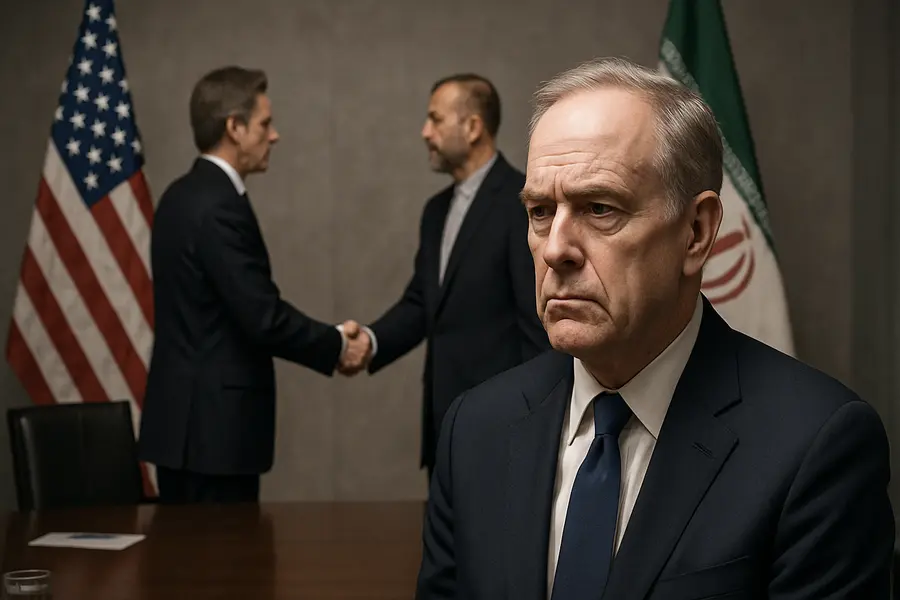
JD Vance's postponed Switzerland trip stalls the first post-framework session with Tehran, raising early doubts about Washington's 60-day window to finalize a landmark nuclear and sanctions accord.
- Vance canceled his Switzerland trip June 18, one day after Trump and Pezeshkian signed a 14-point memorandum of understanding at Versailles.
- Iran refused to send negotiators until Israel halted strikes on Hezbollah in Lebanon, exposing a critical linkage the framework did not resolve.
- A renewed Israel-Hezbollah ceasefire took effect Friday afternoon, but the diplomatic schedule remains uncertain.
Lead
Washington, June 19 — Vice President JD Vance abruptly canceled his planned trip to Switzerland on June 18, 2026, postponing the inaugural round of technical negotiations under the newly signed US-Iran peace deal just 24 hours after President Donald Trump and Iranian President Masoud Pezeshkian affixed their signatures to a 14-point framework at the Palace of Versailles. The breakdown in scheduling — attributed officially to logistical factors but driven by an Iranian demand that Israel halt operations against Hezbollah in southern Lebanon — instantly tested the durability of a deal that gave diplomats a 60-day window to settle some of the most complex disputes in modern diplomatic history.What Happened
The Islamabad Memorandum of Understanding, signed during the G7 dinner on June 17, committed both sides to a structured negotiating process covering Iran's nuclear program, sweeping sanctions relief, the reopening of the Strait of Hormuz, and a permanent regional ceasefire. Washington agreed to begin dismantling its naval blockade within 30 days and to issue immediate Treasury waivers permitting the export of Iranian crude oil, petroleum products, and associated banking services pending formal sanctions removal. Tehran, in return, committed to refrain from procuring or developing nuclear weapons under a framework subject to international oversight.
One day later, the first substantive session collapsed before it began. Iranian officials declined to travel to Geneva, insisting that ongoing Israeli strikes against Iranian-backed Hezbollah militants in Lebanon constituted a breach of the conditions under which Tehran had agreed to engage. The White House cited logistical complications, but three officials briefed on the matter confirmed to the Associated Press that the underlying dispute was substantive, not procedural.
Late Friday, Israel and Hezbollah announced a renewed ceasefire set to take effect at 4:00 p.m. local time, providing a potential opening for the talks to be rescheduled. A White House spokesperson said negotiations remain active and that the framework agreement signed by both presidents remains in force.
Senate Foreign Relations Dimension
The diplomatic delay landed against a charged backdrop on Capitol Hill. Senior Trump administration officials held a briefing call with leaders of the Senate Foreign Relations Committee and the House Foreign Affairs Committee following the Versailles signing, but the reception was mixed. Several Republican senators expressed wariness that the 14-point memorandum does not sufficiently constrain Tehran's nuclear activities, with critics noting that Iran's pledge to forgo nuclear weapons mirrors language it agreed to in the 2015 Joint Comprehensive Plan of Action — an accord Washington later abandoned.
Senate Republicans moved to block a war powers resolution introduced by Senator Raphael Warnock that sought to limit Trump's executive authority in connection with the Iran engagement. The procedural defeat, while anticipated, underscored the degree to which the diplomatic delay has intensified an intra-Republican debate over the administration's Iran strategy and the scope of presidential war powers.
Strategic Context
The US-Iran peace deal emerged from months of direct and back-channel negotiations, originally convened in Islamabad in April under Vance's leadership. The vice president had been positioned as the deal's primary architect within the administration, lending the Switzerland cancellation an added dimension: it is Vance's credibility as a dealmaker, not merely the process itself, that now faces scrutiny.
The 14-point framework's ambition is difficult to overstate. It envisions the elimination of all categories of sanctions against Iran — including United Nations Security Council measures, IAEA Board resolutions, and unilateral U.S. primary and secondary sanctions — on a mutually agreed schedule embedded in a final agreement. The mechanism for implementation is itself subject to the 60-day negotiation window, extendable by mutual consent, meaning that the Versailles signing was less a conclusion than a structured starting gun.
Geopolitical Dimension
The Lebanon variable illustrates the central vulnerability in the architecture of the accord. Iran regards Hezbollah as both a strategic asset and a political obligation, and any framework that does not address the group's position on Israel's northern border leaves Tehran exposed to domestic criticism. By tying its participation in Switzerland to a cessation of Israeli operations, Tehran signaled that the regional security provisions of the memorandum remain functionally unresolved — a fact the White House's confidence-building posture has not fully addressed.
The Strait of Hormuz reopening, meanwhile, carries immediate economic weight. More than 20 percent of globally traded oil transits the waterway, and Tehran's commitment to restore unrestricted commercial navigation for an initial 60-day period — contingent on Washington dismantling the naval blockade — has already registered in energy markets. Any prolonged delay in finalizing the broader agreement would leave that commitment in a provisional state, sustaining freight-rate volatility and uncertainty for buyers of Iranian crude.
Outlook
The renewed Israel-Hezbollah ceasefire removes the immediate trigger that caused Iran to withdraw from Switzerland, and both sides have indicated that rescheduling is possible. However, the episode exposed the degree to which the JD Vance Iran talks process is hostage to regional dynamics that the memorandum of understanding acknowledged but did not settle. With 59 days remaining in the initial negotiating window, the administration faces concurrent pressure to reschedule the Switzerland session, manage congressional skepticism on Senate foreign relations oversight, and hold together a regional ceasefire whose fragility was demonstrated within hours of the Versailles signing. The framework survives; the timeline does not have margin for further disruption.