Pomegra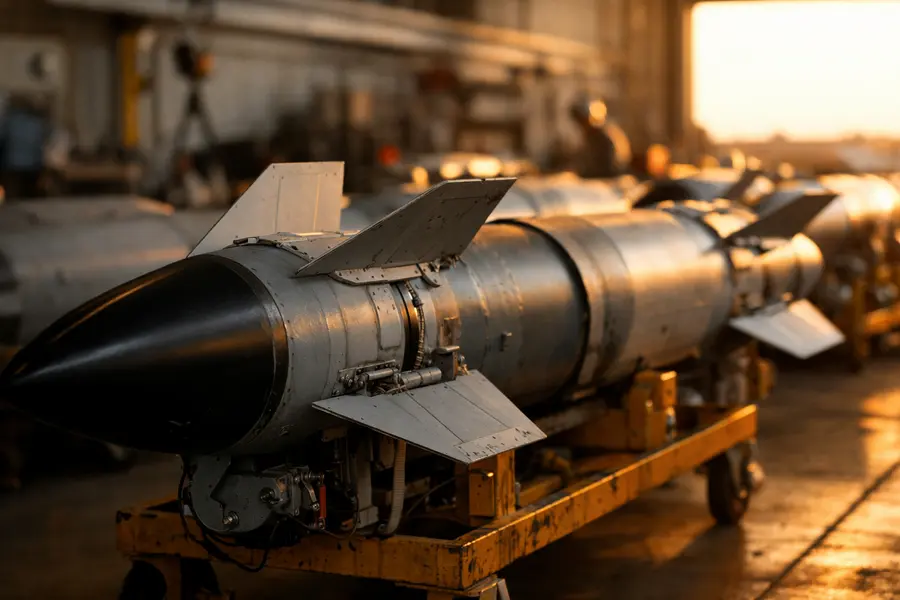
UBS raised its Lockheed Martin price target to $674, implying 26% upside, as Iran-driven munitions depletion locks in a decade's worth of accelerated missile production demand compressed into a five-year window through 2030.
- UBS upgraded LMT to Buy with a $674 price target, projecting 150% revenue growth in Missiles and Fire Control through 2030 driven by PAC-3, THAAD, and JASSM/LRASM acceleration.
- Operation Epic Fury depleted an estimated two-thirds of U.S. Patriot interceptor inventory and roughly 38% of THAAD stocks, triggering multi-year, multi-billion-dollar replenishment programs.
- Lockheed's order backlog reached a record $230 billion in Q2 2026, up $64 billion year-over-year, with a book-to-bill ratio of 3.2-to-1.
Lead
Lockheed Martin (LMT) received a decisive vote of analyst confidence on Wednesday as UBS upgraded the defense prime from Neutral to Buy and lifted its price target to $674 from $581, implying 26% upside from the stock's September 10 price of approximately $525. The bank's thesis centers on the Missiles and Fire Control (MFC) division, where UBS projects 150% revenue growth from 2025 through 2030, driven by manufacturing volume expansion exceeding 30% annually across four principal platforms: PAC-3, THAAD, JASSM, and LRASM. The catalyst, analysts argue, is not a gradual policy shift but a structural demand shock - the Iran conflict has pulled forward roughly a decade of munitions consumption into a compressed five-year replenishment cycle.Why Did UBS Turn Bullish on Lockheed Martin Now?
The upgrade reflects a recognition that the U.S.-Iran conflict - designated Operation Epic Fury - fundamentally reset the baseline for long-cycle defense procurement. Direct U.S. military spending on the campaign reached $35 billion, while broader economic damage extended to an estimated $132 billion. Critically for Lockheed, the war expended munitions at a pace that existing production infrastructure was never designed to match. Pentagon data cited in the UBS note indicates roughly two-thirds of pre-war Patriot interceptor inventory was consumed, alongside approximately 38% of THAAD stocks, creating an immediate replenishment imperative that now carries multi-year contract visibility.
The Defense Department moved swiftly, executing seven-year framework agreements with Lockheed and General Dynamics (GD) to surge PAC-3 and THAAD production. In June, the Missile Defense Agency awarded Lockheed a contract valued at more than $35 billion to quadruple THAAD interceptor output. Current surge-rate production stands at 96 interceptors annually; under the new framework, capacity is targeted at 400 per year. PAC-3 MSE capacity is simultaneously being quadrupled, with Lockheed executives describing the acceleration as the fastest munitions ramp in the company's history.
UBS projects Lockheed will generate revenues of $81.05 billion in 2026, $88.48 billion in 2027, and $96.13 billion in 2028, representing a 9% compound annual growth rate - materially above consensus estimates.
What Is Driving the 150% MFC Revenue Projection?
The 150% figure is not a single contract extrapolation but an aggregate across four converging production programs. JASSM and LRASM standoff strike missiles, both manufactured exclusively by Lockheed, saw significant drawdowns during operations against Iranian air defense and naval assets. CSIS analysis indicates JASSM inventories could be replenished in approximately one year at accelerated production rates, but LRASM, with its more complex seeker and propulsion architecture, faces a longer ramp timeline that extends the revenue contribution through the decade.
PAC-3 MSE adds a foreign military sales dimension that amplifies the domestic procurement cycle. In the first quarter of 2026 alone, the U.S. approved more than $21 billion in foreign military sales to Saudi Arabia, Kuwait, and the UAE - allies that expanded their own air defense posture as Iranian ballistic missile threats escalated. Allied demand for the same platforms Lockheed is scaling domestically creates a production-absorption dynamic that supports sustained margin expansion alongside revenue growth.
UBS estimates that manufacturing volume across the four platforms will grow at better than 30% annually through the forecast period, providing the operating leverage that underpins its margin improvement assumptions.
Lockheed's Financial Position Entering the Cycle
Lockheed's most recent quarterly results demonstrated the early-stage momentum the UBS note seeks to quantify. Q2 2026 earnings per share of $7.94 beat consensus by 9.82%, while revenue of $20.1 billion exceeded estimates by 3.77%, driving shares up more than 10% in the session following the release. The company's order backlog reached a record $230 billion, a year-over-year increase of $64 billion, with the 3.2-to-1 book-to-bill ratio signaling that contract inflows are running at more than three times the rate of revenue recognition - an unusually strong leading indicator for multi-year revenue growth.
The broader defense budget environment reinforces the backlog trajectory. The administration requested a $1.5 trillion defense budget for fiscal year 2027, a proposed increase of more than 40% in a single fiscal year - a pace of expansion without precedent since World War II. Within that request, munitions received particular emphasis: the FY27 proposal allocated $76.3 billion for munitions procurement, a 185% increase over the $26.8 billion appropriated in FY26. A supplemental appropriation of $21 billion for munitions replenishment was also advanced, with the single largest individual line item directed at rebuilding PAC-3 and THAAD stockpiles.
Geopolitical Dimension
The Iran conflict created what analysts describe as a demand inversion: rather than spreading procurement across a multi-decade modernization plan, the Pentagon is now required to rebuild active-use inventories on an emergency basis while simultaneously sustaining ongoing operational requirements. The Washington Post and CSIS analyses conclude that Tomahawk cruise missiles will require four to five years to replenish at current production rates, with THAAD and Patriot interceptors projected at approximately three years under accelerated timelines. These windows map almost precisely to the 2025-2030 MFC revenue window that forms the backbone of UBS's Buy thesis.
For Lockheed, the geopolitical context is structurally different from prior defense upcycles that rested primarily on budget politics. The inventory gaps are measurable, publicly documented, and operationally significant - creating a procurement imperative that is resistant to the budgetary reversals that historically interrupted defense upcycles in peacetime.
Outlook
UBS's upgrade formalizes what Lockheed's own backlog data has been telegraphing for two quarters: the MFC division is entering an extended production ramp with contracted demand that stretches well into the next decade. The $674 price target implies valuation expansion on top of the projected earnings growth, reflecting the bank's view that the market has yet to price the full magnitude of the MFC revenue inflection. With THAAD production capacity set to increase more than fourfold, PAC-3 MSE on a parallel trajectory, and JASSM/LRASM ramp adding standoff strike depth, Lockheed's position as the primary U.S. supplier across all four high-demand categories gives the company a degree of revenue concentration in the most urgent procurement programs of the current defense cycle.
Mentioned tickers: LMT, GD