Pomegra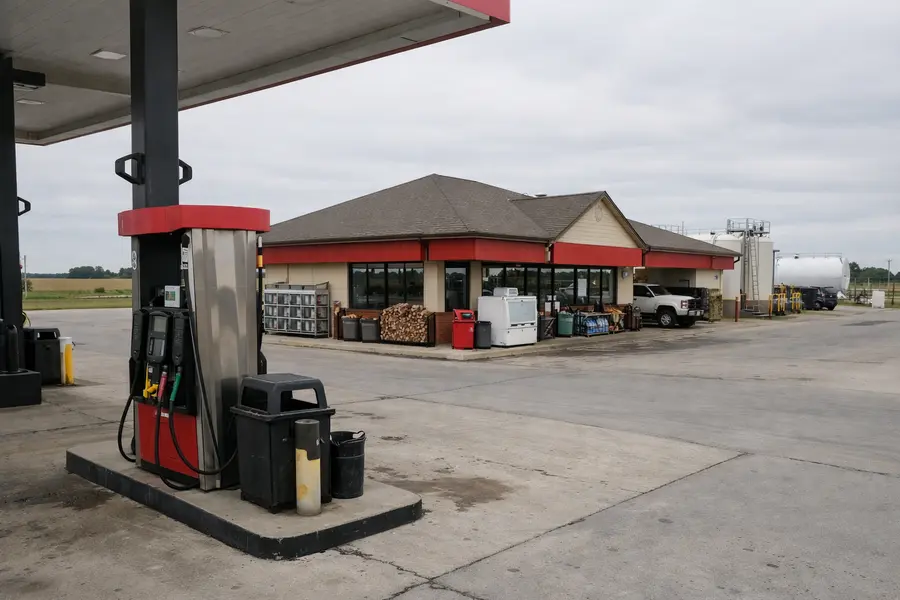
Casey's General Stores shed 14% after holding fiscal 2027 guidance flat despite a Q1 EPS beat of $3.37 versus the $2.72 estimate and revenue of $3.68B versus $3.57B expected.
- CASY reported Q1 FY2027 EPS of $3.37, beating the $2.72 consensus estimate by roughly 24%, while revenue of $3.68B cleared the $3.57B forecast.
- Management held fiscal 2027 guidance unchanged, offering no upward revision despite the outperformance on both profit and revenue.
- Same-store sales growth decelerated to 3.2% year-over-year from 4.3% in the prior-year period, triggering the worst single-name reaction in convenience retail during the session.
Lead
Casey's General Stores (CASY) shares plunged 14% on Wednesday, their largest single-session decline in recent memory, after the Ankeny, Iowa-based convenience retailer posted a clean first-quarter beat on earnings and revenue but declined to raise its full-year outlook - an omission that overrode the headline outperformance in investor eyes. The selloff ranked as the worst single-name reaction across convenience retail in the session, underscoring the precision with which the market penalized a combination of decelerating comparable-store sales and withheld guidance upgrades.Why Did CASY Stock Fall Despite the Earnings Beat?
The 14% drop reflected disappointment not in what Casey's delivered, but in what management chose not to say. Despite earnings per share of $3.37 clearing the $2.72 consensus estimate by approximately 24%, and despite revenue of $3.68 billion coming in ahead of the $3.57 billion forecast, executives kept fiscal year 2027 guidance flat with zero upward revision. In current equity markets, a "beat and hold" outcome frequently draws the same reaction as a guidance cut when investors have priced in forecast upgrades alongside the earnings outperformance - and that is precisely the dynamic that drove CASY's intraday collapse.
The decision to maintain existing targets without adjustment signaled to analysts that the first-quarter strength may have been driven by transient factors - fuel margin tailwinds, favorable commodity timing, or cost discipline - rather than durable top-line momentum. That interpretation left no credible basis for multiple expansion heading into the back half of the fiscal year.
What Does Same-Store Sales Deceleration Mean for Casey's?
Comparable-store sales growth is the single most watched metric in convenience and fuel retail, and the deceleration from 4.3% to 3.2% year-over-year became the session's defining data point once the flat guidance had already compressed sentiment. The slowdown raises a structural question about whether Casey's core customer base - predominantly rural, Midwest-concentrated, and fuel-dependent - is exhibiting signs of spending fatigue consistent with broader pressures on lower-to-middle income consumers.
Casey's has invested heavily in foodservice differentiation, particularly its made-from-scratch pizza program, which has historically helped insulate margins from fuel price volatility and supported in-store traffic beyond the pump. Yet the comparable-store deceleration suggests that differentiation has not fully offset the macro pressures bearing on the convenience retail category.
Flat Guidance: Caution or Clarity?
Management's decision to hold fiscal 2027 targets unchanged functions as a soft ceiling on near-term earnings expectations. Without a raised floor to anchor new estimates, sell-side models have limited basis for upward revision, and the stock's prior valuation - which had priced in both continued outperformance and a guidance lift - required rapid repricing. The 14% move reflects the magnitude of that gap.
Sector Context
The CASY selloff arrives against a backdrop of uneven signals across consumer-facing retail. Fuel retail faces structural headwinds from vehicle electrification trends over the medium term, while the merchandise and prepared food segments must absorb elevated labor and input costs. In the session, convenience retail broadly tracked lower in sympathy, though no peer matched CASY's magnitude of decline. The reaction also fed into cautious sentiment across consumer discretionary names in the broader equity markets today, reinforcing the market's prevailing sensitivity to any guidance conservatism in a sector where volume growth assumptions are under active scrutiny.
Casey's has historically traded at a premium to peers on the strength of its foodservice execution and geographic density advantages in underserved rural markets. Wednesday's repricing compresses that premium materially.