Pomegra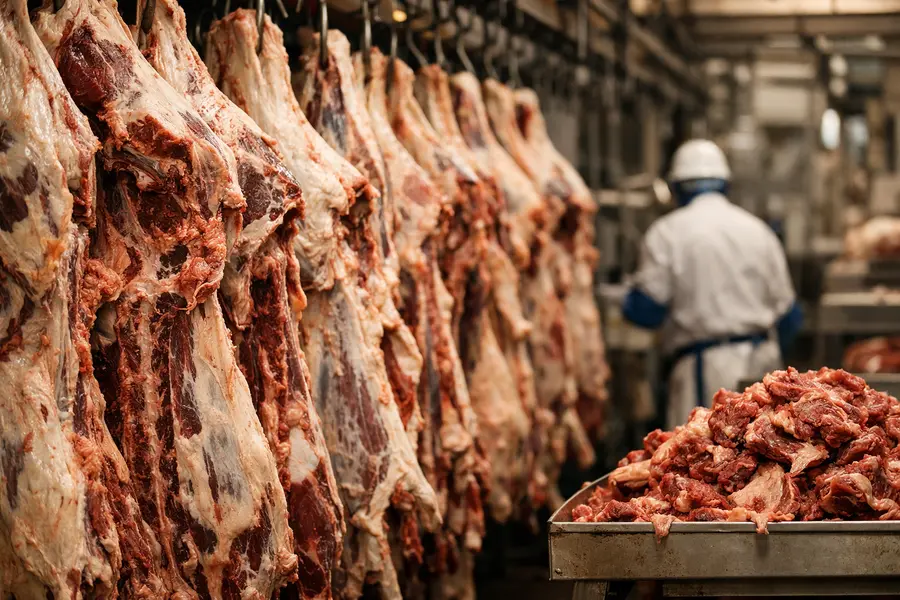
Tyson Foods slashed its fiscal 2026 beef segment loss outlook to $625M-$775M, its worst beef guidance in decades, as the U.S. cattle herd hits a 75-year low and beef prices surge past 70% since 2020.
- TSN shares fell more than 7% after Tyson Foods widened its fiscal 2026 beef segment operating loss forecast to $625M-$775M, from a prior range of $500M-$650M.
- The U.S. cattle herd has contracted to its smallest size in 75 years, driven by prolonged drought, border closures on Mexican cattle imports, and structural disincentives to herd rebuilding.
- Meaningful supply relief is not expected until 2028-2029, keeping retail beef prices elevated for the foreseeable future and adding sustained pressure to household food budgets.
Lead
Tyson Foods (TSN) shares dropped more than 7% on September 3, 2026, after the company issued a second profit warning this year, cutting its fiscal 2026 beef segment operating loss estimate to a range of $625 million to $775 million -- up from the $500 million to $650 million it had projected less than a month earlier. The warning marks the worst beef guidance Tyson has delivered in decades, as America's largest meat processor confronts a historic contraction in the domestic cattle supply that its management now describes as a multi-year structural problem with no near-term resolution.
Why Is Tyson's Beef Segment Bleeding?
The core problem is that Tyson is paying elevated prices for live cattle at a moment when it cannot fully pass those costs downstream. The company cited significant margin compression from volatile cattle prices and the impact of lower cattle prices on the carrying value of live cattle inventories already purchased. Beef processors buy cattle months in advance; when spot prices shift sharply in either direction, the inventory mark-to-market effect hits reported earnings before slaughter volumes adjust. With both the input cost floor and price volatility elevated simultaneously, Tyson Foods' beef processing economics have deteriorated sharply through the second half of fiscal 2026.
As a result, the company lowered its full-year adjusted operating income guidance to $1.85 billion to $2.05 billion -- down from $2.1 billion to $2.3 billion -- and trimmed revenue growth expectations to 1.5%-2.0% from the 2.5%-3.5% range projected in August. The company also announced in August that it would close or sell three beef processing plants, restructuring its network around three strategically located facilities in the central United States. That restructuring is expected to begin reducing operating cost pressure as the company enters fiscal 2027.
What Is Causing the U.S. Cattle Shortage?
The U.S. cattle herd has contracted to approximately 86.2 million head, its lowest level in 75 years. Years of severe drought across the southern Plains and Southwest drove liquidations that have taken more than eight million animals out of the national herd compared with 2019 levels. A screwworm infestation along the U.S.-Mexico border resulted in border closures that cut off more than 1.2 million head of annual Mexican feeder cattle imports, compounding the domestic shortfall.
The structural dynamic is made worse by the cattle production cycle itself. Rebuilding a herd requires ranchers to retain heifers for breeding rather than sending them to slaughter -- a decision that takes time and favorable economics to incentivize. High input costs, aging producer demographics, competition for rangeland, and the recent softening in live cattle futures have all delayed the heifer retention cycle. Industry and government forecasters do not expect meaningful herd growth to begin before 2027, with supply normalization projected no earlier than 2028-2029.
How Does the Cattle Crisis Affect Consumer Beef Prices?
Retail consumers are absorbing the herd shortfall directly. Ground beef reached $6.69 per pound in late 2025, up 19.3% year-over-year and approximately 70% above 2020 levels. USDA projections call for a further 6.9% increase in wholesale beef prices through 2026. Beef and veal prices in July 2026 were 9.4% higher than a year prior, with beef roasts up 13.5% and steaks up 9.6%. Beef price inflation is running at nearly six times the rate of overall food-at-home inflation, which itself remains above its pre-pandemic average. The sustained increase in beef prices is becoming a visible component of broader food inflation that policymakers and households alike are monitoring closely.
Market Reaction and Restructuring
TSN shares opened down more than 7% following the guidance update, extending a slide that reflects investor skepticism about the pace of margin recovery. The selloff reflects concerns that Tyson's guidance revisions may not yet fully capture further input cost volatility through the fourth quarter of fiscal 2026. The plant consolidation strategy -- concentrating production at three centrally located facilities -- is designed to reduce fixed-cost exposure in a structurally smaller-volume market. However, the transition period itself is expected to produce additional near-term disruption costs.
Outlook
Tyson Foods faces a prolonged period of compressed beef margins with no structural supply relief before late decade. The U.S. cattle herd's recovery timeline, the pace of heifer retention, drought conditions across key grazing regions, and the status of the U.S.-Mexico border for feeder cattle imports will collectively determine how quickly the beef segment's economics normalize. Until then, TSN and the broader beef processing industry are operating in a structurally constrained environment that simultaneously supports elevated consumer beef prices and constrains processor margins -- a dynamic with significant implications for household food budgets and for food-sector equities.
Mentioned tickers: TSN