Pomegra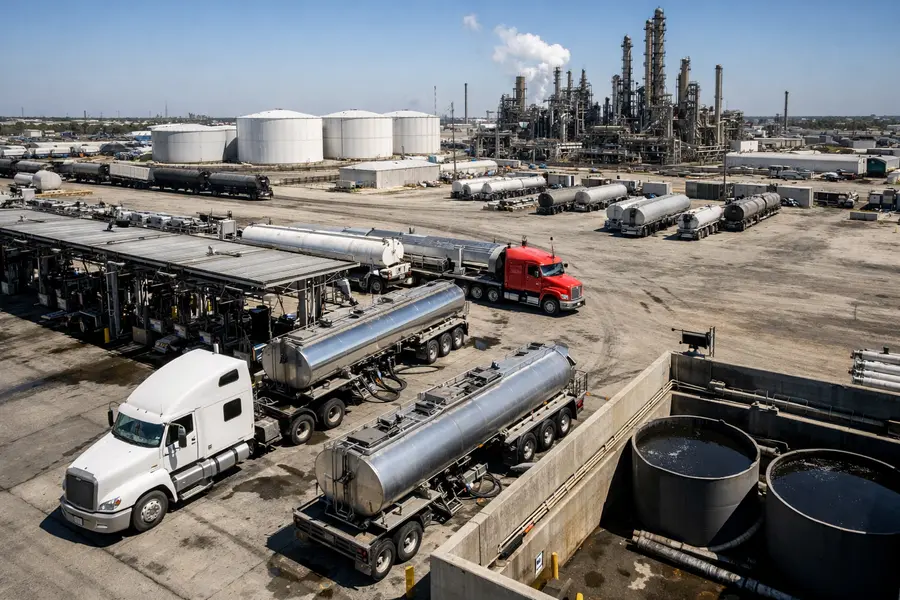
U.S. diesel hit an all-time record $6.85/gallon Friday as Ukrainian refinery strikes and Hormuz disruptions spark the worst global diesel crunch in decades.
- U.S. diesel hit an all-time record of $6.85/gallon; California truckers are absorbing $7.70/gallon, both national and state records.
- Ukrainian drone strikes have gutted Russian refining output while Iran-linked Hormuz pressure has throttled Gulf crude shipments.
- The diesel surge compounds a strong jobs report, placing the Fed's September interest rates decision under fresh inflation pressure.
Lead
U.S. retail diesel averaged $6.85 per gallon Friday, eclipsing every previous record and confirming what logistics operators and fleet managers have watched build for weeks: the worst global diesel supply crunch in decades. The driver is not domestic refining policy or seasonal demand. It is the simultaneous collapse of two major supply corridors - one in Eastern Europe, one in the Persian Gulf - whose combined effect has drained middle-distillate inventories at a pace that outpaces any prior supply disruption since the post-pandemic energy shock.
What Caused the Diesel Price Record?
Ukrainian precision drone strikes have systematically dismantled Russian oil-refining infrastructure over recent months, knocking out a substantial portion of Moscow's active throughput capacity. Russia had been one of the world's largest exporters of diesel and other middle distillates; with its processing capacity compromised, the volume of product flowing to European and Asian buyers has dropped sharply. European buyers, already navigating post-war sanctions adjustments, have been forced to compete more aggressively for alternative supplies, lifting global benchmark diesel prices.
The second shock originates at the Strait of Hormuz. Iran-aligned maritime actors have escalated pressure on shipping lanes that carry roughly 20 percent of global petroleum trade, prompting diversions, insurance surcharges, and reduced shipping frequency. Asian refiners dependent on Gulf crude have absorbed higher input costs and lower throughput, compressing middle-distillate output at precisely the moment European demand for replacement barrels surged.
Why Does Diesel Matter More Than Gasoline for Inflation?
Diesel is the foundational fuel for the U.S. freight economy. Long-haul trucking, agricultural machinery, construction equipment, and ocean container shipping all run on distillate fuel. When diesel prices rise, those costs embed at every node of the supply chain - harvest, processing, warehousing, and final delivery - before they appear in retail price indexes.
At $7.70 per gallon in California, the highest pump price in the country, a single transcontinental freight run is generating fuel bills hundreds of dollars higher than the same route eighteen months ago. Those costs pass through to shippers, which then pass through to retailers including Walmart (WMT) and Amazon (AMZN), which together operate among the largest private trucking and last-mile logistics networks in the United States. Earnings guidance from freight-intensive companies is already being revised lower to account for the fuel-cost inflection.
Energy producers and refiners are the clearest direct beneficiaries. ExxonMobil (XOM) and Chevron (CVX) have each seen refining margins expand materially as crack spreads - the differential between crude input costs and refined product prices - hit multi-year highs. The Energy Select Sector SPDR Fund (XLE) has advanced sharply in September trading, reflecting both elevated crude prices and widening downstream margins.How Does This Affect the Fed's September Interest Rates Decision?
The diesel shock is arriving at the worst possible moment for Federal Reserve policymakers. The August nonfarm payrolls report, released Friday, came in materially above consensus forecasts, reigniting rate-hike expectations that markets had largely priced out following a run of softer labor data through mid-summer.
The Fed's preferred inflation gauge, core PCE, strips out energy and food. But diesel-driven transportation cost increases are not contained within energy indexes. They propagate into goods prices, producer prices, and services with fuel-sensitive logistics components - typically with a lag of two to four months. The September diesel reading will therefore be visible in the inflation data the Fed receives in November and December, exactly when markets are pricing the trajectory of interest rates into the first quarter of 2027.
The policy dilemma is structural: this is a supply-shock-driven price surge that higher interest rates cannot cure. The Fed cannot drill new wells or reopen Russian refineries. A rate increase would add demand-destruction pressure on an economy already showing freight slowdowns but would not address the underlying supply constraint. A pause risks allowing energy-driven inflation to broaden into core categories. Neither path is clean.
Geopolitical Dimension
Ukraine's refinery campaign reflects a deliberate strategic logic: by targeting processing infrastructure rather than extraction, Kyiv reduces Russian export revenues from refined products - which carry higher margins than crude - while simultaneously triggering a global supply shortfall that raises energy costs on third-country buyers of Russian diesel, particularly in South and Southeast Asia. The strikes have been calculated to remain below escalatory thresholds while producing maximum economic effect.
The Hormuz situation is structurally distinct. Iranian proxy pressure on maritime lanes has historically tracked the state of nuclear diplomacy with the United States and Europe; the current episode is unfolding against a backdrop of stalled negotiations with no near-term resolution on the horizon. Insurers are treating the risk as structurally elevated through year-end, not merely episodic.
Outlook
The structural factors sustaining record diesel prices are unlikely to reverse before year-end. Russian refinery repairs require months and specialized equipment subject to sanctions restrictions. Hormuz conditions are tied to geopolitical negotiations that have no scheduled resolution. Demand destruction - the natural corrective mechanism through which high prices suppress consumption - may limit further price appreciation, but diesel demand in U.S. industrial and agricultural sectors has historically proven resistant to price elasticity at current levels.
For the Fed, the September meeting will proceed against an inflation backdrop that is partially insulated from monetary policy tools. For corporate America, $6.85 diesel is now a planning assumption, not a tail risk - one that will reshape freight contracts, capital allocation in logistics, and earnings guidance across sectors from retail to manufacturing well into 2027.
Mentioned tickers: WMT, AMZN, XOM, CVX, XLE