Pomegra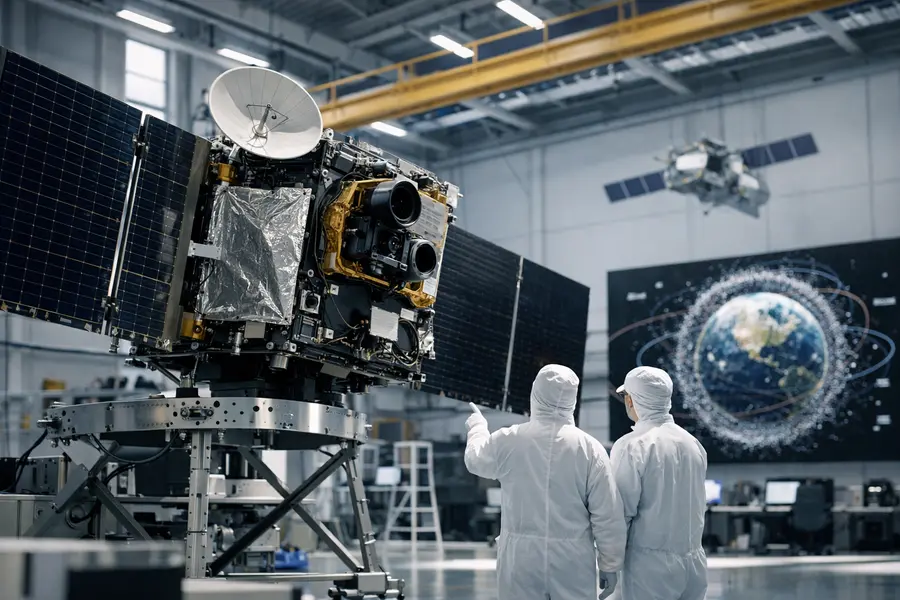
Munich-based Project-S has secured multi-million-euro seed funding to build AI-powered space debris detection and traffic management tools, targeting the growing congestion in low Earth orbit.
- Project-S emerged from stealth on September 2, 2026, backed by lead investor Uni.Fund II alongside non-dilutive German and ESA public grants.
- The company is targeting sub-centimeter debris detection in LEO, a size class that current ground-based radar largely cannot track.
- A first in-orbit radar demonstration is scheduled for an October 2026 SpaceX Transporter rideshare launch.
Lead
Munich startup Project-S exited stealth on September 2, 2026, announcing a multi-million-euro seed round to deploy what it describes as end-to-end orbital intelligence infrastructure - radar hardware, AI trajectory modeling, and collision-avoidance decision software rolled into one commercial offering. The round was led by Uni.Fund II, a Greek-backed venture capital fund with a track record in deep-tech bets across Europe. The exact figure was not disclosed. Non-dilutive grant support came from German federal innovation programs, Bavarian state tech initiatives, and ESA incubator partnerships, including ESA BIC Bavaria, where Project-S has been based during its stealth phase.
What Does Project-S Actually Build?
The core product is a constellation of space-based active radar payloads paired with an AI analytics layer that monitors low Earth orbit (LEO) in real time. The target: debris fragments below one centimeter in diameter, which today evade ground radar entirely but are numerous enough to disable operational satellites. Project-S says its sensors, when networked, can detect this sub-centimeter size class and feed collision-risk assessments directly to satellite fleet managers.
The software layer models object trajectories, scores collision probabilities, and produces actionable avoidance recommendations. The pitch to satellite operators is reducing the manual load on flight dynamics teams while shrinking response windows when conjunction events arise. With commercial LEO broadband constellations now numbering in the thousands of satellites and growing, that bottleneck is real and worsening.
Why Does This Problem Matter Now?
Space situational awareness (SSA) has been a government function for decades, dominated by the U.S. Space Surveillance Network and supplementary European tracking programs. But the pace of commercial launches has outrun what state-funded infrastructure was designed to handle. The European Space Agency estimates around one million debris fragments larger than one centimeter orbit Earth today, with only a fraction actively tracked.
Commercial operators have begun building their own conjunction assessment capabilities, but the underlying sensor data is sparse and latency is high. Startups entering this space argue that a private, dedicated sensor network - optimized for commercial fleet workflows rather than national security priorities - can offer better resolution and faster update rates at lower cost than piggybacking on military feeds.
Project-S is not the first to make this argument. LeoLabs in the United States has built a ground-radar network along similar lines; Privateer Space and Finland's Aavuus are approaching the problem from different angles. What distinguishes Project-S is the bet on space-based active radar rather than ground-based passive observation, which the company claims allows finer debris resolution in orbital regimes where ground geometry limits coverage windows.
What Comes Next for Project-S?
The immediate test of the thesis is hardware. Project-S has confirmed it will fly its first in-orbit radar demonstration aboard a SpaceX Transporter rideshare mission targeting October 2026. That flight will produce the first real-world performance data for the company's sensor design, and its outcome will likely shape the trajectory of any follow-on funding conversations.
On the commercial side, the company plans to launch pilot programs with satellite fleet operators in parallel with the hardware demonstration. Those pilots will test the software stack's collision-avoidance decision tools on live operational data. Early traction with fleet managers would give Project-S a customer validation story ahead of what will presumably be a Series A process in 2027.
The team is also expanding in Munich, adding aerospace engineers to advance the radar payloads toward formal orbital flight qualification. At seed stage that means the company is still pre-revenue, pre-constellation, and dependent on a single demonstration flight going as planned.
Strategic Context
Germany has positioned itself as a hub for commercial space activity, with Isar Aerospace, Mynaric, and Reflex Aerospace among the Munich-area names that have attracted significant capital in recent years. ESA incubator programs have accelerated that cluster by providing early non-dilutive support that de-risks the pre-seed phase for deep-tech founders. Project-S fits the same pattern: government-incubated, then venture-backed, with hardware ambitions that require a long runway before revenue.
The broader space traffic management market is attracting regulatory attention from the European Union and national space agencies concerned about LEO congestion. A commercial provider with a credible sensing network could eventually become infrastructure for that regulatory framework - a scenario that would substantially expand the addressable market beyond direct sales to satellite operators. That prospect is probably part of the bull case Uni.Fund II underwrote.
Outlook
Project-S arrives at a moment when the LEO congestion problem is visible and the incumbent tracking infrastructure is acknowledged to be inadequate. Its October rideshare launch is the first genuine test of whether the hardware matches the pitch. If the in-orbit demonstration delivers usable debris detection data, the company will have a tangible proof point heading into commercial pilot negotiations and eventual Series A fundraising. If not, the seed runway and the non-dilutive grant cushion will buy time to iterate - but the clock on the LEO congestion window is not pausing while hardware teams debug.