Pomegra
TSMC Q2 2026 revenue reached $39.6 billion, a 36% year-over-year surge as insatiable AI chip demand drives semiconductor industry growth to new records.
- TSMC Q2 2026 revenue hit NT$1.27 trillion (~$39.6 billion), up 36% year-over-year, edging past the top of company guidance.
- June 2026 monthly revenue surged 67.9% year-over-year to NT$442.68 billion, an all-time record breaking a four-year seasonal pattern.
- First-half 2026 revenue totaled NT$2,404.48 billion, up 35.6% versus H1 2025, driven entirely by AI infrastructure spending.
Lead
Taiwan Semiconductor Manufacturing Company (TSMC, NYSE: TSM), the world's largest contract chipmaker, reported record second-quarter 2026 revenue of NT$1.27 trillion (approximately $39.6 billion) on Monday, a 36% increase from the same period a year earlier. The result edged past the top of the company's own guidance range of $39.0 billion to $40.2 billion, confirming that demand from artificial-intelligence accelerator makers continues to outpace available wafer capacity.What Happened
TSMC's June 2026 monthly revenue hit NT$442.68 billion — the highest single-month figure in the company's history — rising 67.9% from June 2025 and 6.2% sequentially from May. The sequential gain is significant: TSMC had posted a month-over-month revenue decline in every June for the prior four years, a pattern driven by seasonal softness in consumer electronics. In 2026, AI-driven orders from hyperscale data centers overrode that seasonal rhythm entirely.
For the full first half of 2026, cumulative revenue reached NT$2,404.48 billion, up 35.6% compared to the same period in 2025, placing the company firmly on a trajectory to surpass its full-year 2025 results by a wide margin.
Market Reaction
TSM shares traded near $434 on the New York Stock Exchange on Monday, having pulled back from a 52-week high of $479 reached in late June. The stock rose approximately 1% in Taipei trading following the revenue release. Formal second-quarter earnings — including gross margins, net income, and updated full-year guidance — are scheduled for July 16. Gross margins for the quarter are expected in the 65.5%–67.5% range.AI and Technology Angle
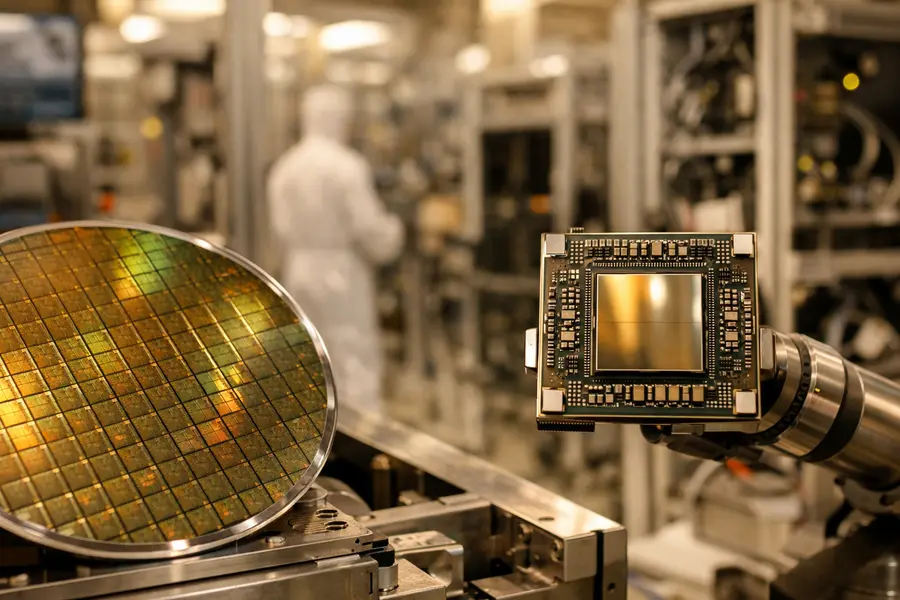
The revenue surge reflects a single, overwhelming force: artificial intelligence. Demand for AI accelerators — the chips powering large-language models, inference engines, and data-center computing clusters — has created what analysts describe as a structural overcapacity problem in reverse. TSMC's most advanced fabrication node, N3 (3-nanometer class), remains sold out, with every available wafer slot committed to AI graphics processors and custom silicon from hyperscalers.
The company's AI-related revenue is on pace to exceed $40 billion for the full year 2026, representing roughly 25% of total revenue — up from a mid-single-digit percentage just three years ago. Nvidia (NVDA) and AMD are among the primary customers consuming advanced-node capacity, alongside hyperscalers developing proprietary AI chips.
Strategic Context
TSMC's pricing power has expanded alongside this AI chip demand boom. The semiconductor industry is entering what observers describe as an AI chip pricing supercycle, in which the criticality of leading-edge silicon gives foundry operators leverage to raise average selling prices across successive technology nodes. For TSMC, this dynamic compounds the revenue impact of already-robust volume growth.
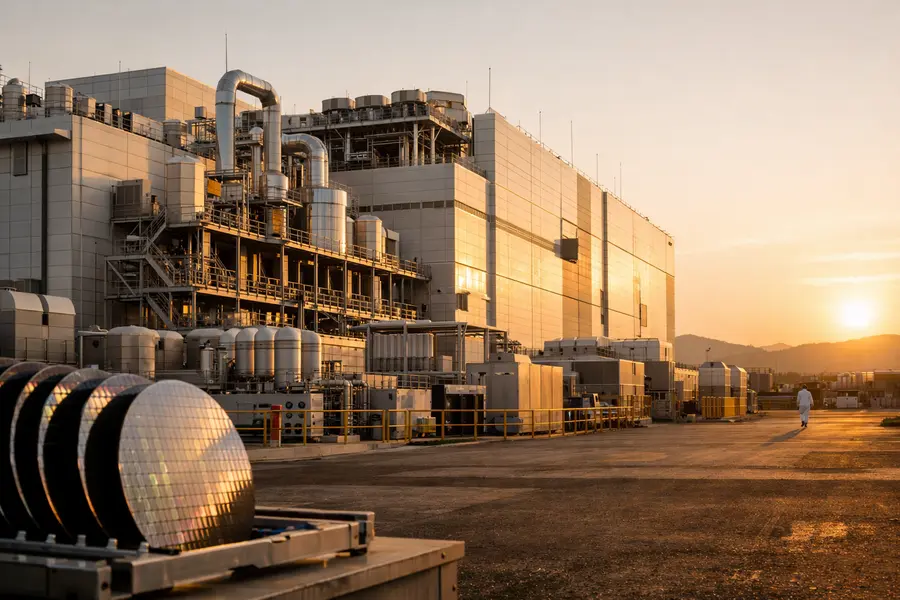
The company continues to expand capacity globally, with facilities under construction in Arizona and Japan alongside its core Taiwan operations. These international plants target geographic diversification of supply chains and proximity to key customers increasingly sensitive to geopolitical risk around the Taiwan Strait.
What Comes Next
Q2 formal earnings on July 16 will focus on three elements: gross margin delivery within the guided range, updated third-quarter guidance, and management commentary on the N2 (2-nanometer) demand ramp. N2 is entering volume production in the second half of 2026 and is expected to capture additional AI-workload share as customers advance to the next process generation.
Full-year semiconductor industry growth forecasters continue revising estimates upward, reflecting the durability of AI infrastructure spending from hyperscalers that show no sign of reducing capital expenditure budgets.
Outlook
TSMC's Q2 results confirm that the TSMC sales jump reflects structural, not cyclical, conditions — with both volume and pricing supporting continued expansion. The July 16 earnings call will determine whether management raises its full-year outlook, a step that would signal confidence the current demand environment extends well into 2027. TSM stock, trading on expectations of durable revenue growth, enters earnings week with investors watching N2 ramp guidance as the next catalyst.
Mentioned tickers: TSM, NVDA, AMD