Pomegra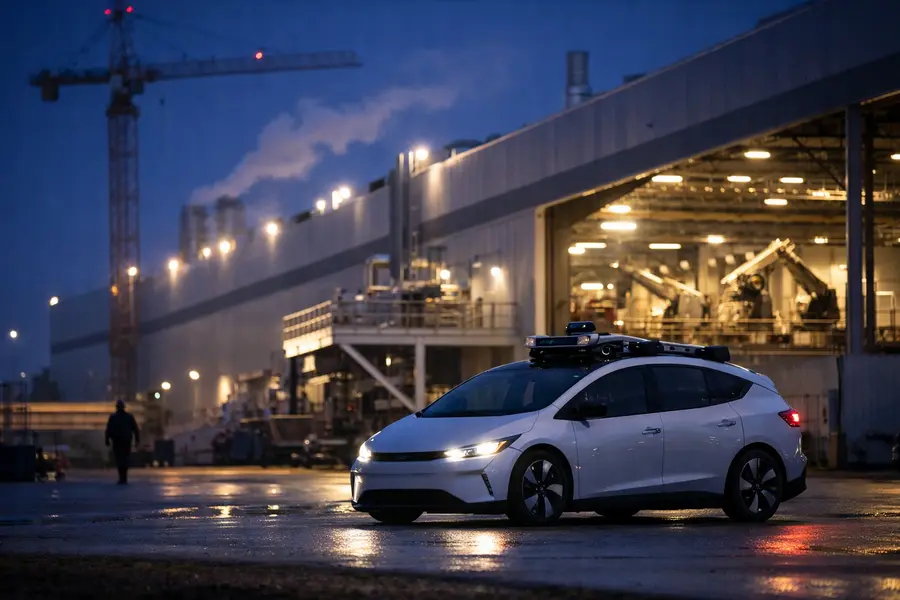
Tesla shares suffered their steepest single-session loss since July after the Cybercab robotaxi debut in Austin drew routing failures, user complaints, and a federal safety probe.
- TSLA fell approximately 6% in heavy volume, marking its worst trading session since July 2026.
- Early Cybercab riders in Austin reported repeated routing errors and vehicles failing to reach intended destinations.
- The National Highway Traffic Safety Administration opened a formal audit questioning whether Tesla properly self-certified the Cybercab as road-legal under federal safety standards.
Lead
Tesla's (TSLA) highly anticipated Cybercab commercial launch in Austin collapsed into regulatory and operational disarray on Saturday, sending shares down roughly 6% when markets reopened -- the largest single-day decline since July -- as federal safety regulators announced a formal audit of the vehicle's road-legal certification and early passengers reported widespread navigation failures across the Texas capital.
What Went Wrong at the Austin Cybercab Launch?
The rollout broke down on multiple fronts simultaneously. Elon Musk did not appear at any launch event, and no livestream was broadcast to mark what Tesla had positioned as a milestone in autonomous vehicle commercialization. Passengers who accessed the Cybercab service via the Tesla app documented routing errors that sent vehicles to incorrect locations, incomplete trips, and in several instances, vehicles that failed to reach a destination entirely. Social media footage of stranded or circling Cybercabs spread quickly, framing the debut as a public-facing operational failure rather than a controlled market entry.
The absence of a flagship Musk moment -- a fixture of previous Tesla product launches -- amplified the perception that the rollout was rushed or unprepared, feeding investor concern about the maturity of the underlying autonomy stack.
Why Did NHTSA Open a Safety Audit Probe?
The National Highway Traffic Safety Administration's decision to open a formal safety audit probe cuts directly at Tesla's regulatory strategy for the Cybercab. Unlike traditional automakers, Tesla did not pursue a conventional federal approval pathway; instead, it self-certified the vehicle as compliant with Federal Motor Vehicle Safety Standards, a legally permissible route for low-volume manufacturers but one that transfers liability and documentation burden entirely to the company. NHTSA's probe specifically questions whether Tesla's self-certification process was adequate for a vehicle designed to operate without a human driver present -- a configuration that sits at the outer edge of existing safety standards written decades before full autonomy was commercially feasible. A formal audit gives NHTSA broad authority to demand internal engineering documentation, testing data, and crash-reporting records, and can result in recalls, operating restrictions, or mandatory design modifications.
Market Reaction
The selloff in TSLA was broad-based. Volume ran well above the 30-day average, suggesting institutional rather than purely retail-driven selling. The move erased billions in market capitalization and pushed the stock to its lowest close since early summer. Options markets reflected elevated uncertainty, with implied volatility spiking on near-term contracts. Broader AI stocks and autonomous-vehicle-adjacent names saw sympathy pressure, as investors recalibrated execution timelines across the sector. Bears pointed to the Austin session as the clearest live demonstration yet of autonomous vehicle execution risk -- the gap between promised capabilities and real-world performance under commercial, unscripted conditions.
How Does This Affect Tesla's Robotaxi Timeline?
The NHTSA audit introduces the most concrete regulatory constraint Tesla's autonomy program has faced. While the probe does not constitute a ban on Cybercab operations, it creates legal and reputational pressure that could slow geographic expansion beyond Austin. Any finding that Tesla's self-certification was procedurally deficient would force either a voluntary recall or an agency-mandated one -- either outcome pausing commercial deployment. Tesla has staked a large portion of its long-term valuation narrative on robotaxi revenue at scale; a regulatory cloud over the foundational vehicle in that strategy directly undermines the bull case that autonomy justifies current price-to-earnings multiples.
How to Buy Tesla Stock
Outlook
Tesla faces a compressed decision window. NHTSA audits move on the agency's timeline, not the company's, and Cybercab's commercial credibility depends on demonstrating consistent, failure-free operations in Austin before any expansion pitch becomes credible. The routing failures need a public technical explanation, and Musk's visibility -- conspicuously absent at launch -- will be closely watched in coming days. For TSLA, the session represents more than a single bad trading day; it marks the moment the robotaxi thesis met an unscripted operational test and produced evidence that rivals and regulators will cite for months.