Pomegra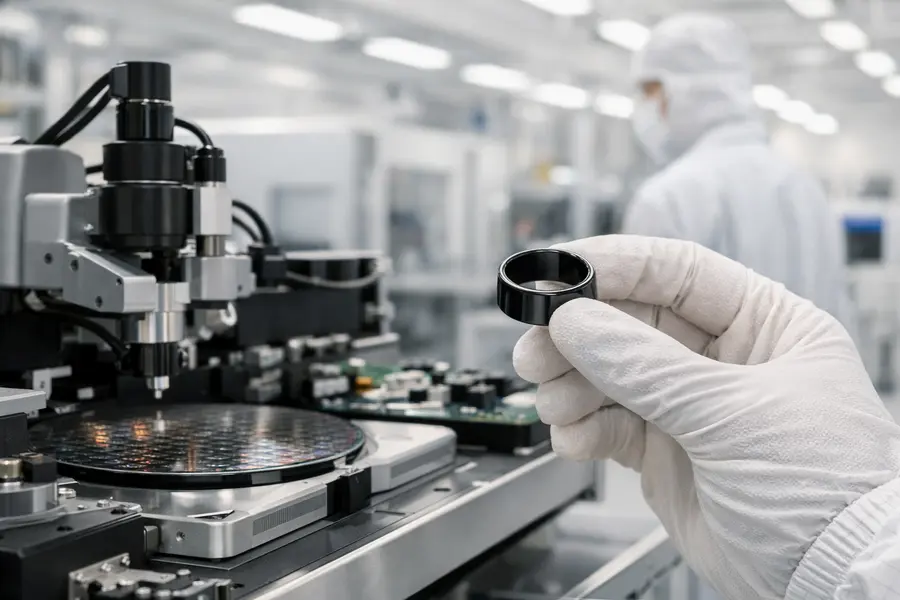
Qualcomm Ventures led a $70M Series C into Bengaluru-based Ultrahuman, valuing the smart ring maker at $365M as it targets gesture control and on-device AI.
Key Takeaways
- The Series C values Ultrahuman at $365M, roughly triple its $120M valuation from 2023.
- Ultrahuman will replace Nordic Semiconductor chips with Qualcomm silicon, enabling on-device AI inference without cloud processing.
- Annual revenue run rate stands at $140M, up 45% year-over-year; the company targets $200M by January 2027.
Lead
Ultrahuman, the Bengaluru-based maker of the Ring AIR health tracker, closed a $70 million Series C on September 3, 2026, led by Qualcomm Ventures. The raise - split between $65 million in primary equity and $5 million in debt - values the company at $365 million. Co-investors include U.S. diagnostics company Labcorp, Alpha Wave, Blume Ventures, Nexus Venture Partners, and Alteria Capital, with Blume and Nexus both returning from earlier rounds. The strategic premise is straightforward: the ring stops being a sensor array and becomes a computing platform.
What Is Ultrahuman Actually Building?
The company is not rebranding its health tracker as a platform. The pivot is more literal: a ring that runs software on the device. Founded in 2019 by Mohit Kumar and Vatsal Singhal - who previously co-founded food-delivery startup Runnr before its Zomato acquisition - Ultrahuman entered the market with a continuous glucose monitor before turning to wearable hardware through the 2022 acquisition of IoT design firm LazyCo. The Ring AIR, launched in June 2023, built its following on a subscription-free model in a category that Oura had long anchored with recurring charges.
The next-generation ring in development will run on Qualcomm silicon, replacing the Nordic Semiconductor chips in current hardware. On-device computation is the explicit goal: health algorithms and AI inference without offloading to cloud servers. Gesture control is on the roadmap as well, which would reposition the ring as an input device for other systems rather than a standalone health monitor.
Why Does Qualcomm's Involvement Matter Beyond the Check?
The chip relationship is the substance here, not the capital sum. Qualcomm's venture arm participating alongside a hardware co-development agreement gives Ultrahuman access to processor architectures tuned for ultra-low-power wearable compute - something no supplier negotiation from a smaller hardware buyer would normally unlock. For Qualcomm, Ultrahuman is a reference customer for silicon that has not yet found its breakout consumer moment in the ring category.
The $365 million post-money valuation implies a roughly 2.6x revenue multiple on Ultrahuman's $140 million ARR. That is not aggressive for a hardware company posting 45% year-over-year revenue growth and reporting a net profit of $8.2 million on $64 million in operating revenue for the fiscal year ended March 2025. Returning investors did not appear to face a down round; the 3x step-up from the 2023 valuation suggests the cap table held together cleanly.
Competitive Context
The smart ring market has compressed quickly. Samsung entered with the Galaxy Ring in 2024, bringing manufacturing scale and software ecosystem integration that Ultrahuman cannot replicate. Oura has moved toward enterprise health partnerships and clinical-grade data licensing, pulling upmarket. Ultrahuman's no-subscription, advanced-hardware positioning has carved out a specific consumer segment, but the gesture-control and AI-interaction thesis pushes it into territory adjacent to Apple and Google platform devices on a timeline that neither company has publicly committed to.
Reaching $200 million ARR by January 2027 from the current $140 million run rate requires roughly 43% growth over about six months. That would depend heavily on a successful launch of the Qualcomm-based hardware or a significant expansion in distribution, possibly both simultaneously.
Outlook
The Qualcomm partnership provides Ultrahuman with chip access and co-development credibility that matters in a hardware category where differentiation is difficult to sustain. The financials look healthier than most consumer hardware companies at this stage: profitable, growing, and now backed by a strategic investor with a direct interest in the product succeeding. Whether a ring capable of gesture control and local AI inference reaches shelves before the competitive window narrows is the only question the capital cannot answer.