Pomegra
Brent crude climbed toward $94 a barrel and WTI touched $86 after President Trump vowed "economic warfare" against Iran, rattling energy markets bracing for tighter global supply.
- Brent crude rose near $94 a barrel, its highest level in months, on renewed U.S.-Iran tensions.
- WTI crude climbed to $86 a barrel as traders priced in supply-disruption risk.
- Energy shares and safe-haven assets moved higher as investors reassessed geopolitical risk premiums.
Lead
President Trump said Washington would wage "economic warfare" against Iran, a statement that sent Brent crude to roughly $94 a barrel and West Texas Intermediate to about $86 a barrel in a single trading session. The remarks, delivered amid heightened friction over Tehran's regional activity and nuclear posture, revived fears of tighter global oil supply and pushed traders to rebuild risk premiums that had eased earlier in the year. Energy markets, already sensitive to shipping risk around the Strait of Hormuz, reacted within hours as futures desks repriced the odds of renewed sanctions enforcement and possible disruptions to Iranian exports.
What Happened?
Trump's comments signaled an intensified U.S. economic campaign against Iran rather than a military escalation, but markets treated the threat as materially raising the odds of supply disruption. Brent, the international benchmark, gained several dollars a barrel to approach $94, while WTI, the U.S. benchmark, advanced to around $86. Both moves marked some of the sharpest single-session gains in crude this year. Trading volume in oil futures rose sharply as hedge funds and commodity trading advisors added long positions, and options markets showed increased demand for upside calls betting on $100 crude.
Why Did Markets React This Way?
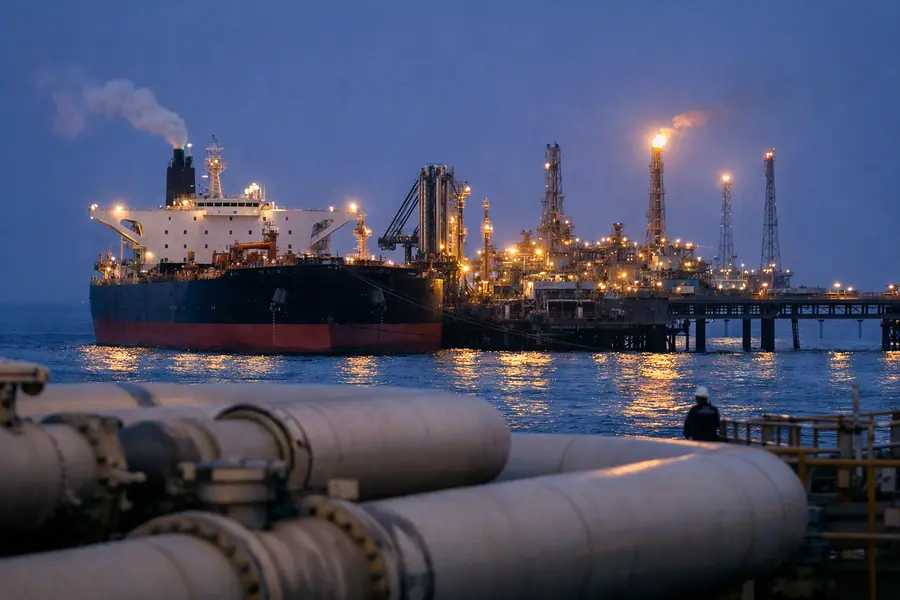
Markets reacted because "economic warfare" language implies a broader sanctions regime that could remove Iranian barrels from an already tight global market. Iran remains one of OPEC's larger producers, and any tightening of enforcement against its exports — much of which flows to Asian buyers through intermediaries — reduces effective global supply even without a formal blockade. Traders also weighed the risk that Tehran could respond by threatening shipping lanes near the Strait of Hormuz, through which a significant share of the world's seaborne oil transits daily. The crude oil price marketwatch community closely tracks these headline-driven swings, and the latest move underscored how sensitive the market remains to rhetoric alone, independent of any confirmed disruption to physical flows.
Market Reaction
Energy equities rallied alongside crude futures, with major producers such as Exxon Mobil (XOM) and Chevron (CVX) posting gains as investors rotated into names seen as beneficiaries of higher realized prices. The United States Oil Fund (USO), a widely traded oil-tracking exchange-traded fund, moved higher in tandem with WTI. Broader equity benchmarks, including the S&P 500 (SPY), showed a more muted response, reflecting the offsetting effects of higher energy costs against fears of inflationary pressure on consumers and industrials. Currency markets also stirred, with the dollar firming modestly against oil-sensitive emerging-market currencies as investors sought safety.
Geopolitical Dimension
The threat fits a broader pattern of U.S. pressure campaigns aimed at constraining Iran's oil revenue and regional financing capacity. Economic warfare, in this context, typically refers to expanded sanctions on Iranian oil exports, shipping networks, and financial intermediaries rather than direct military action. Iran has historically responded to sanctions pressure by seeking alternative buyers, primarily in Asia, and by signaling potential disruption to Gulf shipping lanes as leverage. Analysts tracking the standoff note that any enforcement action targeting tankers or insurers handling Iranian crude could remove barrels from the market quickly, while a diplomatic de-escalation could just as quickly unwind the current price premium.
How Does This Affect Global Supply Calculations?
The immediate effect is a higher geopolitical risk premium embedded in oil prices rather than a confirmed physical supply loss. OPEC+ spare capacity, concentrated among Gulf producers, provides a partial buffer against a full disruption of Iranian exports, but that cushion has narrowed compared with prior years as global demand has recovered. Inventory data and shipping-tracker estimates will be closely watched in coming weeks to determine whether Iranian export volumes are actually declining or whether the price move reflects risk pricing alone.
What Comes Next for Oil Prices?
Near-term price direction will hinge on whether Washington follows through with concrete sanctions measures or enforcement actions, and how Tehran chooses to respond. A confirmed reduction in Iranian export volumes could push Brent toward the $100 level, while a diplomatic offramp or clarification that "economic warfare" excludes new sanctions could see prices retrace part of the recent gain. Traders are also watching for signals from Gulf producers on whether they would raise output to offset any shortfall, a step that would cap further price appreciation.
Outlook
Trump's economic-warfare threat against Iran has reintroduced a significant geopolitical risk premium into oil markets, lifting Brent near $94 and WTI to $86 in a rapid repricing. The scale of any lasting supply impact depends on the specifics of forthcoming U.S. measures and Iran's response, particularly around shipping security in the Gulf. Until clarity emerges, energy markets are likely to stay volatile, with both crude benchmarks and energy equities trading on headline risk rather than confirmed changes to physical supply.