Pomegra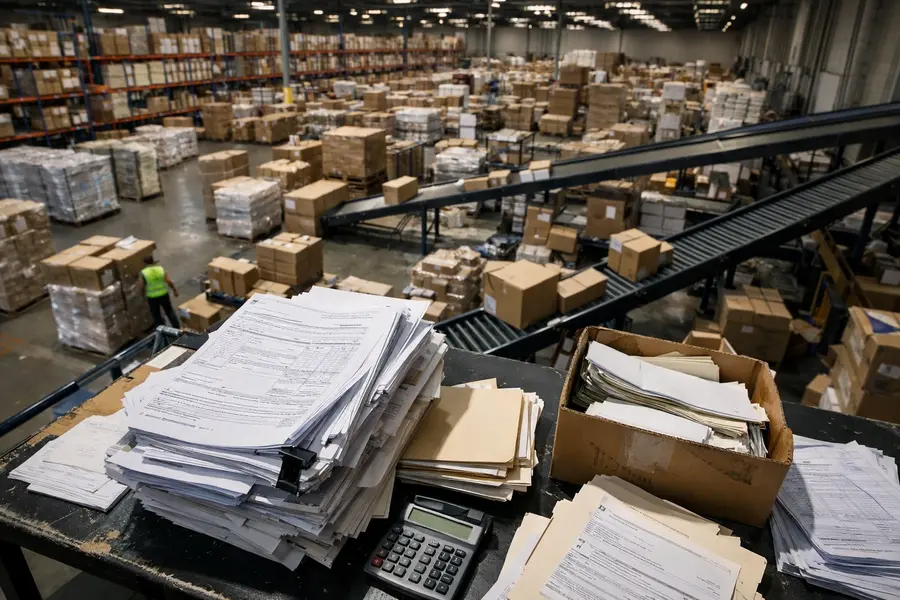
A Supreme Court ruling triggered IEEPA duty refunds, delivering quarterly windfalls ranging from $30 million for mid-size operators to nearly $1 billion for major retail chains in 2026.
- Retailers booking tariff refunds in Q2 2026 range from $30 million for mid-size chains to $994 million for Target (TGT), doubling that company's net earnings
- Walmart (WMT) faces a total IEEPA refund exposure of up to $10.2 billion, the largest single-retailer obligation in the recovery cycle
- Refunds flow only to importers that held complete tariff paperwork at duty-payment time, leaving consumers and downstream buyers largely excluded
Lead
A February 2026 Supreme Court decision invalidating IEEPA-based import duties has inserted a new and highly variable line into U.S. retail earnings. Target Corp. (TGT) reported $994 million in pretax tariff recoveries in its second quarter, doubling net income to $1.88 billion. Smaller operators posted proportionally modest sums - some mid-size retail chains booking $30 million in a single quarter - while Amazon (AMZN) recorded $600 million during the same period. As of early August 2026, U.S. Customs and Border Protection had certified approximately $100 billion in refunds plus interest, disbursing payments electronically via ACH against a total obligation estimated at $166 billion.
Why Are Retailers Receiving These Refunds Now?
The Supreme Court ruled that the Trump administration exceeded its statutory authority when it used the International Emergency Economic Powers Act to impose country-specific tariffs. The decision obligated the Treasury to return all duties collected under that authority. More than 75,000 businesses had filed refund applications as of late April 2026. Payments are processed on a rolling basis, meaning individual retailers recognize revenue across multiple quarters depending on when CBP certifies each claim tranche.
Section 301 tariffs on Chinese-origin goods, imposed under separate authority and not addressed by the ruling, remain in force.
How Does Tariff Paperwork Determine Who Gets Paid?
Refunds flow exclusively to the importer of record at the time of original duty payment. Companies that maintained complete tariff paperwork - precise Harmonized Tariff Schedule codes, country-of-origin certificates, and matched entry summaries - were able to file clean applications with minimal adjudication delays. Those relying on fragmented recordkeeping or third-party brokers experienced longer processing windows.
The duty drawback mechanism, a parallel program allowing recovery of up to 99% of duties on goods later exported or destroyed, ran concurrently with IEEPA refunds. Together, the two programs created the most concentrated customs-recovery period in U.S. retail history.
Retail Warehouse Operations and Claim Processing
For large-scale importers, retail warehouse facilities became the administrative center of the recovery process. Each inbound container required documentation linking its original duty payment to the refund application, a workflow managed at distribution hubs rather than individual stores. Companies that had centralized import records at regional receiving facilities reported faster claim resolution and earlier revenue recognition.
Walmart (WMT), projected to receive up to $10.2 billion across multiple quarters, expanded its customs compliance team within its supply chain organization earlier this year. The company's scale of inbound freight - spanning thousands of product categories across multiple import origins - made the documentation task one of the largest single customs projects ever undertaken by a U.S. retailer.
Will Consumers See Lower Prices?
Most major retailers are retaining refunds as margin improvement rather than passing them back through lower shelf prices. Costco (COST) is among the exceptions, pledging to return refunds to members in some form. Walmart and Home Depot (HD) have not announced consumer pass-throughs. The asymmetry - companies recovering duties that consumers had partly absorbed through elevated retail prices during the tariff period - drew attention from consumer advocacy groups and members of Congress during the summer of 2026.
Outlook
Additional refund tranches are expected through the remainder of 2026 as CBP processes the remaining approximately $66 billion in certified claims. Retailers with large import portfolios and high historical duty payments will continue to report above-trend gross margin in quarters when claim tranches are recognized. Once the IEEPA recovery cycle concludes, import economics will revert to a baseline still shaped by Section 301 tariffs on Chinese goods. Retailers that used the refund period to renegotiate supplier pricing or accelerate sourcing shifts to non-tariffed origins enter 2027 with durable structural advantages over those that treated the windfall as a one-time event.