Pomegra
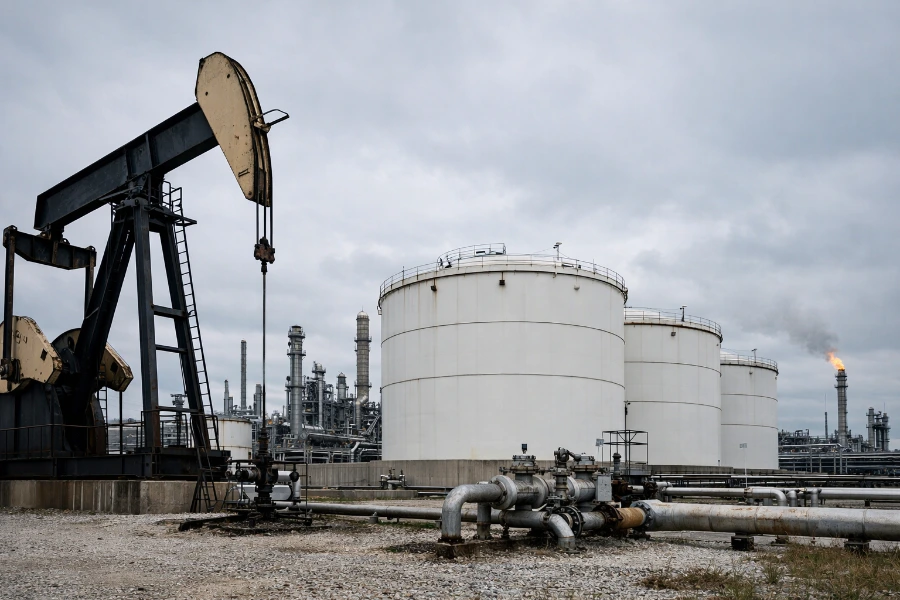
Brent crude slid to about $92.50 as US stocks rose 5.3 million barrels, but seven Hormuz shipping attacks since November 10 limited the crude oil price drop.
- Brent fell roughly 50 cents to about $92.50 a barrel on Wednesday, November 18, after a large US crude inventory build.
- The American Petroleum Institute reported a 5.3 million barrel crude rise for the week ended November 13, against an expected 0.5 million draw.
- Seven attacks on shipping in or near the Strait of Hormuz since November 10 kept a floor under prices.
Lead
Brent crude futures slipped to about $92.50 a barrel in Asian trade on Wednesday as a larger-than-expected build in US crude inventories pointed to ample near-term supply. The decline was contained by continued disruption in the Strait of Hormuz, where the UK Maritime Trade Operations centre has logged seven attacks on vessels since November 10. West Texas Intermediate, the US benchmark, traded around $83 to $85 a barrel, its weakest level since late August.
What Happened to the Crude Oil Price?
Brent fell about half a dollar to around $92.50 after industry inventory data showed US crude stocks climbing for a second consecutive week. The American Petroleum Institute put the build at 5.28 million barrels for the week ended November 13, the largest weekly increase since July. Markets had priced in a modest draw of about 0.5 million barrels. The prior week had already delivered a build of roughly 9 million barrels.
Product inventories also grew. Gasoline stocks rose 5.12 million barrels and distillates added 351,000 barrels, though diesel prices remain elevated relative to crude. The pattern suggests weaker domestic demand or stronger supply, and it reinforced expectations of a surplus.
Why Are Losses Limited by the Strait of Hormuz?
Losses are limited because the Strait of Hormuz, the narrow channel linking Gulf producers to open water, carries a large share of seaborne crude, and shipping through it remains under threat. The seven reported attacks since November 10 have raised insurance costs and forced operators to weigh routing and timing decisions, even where cargoes continue to move.
The security picture worsened this week. The United States and Iran traded strikes on Tuesday, and Bahrain's defence force said on Wednesday that it intercepted Iranian aerial attacks. Physical flows have not collapsed, which explains why the risk premium has not pushed Brent back above $100. But each incident reminds traders that a sustained interruption would remove far more supply than any inventory build can offset.
Market Reaction
The move extends a pullback from recent highs. Brent traded above $100 a barrel a month ago, and WTI sat near $98 at that point. WTI has since dropped more than 20% from its October peak near $104, ending a stretch in which supply fears dominated pricing.
The current range shows two forces roughly balancing. Inventory data and surplus expectations pull prices lower, while the shipping attacks and the US-Iran exchanges hold them up. Brent has largely held between $91 and $93 in recent sessions, and short-term technical commentary has framed $88 and $96 as the edges of the near-term band.
Geopolitical Dimension
The Strait of Hormuz is the central chokepoint for Gulf energy exports. Saudi Arabia, Iraq, Kuwait, the United Arab Emirates, and Iran itself rely on it for crude shipments, and Qatar depends on it for liquefied natural gas. Because there are few practical alternatives, even limited harassment of tankers can lift freight rates, war-risk premiums, and delivered fuel costs for Asian and European importers.
The economic channel runs through shipping costs first and futures prices second. Higher insurance and rerouting costs reach refiners and consumers before any physical shortfall appears. That is why diesel, which is traded more tightly than crude, has stayed costly even as crude weakens.
What Comes Next for Oil Prices?
Oil prices are likely to stay range-bound over the next several weeks unless either the inventory trend or the security situation shifts decisively. Official US weekly inventory data will confirm or revise the industry figures, and a second consecutive large build would strengthen the surplus narrative.
On the geopolitical side, three scenarios matter over a three to twelve month horizon. De-escalation between Washington and Tehran would remove the risk premium and could push Brent toward the high $80s. A continuation of sporadic attacks would keep prices near current levels. A major disruption to Hormuz transit would send Brent back above the $100 mark reached last month, with the impact felt first in refined products and freight.
Outlook
Brent at about $92.50 reflects a market caught between a growing US stockpile and an unresolved security threat in the Gulf. The inventory build argues for lower prices, while seven attacks on shipping in eight days argue against complacency. Near-term direction depends on the next official inventory release and on whether the US-Iran exchanges widen or fade.
Mentioned tickers: None