Pomegra
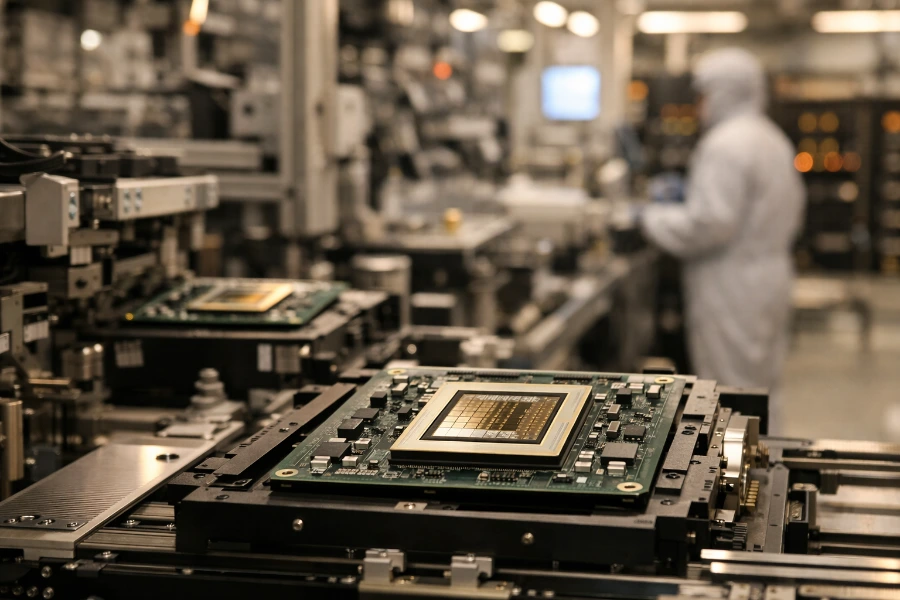
Nvidia reported $115.8B in third-quarter revenue, up 103%, and lifted its fiscal 2028 growth outlook to about 75%, yet shares gave up early gains at the open.
- Nvidia (NVDA) third-quarter revenue hit $115.8B, up 103% year on year and 20% on the quarter, versus a $108.8B consensus.
- Fiscal 2028 revenue growth is now guided to about 75%, up from roughly 70% three months ago.
- NVDA rose 2.79% premarket on Wednesday, then traded 0.91% lower at 10:02 a.m. ET.
Lead
Nvidia (NVDA) beat third-quarter estimates on Tuesday, reporting revenue of $115.8B for the quarter ended October 25, 2026. That was up 103% from a year earlier and well above the roughly $108.8B Wall Street forecast. The chipmaker also raised its fiscal 2028 revenue growth outlook to about 75%. The stock rose more than 4% in extended trading and 2.79% in premarket on Wednesday. It then reversed after the opening bell, a sign that ai stocks are weighing a record quarter against questions about who leads the company.What Did Nvidia Report?
Nvidia reported record revenue, profit above forecasts and a larger fourth-quarter outlook. Data Center revenue reached $107.6B, up 110% from a year ago and 21% from the second quarter. GAAP gross margin was 74.8% and non-GAAP gross margin 74.9%.
Non-GAAP earnings per diluted share were $2.68, against a consensus of $2.47. GAAP earnings per share were $2.70.
For the fourth quarter, Nvidia guided revenue to $130B, plus or minus 3%. That figure assumes no data center compute sales to China. Gross margins are guided lower, to 71.0% to 72.0%. Non-GAAP operating expenses are expected near $10.7B.
How Much Cash Is Nvidia Returning to Shareholders?
Nvidia returned $28.1B to shareholders in the quarter through buybacks and dividends. The board approved a $150B increase to the repurchase authorization in September, leaving $227.3B available. The next quarterly dividend is $0.25 per share, payable December 23.
Why Did Nvidia Shares Give Up Their Gains?
The shares reversed because investors are pricing leadership uncertainty alongside the earnings beat. Nvidia's results were its first since founder Jensen Huang resigned as chief executive. The board accepted the resignation unanimously and named Chief Financial Officer Colette Kress interim CEO while it searches for a permanent successor. Directors have said they have no plans to reinstate Huang, which keeps the succession question open.
Wednesday's session showed the split. Nvidia was up 2.79% before the bell, then slipped to a 0.91% loss within the first 30 minutes of regular trading. Other semiconductor stocks gave up premarket gains as well. Broader indexes were mixed: the Dow Jones Industrial Average was down 333 points at 9:50 a.m. ET, while the Nasdaq-100 tracker QQQ was up 0.44% and the SPY S&P 500 tracker was up 0.02%.
What Does the 75% Growth Outlook Mean for AI Spending?
The outlook shows the artificial intelligence build-out still running ahead of the demand-peak concerns that weighed on the sector over the past month. The fiscal 2028 target of about 75% growth, up from roughly 70%, builds on a higher base than expected. Fiscal 2028 begins in late January 2027.
The data center business is the engine. It now generates more than 92% of total revenue, so Nvidia's growth depends on spending by cloud providers, model developers and enterprises on accelerators and networking. A 75% increase implies annual revenue well above any level the company has reported.
The guided margin step-down in the fourth quarter shows that growth at this scale carries a cost. Rising component and ramp costs for new systems are compressing margins from their third-quarter peak.
Strategic Context
Nvidia has become the reference point for the sector. Its guidance sets expectations for suppliers, data center operators and the hyperscalers that buy its systems. The company is delivering record numbers while its chief executive role is held on an interim basis. That is unusual for a company of this size, and it explains why a large beat did not produce a sustained rally.
The China exclusion in the fourth-quarter guidance is a second variable. Any change to export rules would add to a forecast that currently assumes no such sales.
Outlook
Nvidia enters the final quarter of fiscal 2027 with $130B in guided revenue, a larger buyback and a raised fiscal 2028 growth target. Near term, the stock is likely to trade on the pace of the CEO search and any further board decisions on leadership. The operating figures are strong, and the open on Wednesday showed that leadership, not demand, is now the main uncertainty for the world's largest AI chip supplier.
Mentioned tickers: NVDA, SPY, QQQ