Pomegra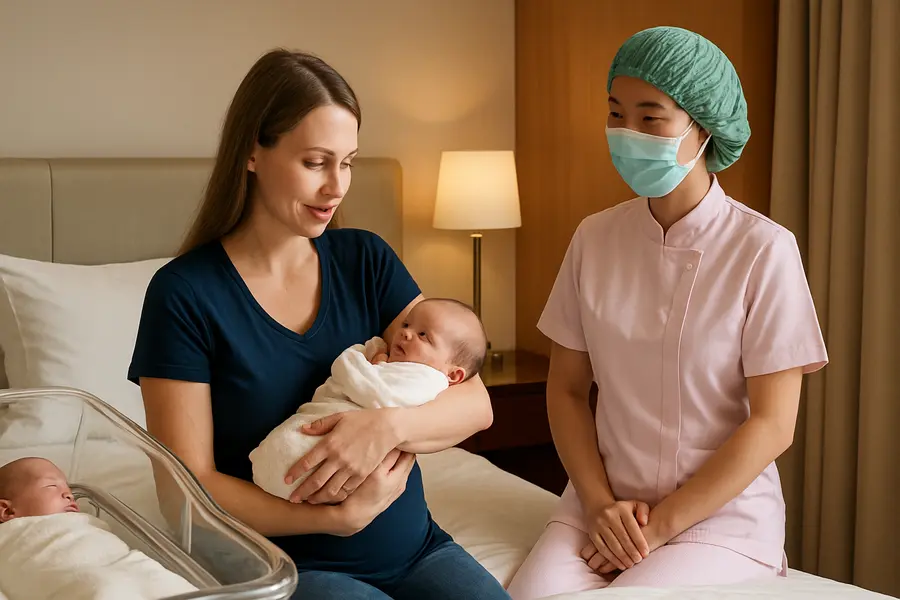
American mothers are traveling to Taiwan's premium postpartum care centers for services costing as little as $5,000 — far below comparable U.S. boutique retreats — amid a widening gap in maternal support.
- Taiwan has nearly 275 licensed postpartum care centers; approximately 65% of Taiwanese mothers use them following delivery.
- Daily rates range from $160 to $863, significantly undercutting U.S. boutique postpartum retreats that charge up to $1,740 per night.
- The sector, formalized since the late 1990s, blends hospital-grade nursing with luxury hotel amenities and traditional Chinese medicine.
Lead
American mothers are crossing the Pacific to access Taiwan's postpartum care industry, a 30-year-old sector that combines medical supervision, nutritional support, and spa-grade amenities into a single residential model. The trend highlights a structural gap in maternal health services between the United States, where standard hospital discharge occurs within 48 hours of delivery, and Taiwan, where professionally staffed confinement centers routinely offer 30- to 40-day recovery programs. One Ohio mother relocated to Taipei in mid-2024 and spent approximately $5,000 on a full postpartum stay — a cost that would purchase fewer than three nights at comparable U.S. facilities.
The Taiwan Model
Taiwan's postpartum care centers — known locally as 坐月子中心 (zuò yuèzi zhōngxīn) — are purpose-built facilities that institutionalized the ancient Chinese practice of postpartum confinement, called "sitting the month." The modern version bears little resemblance to its origins. Contemporary centers operate as hybrid medical-hospitality properties, staffed by registered nurses, lactation consultants, postpartum nutritionists, and traditional Chinese medicine practitioners. Private rooms with hotel-standard interiors, daily spa treatments, infant care classes, and curated postnatal meal plans are standard offerings at mid-tier and premium facilities.
The sector traces its modern form to 1996, when Taiwan counted only three formal centers. By 2019, that number had grown to 275 nationally. Market penetration now stands near 65%, meaning nearly two-thirds of Taiwanese mothers choose a professional center over home-based recovery — a rate that reflects both cultural normalcy and the breadth of available options.
Cost and the Value Gap
Medical tourism to Taiwan for postpartum care presents a stark value proposition for American mothers. Daily rates at Taiwanese centers range from approximately NT$5,000 (around $160) to NT$27,000 ($863) at top-tier luxury facilities. A full 30-day stay at a standard center typically costs between $4,000 and $5,500 all-inclusive — covering accommodation, three nutritionist-prepared meals daily, 24-hour newborn care, lactation support, massage therapy, and access to on-site medical staff.By contrast, premium care at U.S. postpartum retreats starts at roughly $850 per night for a three-day minimum stay, with some boutique offerings reaching $1,740 per night. Standard postpartum doula services in major U.S. cities run $25 to $75 per hour with no accommodation. The arithmetic makes Taiwan's all-inclusive model financially competitive even after factoring in transatlantic airfare for mothers who combine the stay with existing family connections or planned travel.
Maternal Health and the U.S. Deficit
The United States ranks among the highest-income countries for maternal health expenditure yet trails peer nations on postpartum support infrastructure. Hospital discharge within 48 hours of vaginal delivery is standard practice. Postpartum depression affects an estimated one in five American mothers, and access to professional lactation support, mental health follow-up, and structured recovery resources remains uneven across income levels and geographies.
Taiwan's centers address precisely these gaps. Research has linked structured residential postpartum care to measurable reductions in the incidence and severity of postpartum depression. The combination of physical recovery support, infant care coaching, and temporary relief from household responsibilities produces outcomes that appeal to American mothers increasingly aware of the disparity.
Cultural Architecture
The appeal to non-Taiwanese mothers extends beyond cost. Taiwan's centers impose strict visitor limits — typically 30 minutes to one hour per week — creating a structured buffer between new mothers and the social demands that often accompany early parenthood. This design feature, born of cultural custom, produces a protected recovery environment that many international clients find equally valuable.
Traditional Chinese medicine remains embedded in the model: warming herbal tonics, acupressure, and dietary principles rooted in balancing postpartum qi are standard rather than optional. Western-trained mothers, including those without prior exposure to Chinese medical tradition, frequently cite these components as unexpectedly beneficial.Industry Pressures
Taiwan's postpartum sector is not without structural challenges. The island's persistently low birth rate — one of the lowest globally — is compressing the domestic customer base. Market saturation in urban centers has driven consolidation: seven facilities closed in Taipei alone in 2022. Premium and differentiated operators, particularly those positioned to attract international clients and affluent domestic consumers, are best positioned to weather the demographic headwind.
High-end centers have responded by doubling down on luxury positioning. Facilities featuring Northern European interior design, branded amenities, private cooking classes, and photography studios now compete for a customer segment that treats postpartum recovery as a premium wellness investment rather than a medical necessity.