Pomegra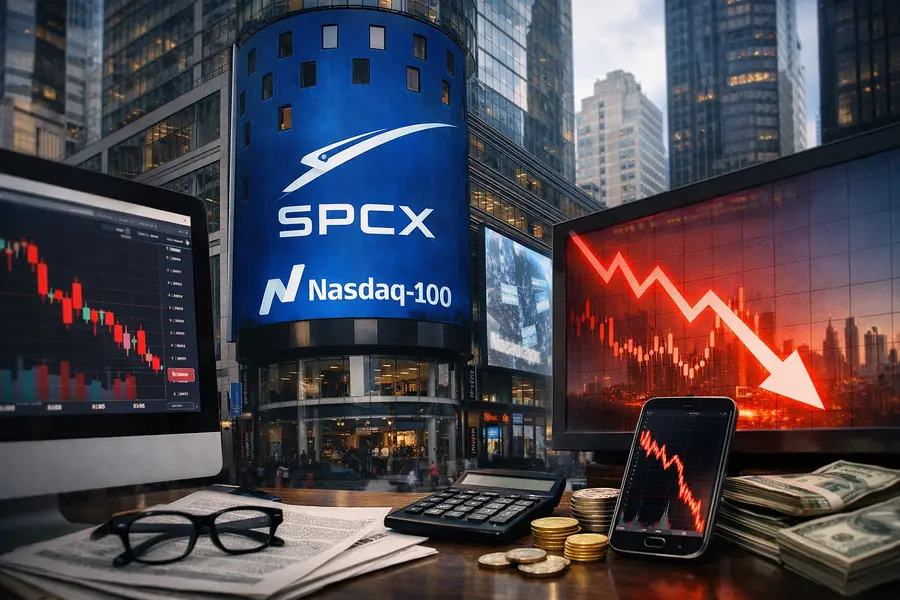
SpaceX's record $75B debut on June 12 propelled the company into the Nasdaq-100 within 15 trading days, but SPCX has since retreated below its offering price as Starlink growth and the first lockup expiry draw focus.
- SpaceX priced its IPO at $135, surged to $225.64 within days, and has since corrected to $123.99 — roughly 8% below the offering price.
- SPCX joined the Nasdaq-100 on July 7, triggering an estimated $4.3B in forced QQQ buying and up to $27B across all passive trackers.
- Starlink drove $11.4B in 2025 connectivity revenue with 86% EBITDA growth; subscriber count reached 10.3 million by end of Q1 2026.
Lead
SpaceX (NASDAQ: SPCX) entered the Nasdaq-100 on July 7, 2026, just 15 trading days after completing the largest initial public offering in history, raising approximately $75 billion at a $1.77 trillion valuation. By July 19, spcx stock had retreated to $123.99, falling below its $135 offering price and sitting 45% off its June 16 all-time high of $225.64, as investors weighed insider lockup mechanics, a constrained float, and an inaugural earnings report due August 6.What Happened
SpaceX priced the spacex ipo at $135 per share on June 11, eclipsing Saudi Aramco's 2019 record and listing one of the world's most valuable companies on its first day of trading. Shares opened at $150 and closed the debut session at $160.95, a gain of 19%, before an intraday peak of $225.64 four days later. The stock has since declined roughly 28% from that high, breaching the IPO price on July 16.
The Nasdaq-100 inclusion was equally historic. Nasdaq revised its methodology ahead of the offering, cutting the standard one-year seasoning requirement to 15 trading days, eliminating minimum float thresholds for companies entering the top 40 by market cap, and introducing a weighting multiplier for low-float additions. SpaceX became the fastest company ever admitted to the benchmark.
Index Mechanics and Forced Demand
Passive fund mechanics amplified SPCX's post-debut volume. Funds tracking QQQ — the Invesco ETF with more than $300 billion in assets — were required to absorb an estimated $4.3 billion of spcx stock by the July 6 close. Across all Nasdaq-100 and Russell index trackers, including 401(k) vehicles, total forced buying ranged from $22 billion to $27 billion. SPCX entered at a sub-1% index weight, with the low-float multiplier inflating its effective benchmark exposure relative to its tradeable share count.
The structural tension was immediate: passive funds were mechanically buying at the same time the first cohort of pre-IPO shareholders began to gain the ability to sell. With a public float constrained by a concentrated ownership structure, even measured insider selling risked outsized price impact.
Starlink: The Core Investment Case
Starlink, SpaceX's satellite broadband service and the company's largest revenue segment, anchors the long-term valuation thesis. The Connectivity segment generated $11.4 billion in 2025, representing approximately 61% of the company's $18.6 billion in total revenue. Adjusted EBITDA for the segment grew 86% between 2024 and 2025 as subscriber counts doubled.By the end of the first quarter of 2026, Starlink had 10.3 million active subscribers globally. Average revenue per user, however, declined to $66 per month in Q1 2026 from $86 a year earlier, a compression attributed to international market expansion and the addition of lower-priced residential tiers. Higher-margin enterprise, maritime, aviation, and direct-to-cell contracts are increasingly cited as the mechanism to stabilize or lift blended ARPU over time.
Full-year Starlink revenue projections range from $15.5 billion to $20 billion for 2026, depending on subscriber trajectory and enterprise mix.
Revenue Mix and the xAI Variable
SpaceX reported 33% year-over-year revenue growth from 2024 to 2025 and 15% year-over-year growth in the first quarter of 2026. Analyst consensus points toward approximately $25 billion in full-year 2026 revenue, driven predominantly by Connectivity but tempered by heavy AI investment.In February 2026, SpaceX completed the acquisition of xAI, Elon Musk's artificial intelligence venture, valued at approximately $250 billion at the time of the transaction. The AI segment contributed $3.2 billion in 2025 revenue but recorded a $6.35 billion operating loss, reflecting data-center and model-infrastructure buildout. Starlink's cash generation is effectively underwriting xAI's capital expenditure, a subsidy relationship that will come under analyst scrutiny when the company reports its first public quarterly figures on August 6.
Strategic Context
The Nasdaq-100 rule changes that enabled SPCX's record-fast inclusion have drawn scrutiny from index investors and passive-fund managers. The decision to waive float minimums and add weighting multipliers for low-float additions is viewed by some as a structural adjustment calibrated for a single issuer, setting a precedent for how benchmark administrators may accommodate future mega-cap IPOs.
The combination of a constrained float, outsized passive demand, and staggered lockup expirations through the summer creates a volatile supply-demand dynamic uncommon in standard index additions. How insider selling unfolds through the remainder of July and August will set the context for SPCX's price discovery as it transitions from IPO to reporting company.
Outlook
The August 6 earnings report will be the first structured test of SpaceX's public-market narrative. Investors will focus on Starlink subscriber additions, ARPU trends, the pace of xAI loss reduction, and progress on Starship commercial cadence. For spacex stock, the near-term range between $122 and $135 reflects a market balancing a generational infrastructure asset against an unusual float structure, a large unprofitable AI subsidiary, and a valuation that implies a significant premium to any conventional revenue or EBITDA multiple. The August combination of earnings, lockup expirations, and continued passive rebalancing flows makes it one of the more consequential reporting events of the 2026 equity calendar.