Pomegra
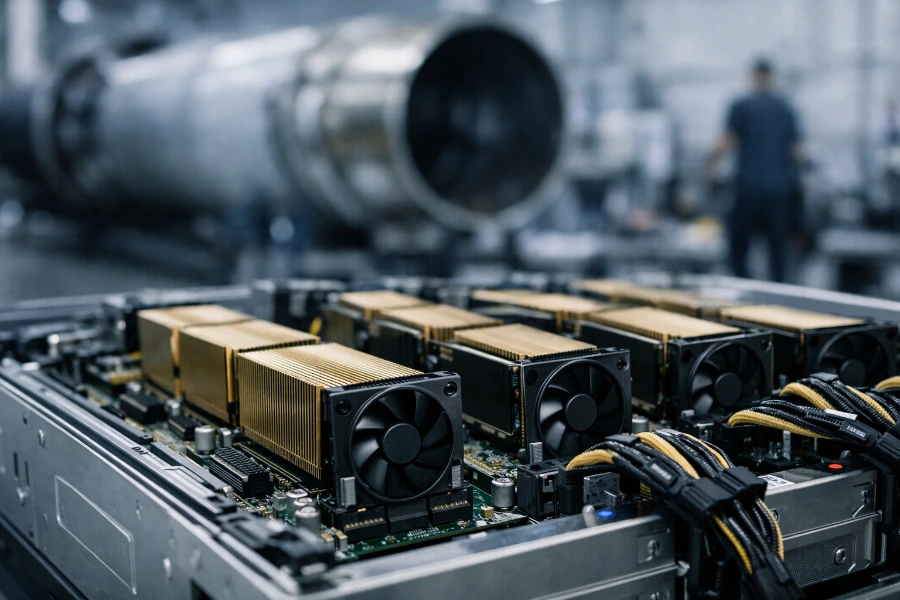
SpaceX shares rose 3% as a $4 billion off-balance-sheet bond sale, part of a $40 billion Goldman and Apollo program, set to fund Nvidia Vera Rubin chips.
- SpaceX (SPCX) rose about 3% to roughly $141 on Tuesday, Nov. 17, outperforming a weaker market.
- About $4 billion of bonds, part of a $40 billion program, could be offered as soon as this week.
- The structure keeps the debt off SpaceX's balance sheet and protects its investment-grade credit ratings.
Lead
SpaceX (SPCX) gained about 3% to roughly $141.32 on Tuesday after reports that it will sell about $4 billion of off-balance-sheet bonds to pay for Nvidia (NVDA) chips. The bonds are the first slice of a roughly $40 billion financing led by Goldman Sachs (GS) and Apollo Global Management (APO). The shares rose while the broader market fell. Among AI stocks, the move set SpaceX apart from space-sector peers: Rocket Lab (RKLB) fell about 3% and AST SpaceMobile (ASTS) slid about 2%. Nvidia shares were down less than 1%.What Is the $40 Billion SpaceX Chip Financing?
It is a master finance lease that lets SpaceX acquire Nvidia's Vera Rubin processors without borrowing directly. A special-purpose vehicle managed by Apollo-backed Atlas SP buys the chips and leases them to SpaceX for five years. The vehicle funds the purchase by issuing debt.
The package includes an $8.3 billion senior secured loan led by Goldman for bank lenders, plus several bond tranches aimed at asset managers. A $7 billion lease prepayment from SpaceX brings total funding to about $47.3 billion of hardware, with delivery due in the first half of 2027. Closing is expected before the end of 2026. Goldman and Apollo are marketing the debt, and early investor discussions are under way.
Why Does SpaceX Want Debt Off Its Balance Sheet?
The structure protects SpaceX's investment-grade ratings while it funds a very large AI computing build-out. Because the vehicle, not SpaceX, owns the chips and issues the debt, the obligations sit outside the company's reported borrowings. SpaceX still carries fixed rental payments under the lease.
The financing also shifts equipment risk to lenders. SpaceX gives no residual value guarantee, so it does not promise what the chips will be worth when the lease ends. Investors in the notes therefore bear the obsolescence risk, which matters in a market where each chip generation quickly displaces the last. The deal is the largest financing of its kind for GPUs on record.
Why Did SpaceX Shares React This Way?
Investors read the bond sale as evidence that the AI spending plan is fully funded. SpaceX's Super Intelligence segment grew about 830% from a year earlier to $7.6 billion in the third quarter of 2026, and the Nvidia hardware is meant to extend that capacity.
Tuesday's gain contrasts with the stock's recent path. SpaceX closed at $135.92 on Oct. 26, when it disclosed a binding commitment for the financing, a drop of 3.81% that day. The shares then lost roughly another 7.5% as lenders tested demand. Tuesday's rise recovers part of that decline.
Can the Bond Market Absorb This Much AI Debt?
Demand is the main open question. Heavy borrowing by large technology companies is starting to strain investor appetite for corporate bonds, and this program adds a large new supply of asset-backed paper. Institutional investors were offered stakes of up to $500 million before wider syndication, a sign that the deal depends on large buyers.
Pricing on the first $4 billion will show how much of a premium investors demand for lease-end chip risk. A weak reception could raise the cost of the remaining tranches and affect similar structures at other AI infrastructure builders.
Outlook
The $4 billion bond offering is the first test of whether asset managers will fund the largest GPU lease on record. Pricing and order-book demand this week will indicate the cost of the remaining roughly $36 billion. If the sale clears and the financing closes by year-end, SpaceX can secure its Vera Rubin supply for delivery in 2027 without adding to reported debt. A difficult reception would raise questions about how much off-balance-sheet AI debt the credit market can take.
Mentioned tickers: SPCX, NVDA, GS, APO, RKLB, ASTS