Pomegra
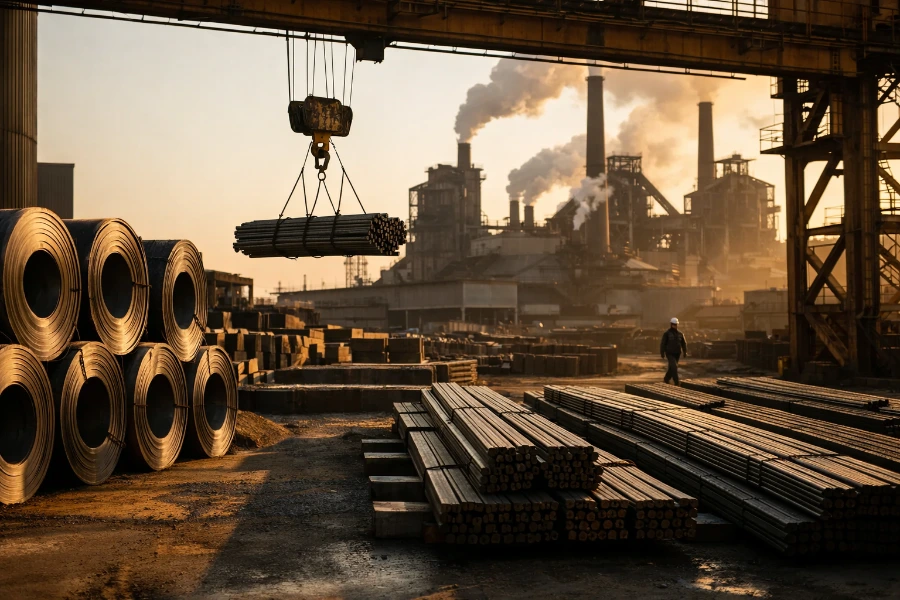
Canada will keep tariff relief on Chinese steel and aluminium until the end of 2028, while Beijing cuts duties on C$400 million of Canadian pork and seafood exports.
- Canada extends remission on Chinese steel and aluminium by two years, to December 31, 2028.
- Another 32 product lines join the list: 23 steel items and nine aluminium items.
- China eases tariffs on roughly C$400 million of Canadian pork, fish and seafood.
Lead
Canada and China extended and expanded their preliminary trade arrangement on Tuesday, November 17, 2026. Prime Minister Mark Carney and President Xi Jinping met in Shenzhen, ahead of the Asia-Pacific Economic Cooperation summit. Ottawa will prolong tariff relief on certain Chinese steel and aluminium products by two years, past the December 2026 expiry. Beijing will lower duties on about C$400 million (roughly US$280 million) of Canadian exports. Xi told Carney that exchanges and cooperation across various fields have "fully resumed" since the two governments signed a strategic partnership in January. It was the third meeting between the two leaders since Carney took office.
What Did Canada Agree to on Steel and Aluminium?
Canada agreed to extend its remission measures on selected Chinese steel and aluminium products to December 31, 2028, and to widen the list by 32 items. The additions comprise 23 steel tariff lines and nine aluminium lines. Ottawa describes them as products that are insufficiently available, or unavailable, from domestic producers.
A remission order lets importers recover duties on specific goods that Canadian industry cannot supply in adequate volume. The mechanism targets inputs rather than finished products, so it gives manufacturers relief without removing the broader surtaxes that protect Canadian steel and aluminium mills. The two-year extension gives buyers of those inputs pricing certainty through the end of 2028.
What Does China Offer in Return?
China will ease tariffs on about C$400 million of Canadian exports, concentrated in food. The relief covers roughly C$116 million of frozen pork cuts and C$285 million of fish and seafood. Beijing has also extended earlier relief on Canadian canola meal, lobsters, crabs and peas for two more years.
The package builds on the January agreement. Under that deal, Canada cut its 100 percent tariff on Chinese electric vehicles to 6.1 percent for an annual quota of up to 49,000 vehicles, with the quota scheduled to rise to 70,000 over five years. China reduced duties on Canadian canola in exchange. The new round adds further agricultural and seafood access.
The two governments also agreed to deepen cooperation in economic and financial matters, e-commerce, education and environmental protection.
Why Is Ottawa Turning Toward Beijing Now?
Ottawa is diversifying its export markets because high United States tariffs on Canadian goods have pressured the domestic economy. The United States remains Canada's dominant trading partner, and Carney has made reducing that reliance a central economic aim. China is Canada's second-largest trading partner and a major buyer of agricultural commodities, seafood and pork.
For Canadian producers on the Pacific and Atlantic coasts and across the Prairies, Chinese market access offers an alternative outlet when American demand is constrained. For Beijing, the arrangement shows that a G7 economy and close US ally is prepared to ease restrictions on Chinese goods, which supports its argument that trade with China can be stabilised through negotiation.
Geopolitical Dimension
The agreement lands in a politically sensitive setting. Canada and China spent several years in a tariff and diplomatic dispute, which included Chinese duties on Canadian agricultural goods and Canadian surtaxes on Chinese steel, aluminium and electric vehicles. The January partnership began unwinding that dispute, and the November extension signals that both sides want the thaw to last.
Domestic criticism has focused on the cost to Canadian industry, and on how the arrangement may affect relations with Washington. Steel and aluminium are the sharpest points. Both sectors are exposed to global overcapacity, and both are already under pressure from American trade measures. Ottawa has limited the remission list to items it says domestic mills cannot supply, which is intended to contain that exposure.
What Comes Next for Canada-China Trade?
The next test is implementation. Canadian authorities must formalise the amended remission list before the current order lapses at the end of 2026, and Chinese customs must apply the lower rates to pork and seafood shipments. The EV quota and its planned increase remain a further variable for Canadian automotive supply chains.
Over the next 12 months, the volume of Canadian pork and seafood shipments to China will show how much of the C$400 million in relief converts into sales. Over the longer term, the 2028 horizon gives manufacturers and exporters a stable window to plan. Whether it is renewed will depend on the state of Canada-US trade relations and on Beijing's conduct on market access.
Outlook
The extended arrangement locks in a two-year framework for steel and aluminium inputs and broadens Chinese access for Canadian food exports. It marks a measured step in Canada's effort to diversify trade away from the United States, with Beijing signalling that bilateral cooperation has returned to full operation. The 2028 expiry date sets the next decision point for both governments.