Pomegra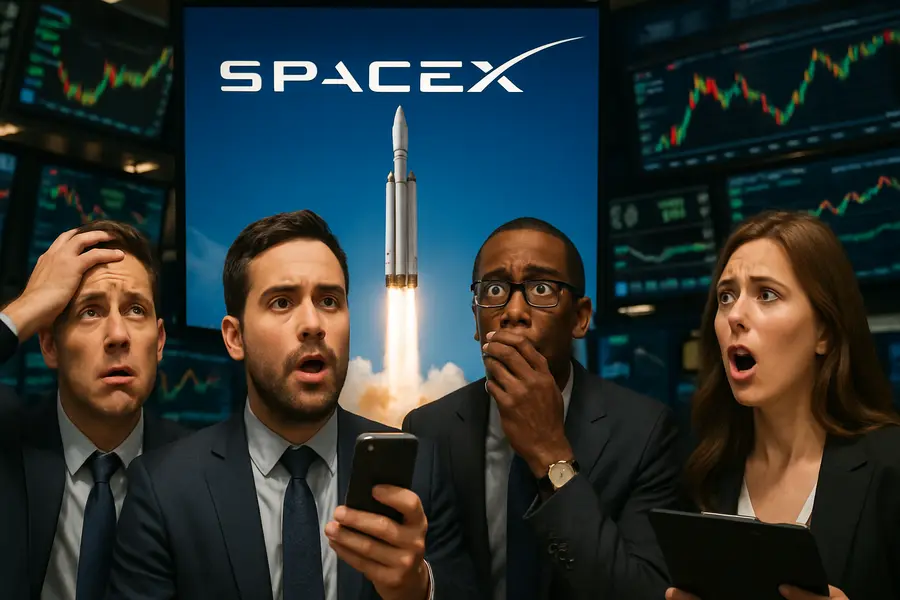
SpaceX raises $75B in the largest IPO in stock market history at $135 a share, opening 11% higher at $150 as investor FOMO and Starlink growth collide.
- SpaceX (SPCX) priced at $135 per share on June 11, raising $75B at a $1.77 trillion valuation — surpassing every prior IPO record.
- Order books closed more than four times oversubscribed with demand exceeding $250B, leaving most applicants with fractional or zero allocations.
- Starlink generated $11.4B in 2025 revenue at 39% operating margins, though group-level losses of nearly $5B reflect the cost of the xAI integration.
Lead
Space Exploration Technologies Corp. made its Nasdaq debut on June 12, 2026, opening at $150 per share under the ticker SPCX — an 11.1% premium over its $135 IPO price — after raising $75 billion in the largest initial public offering in stock market history. The deal valued SpaceX at approximately $1.77 trillion, placing Elon Musk's company among the world's most valuable publicly traded enterprises on its first day of trade and igniting a wave of investor FOMO that proved more powerful than the limits of the offering itself.
What Happened
SpaceX priced 555.6 million shares at $135 each on June 11, following a two-week roadshow that closed its order books the prior day with total demand exceeding $250 billion against a $75 billion raise. The oversubscription ratio topped four times, driven by a fixed-price structure that precluded any upward revision to the offer price — meaning the flood of orders could only determine who received shares and in what quantity, not what those shares would cost.
Several large asset managers and sovereign funds individually placed orders of $10 billion or more. The retail tranche, initially allocated at up to 30% of the offering — roughly triple the industry norm for a deal of this scale — was subsequently trimmed to the low 20% range as institutional demand crowded out smaller participants. Many retail applicants received partial fills or none at all.
Market Reaction
SPCX opened at $150 on the Nasdaq, with early indications to trading desks pointing toward a first print as high as $162, implying opening gains approaching 20% before the book settled. The 11% debut premium nonetheless represented meaningful price discovery above the fixed offer price, with elevated first-session volumes reflecting the pent-up demand that the deal attracted across its roadshow.The FOMO dynamic was measurable: among investors aged 18 to 34, fear of missing out on the SpaceX IPO tied with expectations of share price appreciation — both cited by 21% of that cohort — as the leading motivation for seeking shares. Among investors over 35, FOMO was cited by 13%.
Financial Reality Check
The fervor rests on a financially complex foundation. SpaceX posted revenue exceeding $18.5 billion in 2025, up 33% from 2024, with first-quarter 2026 revenue growing 15% year-over-year. Yet the company recorded a consolidated net loss of nearly $5 billion for 2025.
The split traces directly to two competing forces. Starlink, the satellite broadband network, generated $11.4 billion in 2025 revenue — 61% of the group total — at 39% operating margins, with adjusted EBITDA up 86% year-on-year and the subscriber base doubling to 10.3 million in Q1 2026. Offsetting that, the AI segment established following the acquisition of xAI in February 2026 recorded a $6.35 billion operating loss in 2025 alone, pushing consolidated results deep into the red.
Musk retains approximately 42% of SpaceX's equity and 85% of voting power through a dual-class share structure, limiting public shareholders' ability to influence strategy.
Strategic Context
The space stock debut crystallizes SpaceX's position at the convergence of commercial launch infrastructure, satellite broadband, and AI. The bull thesis centers on Starlink's high-margin growth, expanding international subscriber base, and growing defense contracts. The xAI integration adds a high-cost optionality layer that institutional investors must weigh against near-term cash consumption.
At $1.77 trillion, the implied multiple sits at roughly 95 times 2025 consolidated revenue. Any deceleration in Starlink subscriber growth or margin compression would materially reset the valuation framework.
What Comes Next
SpaceX's first quarterly earnings release as a public company will be the immediate catalyst to watch. Markets will focus on Starlink net subscriber additions, average revenue per user trends, and the trajectory of AI segment losses. A standard greenshoe over-allotment provision could support the share price if early secondary-market trading pulls back toward the offer level.
Smaller listed peers across the commercial launch and satellite verticals are already repricing on altered comparables following the SpaceX debut, with the broader space IPO landscape recalibrated around the new benchmark valuation.
Outlook
SpaceX's Nasdaq listing redraws the map of institutional access to the commercial space sector. The four-times oversubscription, first-day premium, and record retail demand signal that investor appetite for the Musk-controlled franchise runs well beyond the float on offer. Sustaining that premium will depend on whether Starlink's profitable trajectory outpaces the AI segment's cash burn — a question answered by quarterly cadence, not by a single opening print.
Markets