Pomegra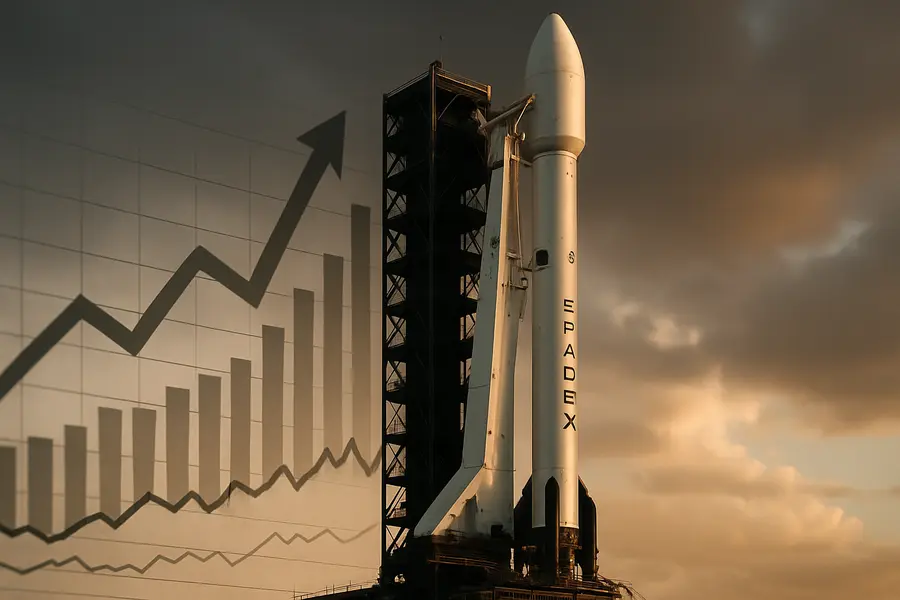
SpaceX's record $75B IPO pushed SPCX to a $2.1 trillion market cap, but at 94 times sales with xAI burning cash, the valuation may limit future returns.
- SPCX debuted June 12, 2026 at $135/share, closing at $160.95 (+19%) in the largest IPO in history, raising $75 billion
- Morningstar sets SpaceX fair value at $780 billion — roughly half the current market cap — flagging xAI as a "material threat of value destruction"
- Starlink's $4.4B operating profit in 2025 funded xAI's $12.7B capex and a $15B+ Starship program, driving a $4.94B net loss
Lead
SpaceX joined the ranks of the world's most valuable public companies on June 12, 2026, when shares of SPCX opened at $150 on the Nasdaq and closed the session at $160.95 — 19 percent above the $135 offering price — giving the aerospace and artificial intelligence company a market capitalisation of approximately $2.1 trillion in the largest initial public offering on record. The euphoric debut raised $75 billion and vaulted Elon Musk's rocket company past several of the world's most established technology firms in a single trading session. Within days, the SpaceX valuation itself had become the central subject of analyst debate: at 94 times 2025 revenue of $18.7 billion, for a company that posted a $4.94 billion GAAP net loss, the market is pricing flawless execution on multiple fronts simultaneously.What Happened
SpaceX filed its S-1 registration document in early April 2026 and priced the offering at the high end of its target range, implying a $1.75 trillion valuation — roughly three times Nvidia's revenue multiple at the time. SPCX surged further on secondary-market momentum, crossing $2.1 trillion within days of listing, shattering the previous record held by Saudi Aramco's 2019 offering.
Total 2025 revenue reached $18.7 billion, a 33 percent increase from $14.1 billion in 2024. Yet the company burned through nearly $21 billion in capital expenditure last year alone — exceeding the entire annual revenue base — while reporting a consolidated net loss of $4.94 billion. Q1 2026 accelerated that trend, with a single-quarter net loss of $4.28 billion.
Starlink: The Engine Under Pressure
Starlink, SpaceX's satellite internet division, remains the company's only consistently profitable business. The unit generated $11.4 billion in revenue in 2025 — 61 percent of the company total — and $4.4 billion in operating profit. Subscriber numbers reached 10.3 million in Q1 2026.Early warning signals are emerging, however. Average revenue per user fell 18 percent year over year to $81 per month in Q1 2026, reflecting price competition and promotional initiatives in emerging markets. Without continued margin expansion in the satellite internet segment, the company's loss profile worsens materially.
Amazon (AMZN) has deployed more than 300 satellites under Project Kuiper, its low-Earth-orbit broadband initiative, and is edging toward commercial service. Starlink holds a commanding lead — tens of thousands of satellites versus Kuiper's nascent constellation — but the competitive runway is narrowing. Dominance in space does not automatically confer dominance in AI, where the contest is far more intense.The xAI Burden
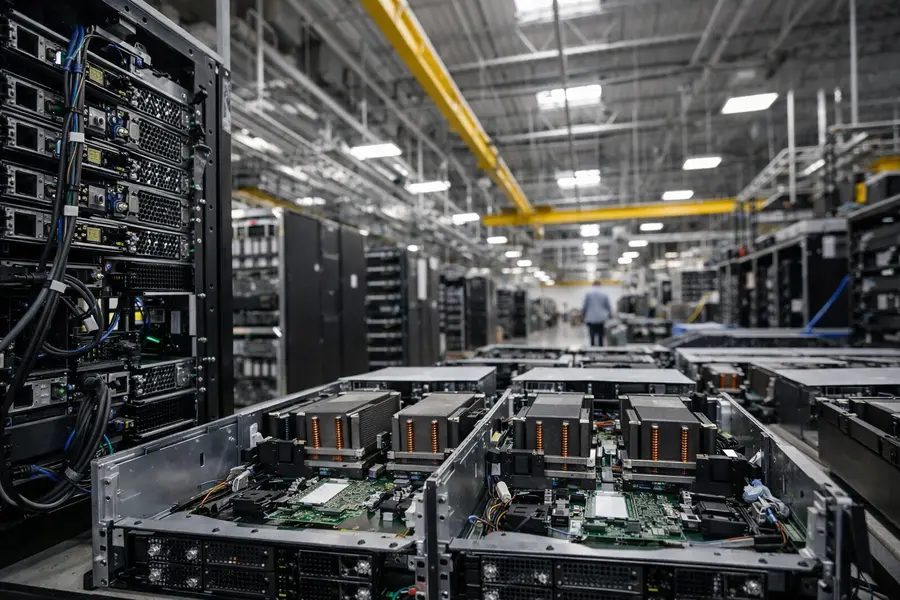
The deeper structural concern centres on xAI, the artificial intelligence venture integrated into SpaceX's financial perimeter. Of the company's $21 billion in 2025 capital expenditure, $12.7 billion — more than 60 percent — was directed into xAI data-centre buildout. That sum exceeds what SpaceX spent on rockets and satellites combined.
The rocket and launch division posted a $657 million operating loss in 2025. The AI segment recorded a $6.35 billion deficit. Starlink's $4.4 billion operating profit was the sole source of internal funding for both. In this configuration, Starlink is not merely a business unit; it is the economic engine sustaining two capital-intensive operations that have yet to generate returns at scale.
Morningstar, in a pre-IPO analysis, placed SpaceX stock fair value at $780 billion — roughly $63 per share and 53 percent below the offering price — and characterised xAI as a "material threat of value destruction," citing its economic moat as "indeterminate." The firm noted that neither a rapidly reusable Starship architecture nor the AI buildout has cleared the engineering and commercial milestones embedded in bullish valuation models, and it does not expect those milestones to be reached before at least 2028.
Strategic Context
At the core of the SpaceX stock news cycle following the IPO is a tension between two businesses at different stages of maturity. The launch and satellite business is established, technically differentiated, and profitable at the Starlink level. The AI operation is early-stage, competing in a market crowded with players — Alphabet, Microsoft, Meta — that carry deeper infrastructure, more established developer ecosystems, and no obligation to simultaneously fund rocket programmes.
Musk has stated that SpaceX is targeting $1 trillion in annual revenue by 2030. Achieving that figure would require growing revenue by more than 50 times over five years from the 2025 base — a trajectory without precedent at this scale of enterprise.
History teaches a consistent lesson for Elon Musk space ventures trading at historic multiples: companies entering public markets among the world's ten largest by capitalisation face structural headwinds from size alone. The pool of incremental buyers that can absorb continued appreciation narrows; absolute dollar inflows required to sustain price appreciation grow correspondingly larger. At $2.1 trillion, SPCX carries the sixth-largest market capitalisation among U.S.-listed companies, leaving limited margin for the execution stumbles that routinely accompany frontier technology development.
Starship: The Long Bet
Starship, SpaceX's next-generation fully reusable super-heavy-lift rocket, has consumed more than $15 billion in development capital. The vehicle sits at the centre of the company's long-term unit economics — enabling dramatically lower cost-per-kilogram to orbit — but remains in test-flight phases, with commercial deployment at scale not expected before the late 2020s. Each year of delayed commercial availability pushes out the revenue inflection point that would begin to compress the current revenue multiple toward defensible territory.Outlook
SPCX enters its first weeks of public trading carrying an extraordinary combination of genuine competitive advantage and speculative premium. Starlink's cash generation is real, scalable, and defensible in the near term. The xAI bet and the Starship development programme are longer-dated and substantially uncertain. For the current valuation to prove correct, execution across all three vectors — satellite internet expansion, AI commercialisation, and rocket reusability — would need to proceed ahead of historical precedent. Morningstar's $63 fair value anchors the opposite end of that probability distribution. The gap between those two estimates defines precisely the risk investors are underwriting at the current SpaceX valuation.