Pomegra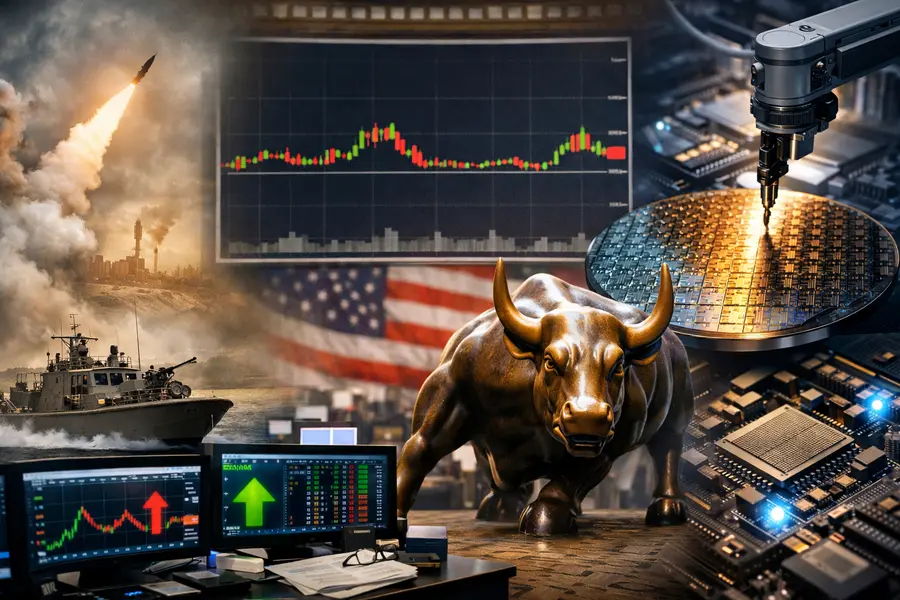
The S&P 500 ends the week little changed as a sharp semiconductor sell-off and Middle East war anxiety cancel out defensive-sector strength, leaving investors in a tense holding pattern.
- The S&P 500 closed near flat at 7,412, with the Philadelphia Semiconductor Index shedding 3.1% and Nasdaq falling further.
- Brent crude retreated ~4% to $96.8/barrel after Reuters reported China-backed Pakistan-Iran diplomatic outreach, easing the worst market fears.
- Defensive sectors — utilities, consumer staples, healthcare — recorded gains as investors rotated out of high-beta technology positions.
Lead
The S&P 500 ended Friday, July 25, within fractions of unchanged, closing at approximately 7,412 as two opposing forces fought each other to a draw: a sharp sell-off across semiconductor stocks driven by geopolitical risk and profit-taking, and a broad advance in defensive sectors benefiting from the same flight-to-safety instinct. The Nasdaq Composite, with its heavier technology weighting, fared worse, while the Dow Jones Industrial Average held steadier ground.
What Happened
The session unfolded in two competing narratives. By midday, the Philadelphia Semiconductor Index (SOX) was down more than 3%, with Micron Technology (MU) leading declines at –8%, Intel (INTC) falling 6%, and Broadcom (AVGO) and Advanced Micro Devices (AMD) each shedding roughly 3%. NVIDIA (NVDA), which closed Thursday at $206.84, added to pressure on the broader index.
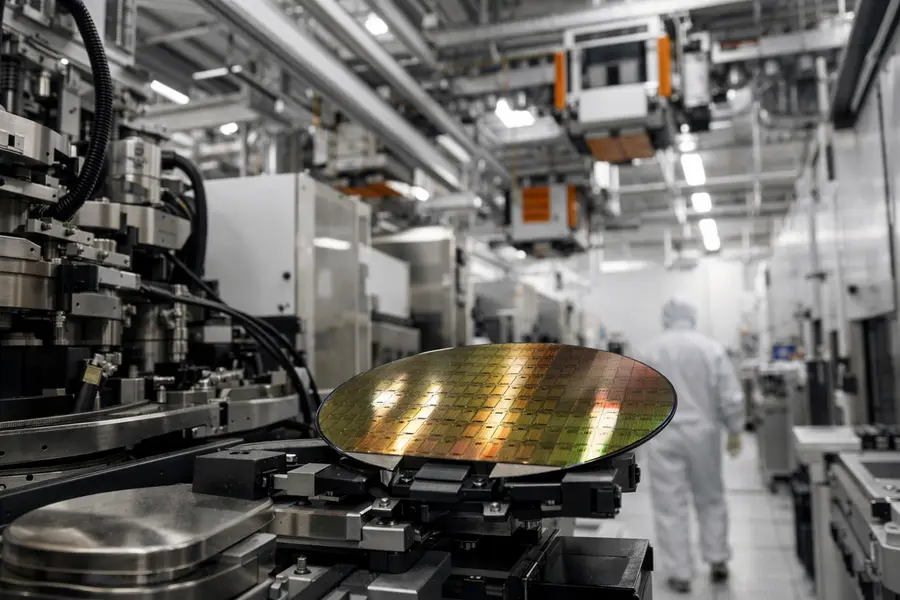
The semiconductor rout carried dual catalysts. First, investors continued to digest Taiwan Semiconductor Manufacturing Co. (TSM)'s second-quarter earnings, released earlier in the week, which showed profit surging 77.4% year-over-year and revenue rising 36% — results that beat consensus — but were overshadowed by a capital expenditure guidance hike to $60–64 billion for the full year, up from a prior range of $52–56 billion. Separately, reports of SK Hynix moderating its high-bandwidth memory production expansion rekindled concerns that the AI infrastructure build-out may be outpacing near-term demand.
Meanwhile, Middle East war tensions kept a ceiling on any tech recovery. The US-Iran conflict, now in its fifth month, has seen U.S. forces conduct more than a dozen consecutive nights of strikes on Iranian targets. Tehran's periodic threats to close the Strait of Hormuz — a chokepoint for roughly 20% of global seaborne oil — have kept Brent crude above $95/barrel for the better part of three weeks, injecting persistent inflation risk into market models.
Oil and the Diplomatic Wild Card
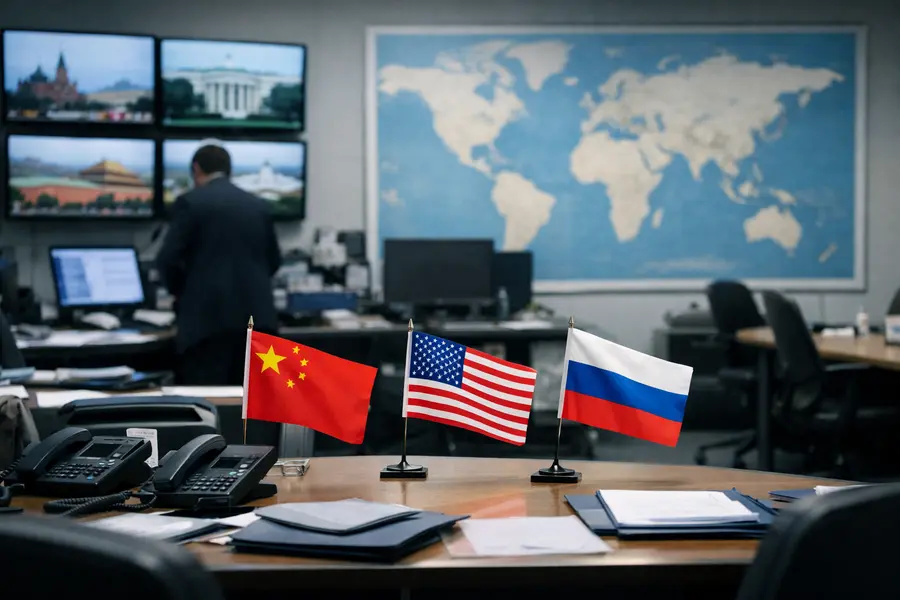
The session's most consequential headline arrived when Reuters and subsequent wire services reported that Pakistan, acting on a China-initiated push, was exploring revival of U.S.-Iran peace talks, with Iran's interior minister having visited Islamabad twice in ten days. Beijing's foreign ministry confirmed its support for Pakistan's mediation role, pledging to "play an active role in restoring peace and tranquillity in the Gulf region."
For context, Brent crude crossed $100/barrel earlier this week for the first time since late May, and the broader commodity complex has surged over 12% in July alone on Middle East war supply-disruption fears. Treasury yields followed energy prices higher over the week, with investors increasingly pricing in the possibility that energy-driven inflation could complicate the Federal Reserve's rate path under Chairman Kevin Warsh.
Defensive Stock Rotation
Where technology gave ground, classic defensive sectors quietly advanced. The Consumer Staples Select Sector SPDR (XLP) extended what has become one of its strongest annual runs in a decade, with the ETF now up approximately 13% year-to-date. The Utilities Select Sector SPDR (XLU) posted a gain on the session; the fund carries a five-year beta of 0.49, making it a natural destination for capital exiting high-volatility names.
Healthcare (XLV) similarly attracted inflows as investors sought stable earnings streams insulated from semiconductor cycle risk and oil-price shocks. The pattern reflects a broader defensive stock rotation that began in earnest during the first half of 2026, as AI-related valuations stretched and the broadening of earnings growth drew capital toward mid-cap value and dividend-paying industrials.Geopolitical Dimension
The U.S.-Iran conflict has become one of the most consequential geopolitical variables for global asset prices in 2026. Its economic transmission channels are explicit: higher energy costs squeeze consumer spending, complicate central bank inflation projections, and raise shipping insurance premiums on tankers transiting Gulf waters. Houthi attacks on Saudi tankers in the Red Sea have added a further dimension of supply-chain unpredictability.
A prolonged conflict at current oil-price levels is estimated to raise odds of a broader inflationary resurgence, potentially keeping the Fed on hold longer than markets previously priced. That calculus has powered the rotation toward income-generating defensive names and away from rate-sensitive growth equities — particularly in the chip stock complex, where elevated multiples leave little margin for macro error.
Outlook
The S&P 500's near-flat close masks a market under significant cross-currents. A resolution — or even a credible diplomatic pathway — in the Iran conflict would likely trigger a sharp decline in oil prices and a rapid recovery in semiconductor and technology equities. Absent that, the Middle East war impact on stocks is expected to persist as a drag on risk appetite well into the third quarter. The chip sector faces an additional reckoning as investors weigh record AI capital expenditure against uncertain near-term returns; TSMC's raised capex guidance is a data point that will dominate semiconductor narratives into the autumn earnings season. Defensive sectors retain their structural appeal in an environment of elevated geopolitical uncertainty and a hawkish Fed posture.