Pomegra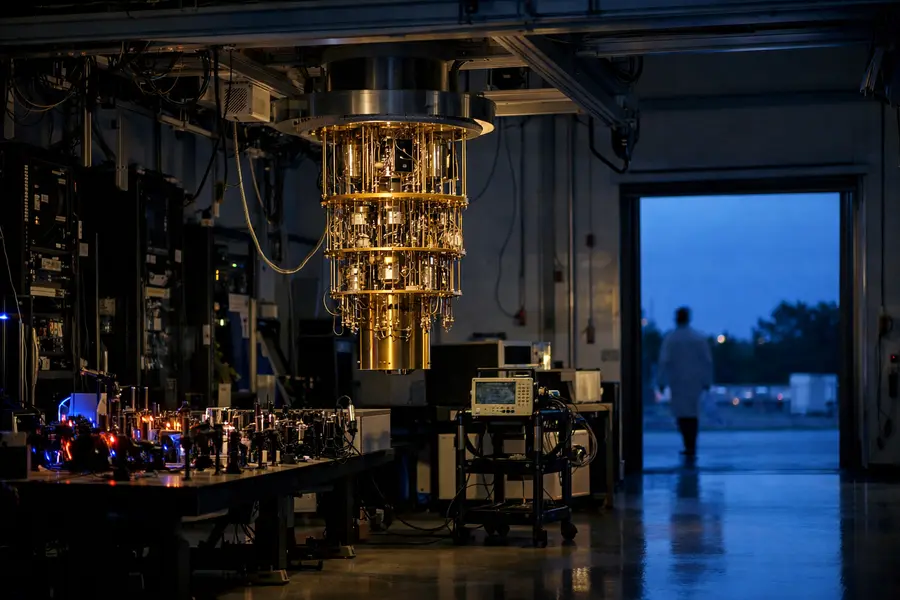
IonQ surged 12.4% on its Investor Day after raising full-year 2026 revenue guidance 63% to $450M-$460M, backed by the completed SkyWater acquisition.
- IonQ raised full-year 2026 revenue guidance to $450M-$460M, up sharply from $280M-$290M issued just five weeks earlier.
- Q2 2026 revenue hit $80.1M, up 287% year-over-year, marking the company's fifth consecutive quarter of record results.
- The $1.8B SkyWater Technology acquisition, closed July 31, underpins both the guidance hike and the launch of the new 256-qubit Superion system.
Lead
IonQ (IONQ) shares surged as much as 12.4% intraday on September 8, 2026, after the quantum computing company delivered five simultaneous press releases that raised its full-year revenue outlook by more than 60% and unveiled its sixth-generation quantum system. Trading volume reached 36.9 million shares, running approximately 73% above the three-month average, as institutional capital accelerated into a name that had quietly built one of the most consequential positioning stories among ai stocks over the preceding two quarters.Why Did IonQ Stock Rally on Investor Day?
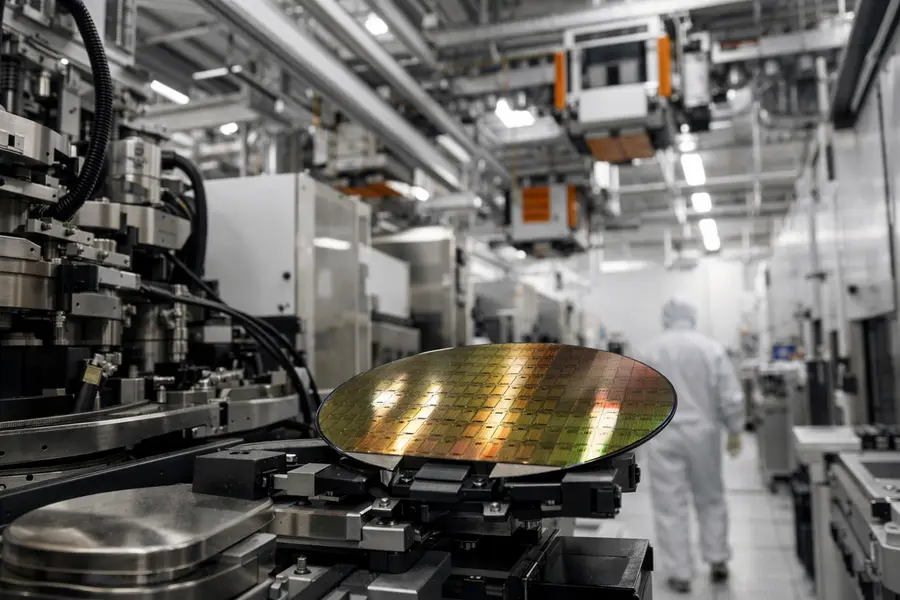
IonQ's full-year 2026 revenue guidance climbed to $450 million to $460 million from the $280 million to $290 million range issued five weeks earlier, driven by the consolidation of SkyWater Technology starting July 31, the day the $1.8 billion acquisition formally closed. The company simultaneously introduced Superion 256, a 256-qubit trapped-ion quantum computer whose chips rolled off SkyWater's production line - the first system to benefit from IonQ's newly vertical manufacturing stack. Orders are open; customer deliveries begin in 2027. The confluence of raised guidance, a new flagship product, and a concrete hardware roadmap triggered broad institutional buying that pushed IONQ to an intraday high, making it the most heavily traded quantum computing name of the week against a backdrop otherwise dominated by artificial intelligence headlines.
What Built the Momentum Before Investor Day?
Institutional accumulation predated the event by months. UBS Asset Management raised its IONQ stake by 24.1% in the first quarter of 2026, bringing its position to 450,031 shares valued at approximately $9.9 million. Man Group opened a new position of 26,798 shares in the second quarter at roughly $1.4 million. Heading into September, institutional investors held approximately 41.4% of IONQ's outstanding shares, with Morgan Stanley the largest disclosed holder at approximately $1.4 billion. Jefferies had designated the September 8 Investor Day as the company's defining near-term catalyst, maintaining a Buy rating and a $75 price target - implying approximately 88% upside from the prior week's close.
The fundamental backdrop reinforced that conviction. Q2 2026 revenue of $80.1 million, up 287% year-over-year, marked the fifth straight record quarter, driven by global deployments of IonQ's Tempo systems, accelerating cloud utilization, and early SkyWater revenue contributions. That August print had already widened IonQ's lead over commercial quantum peers.
Strategic Context: SkyWater and Vertical Integration
The SkyWater deal reshaped IonQ's competitive structure more than any previous transaction. Operating as a wholly owned subsidiary while continuing to serve its existing semiconductor foundry customers, SkyWater gives IonQ domestic chip manufacturing capability - a critical differentiator as export-control pressures intensify and governments prioritize supply-chain sovereignty in advanced computing. SkyWater also announced a dedicated quantum foundry service and a multiyear manufacturing agreement with Qolab, a superconducting quantum computing firm, signaling that the foundry will serve the broader quantum hardware ecosystem beyond IonQ's own roadmap.
Alongside the hardware releases, IonQ disclosed an $8.18 million quantum-security agreement with Congruity360 and published a technical resource estimate detailing the computational cost of threatening a widely used digital-signature system - a move aimed at accelerating enterprise and government preparedness planning. A $28 million DARPA contract extension under its precision-timing program added a further layer of government-revenue visibility.
Outlook
IonQ's revised 2026 revenue guidance represents a structural shift: the company is no longer a pure-play quantum research platform but a vertically integrated hardware and services business with recurring government and enterprise contracts. The pending regulatory approval for its Oxford Ionics acquisition, valued at more than $1 billion, would extend that integration into trapped-ion chip design. D-Wave Quantum (QBTS) and other quantum peers saw sympathy moves on the day, underscoring that institutional attention to the quantum sector is broadening as commercial deployments move from proof-of-concept to revenue-generating scale. IonQ closed at $40.47 on September 8, and with five new product and contract announcements in a single morning, it positioned itself as the period's defining quantum catalyst alongside a market week otherwise defined by AI infrastructure spending.
Mentioned tickers: IONQ, QBTS