Pomegra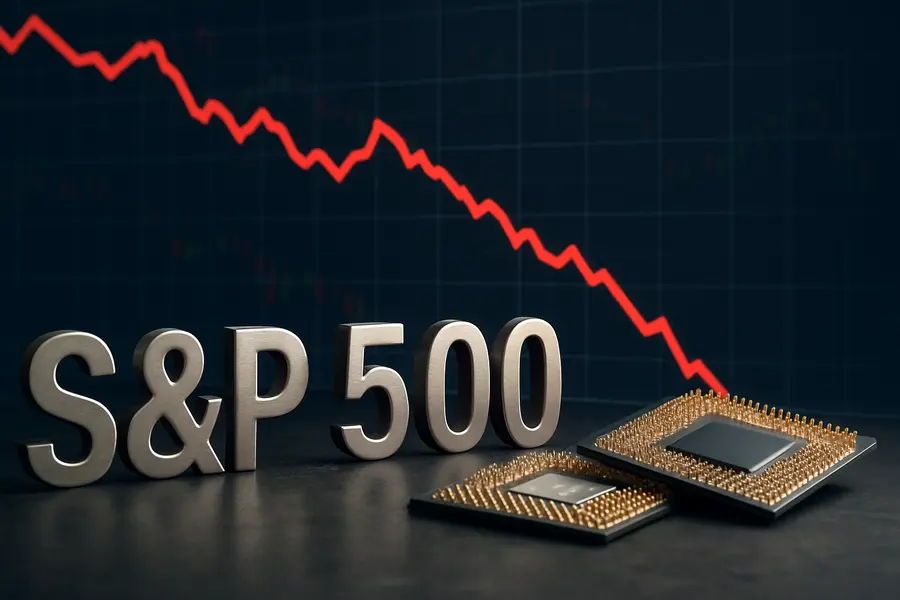
A $1 trillion chip selloff has rekindled June swoon fears for the S&P 500, stretched above key moving averages with its narrowest market breadth in decades.
- The S&P 500 fell 2.64% on June 5 to 7,383, while the Nasdaq dropped 4.18% — its worst session since April 2025.
- Bank of America's contrarian Sell Side Indicator hit its highest reading since February 2025, triggering a "sell in June" call with a 7,100 index target.
- Ten stocks drove roughly 72% of the S&P 500's 1,065-point March rally, leaving the index hostage to any stumble in mega-cap leadership.
Lead
A sharp selloff in semiconductor shares wiped more than $1 trillion from global equity markets on June 5, pulling the S&P 500 to 7,383.74 — down 2.64% on the session — and reigniting a question that trails every strong spring rally: is a June swoon next? The selloff arrived at a moment when positioning, valuations, and technical exhaustion had converged into one of the most fragile backdrops the index has faced since the March lows.
What Happened
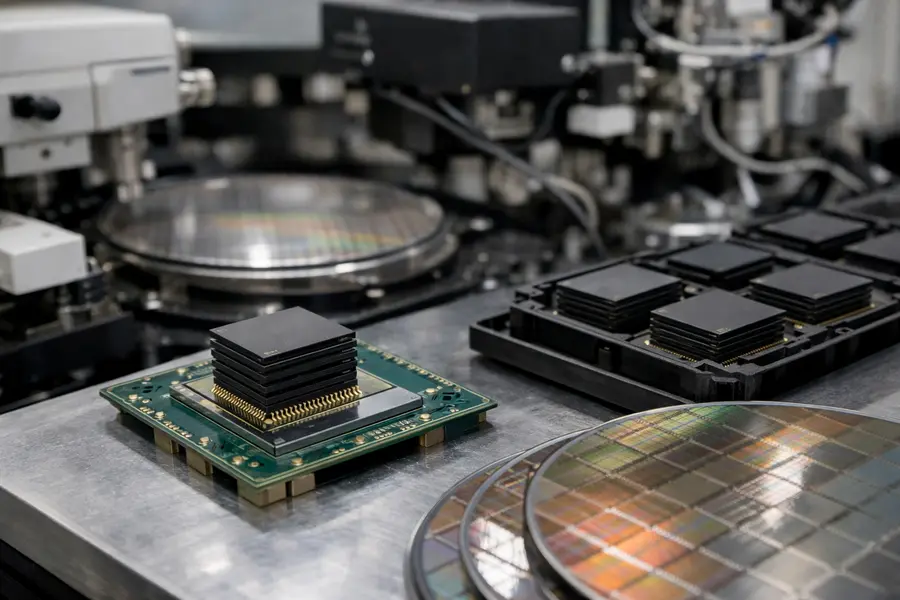
The proximate trigger was Broadcom (AVGO), whose weaker-than-expected artificial-intelligence chip outlook triggered a cascade across the sector. Marvell Technology (MRVL) fell roughly 16%, Micron Technology (MU) dropped 13%, and Intel (INTC) and Advanced Micro Devices (AMD) each shed around 11%. The Philadelphia SE Semiconductor Index posted its largest single-day percentage decline since March 2020. The Nasdaq Composite closed at 25,709.43, off 4.18% — its steepest drop in over a year. The Dow Jones Industrial Average lost 695.15 points, or 1.35%, to settle at 50,866.78.
The violence of the move reflected how tightly the market had been wound. The S&P 500 had advanced 19.1% from its March 30 low — a recovery propelled overwhelmingly by AI-driven earnings optimism. The Information Technology sector surged 44.5% over the same stretch, dragging the headline index to valuations that left little room for disappointment.
Market Reaction
Beyond semiconductors, the June 5 session exposed a macro fault line. The U.S. economy added 172,000 jobs in May, well above consensus, sending Treasury yields sharply higher and rattling rate-sensitive equities. With inflation running at 3.8% and the Federal Reserve holding its benchmark rate at 3.50%–3.75% after six cuts between 2024 and 2025, the probability that the central bank returns to a tightening stance later in 2026 has risen materially. A rate hike as early as July is no longer dismissible. That backdrop removes the Fed backstop that contained prior market pullbacks.
Breadth Warning
The selloff amplified a structural concern that equity strategists had flagged for weeks. Approximately 72% of the S&P 500's 1,065-point advance from the March low was driven by just 10 companies, with the top 10 index weights near 35.6% — a concentration level not seen since the dot-com era. Only 27% of S&P 500 constituents outperformed the index over the trailing 30 trading sessions, a reading in the first percentile of all observations across the past three decades. The median index component sat 13% below its own 52-week high even as the headline gauge hovered near record territory.
The June Swoon Case
Bank of America's Sell Side Indicator — a contrarian measure of Wall Street's aggregate equity allocation — hit its highest reading since February 2025 last week, the same threshold that preceded a 1,000-point S&P 500 decline earlier in the year. BofA set a price target of 7,100 for the index, implying a further decline of roughly 7% from last week's close, and issued a direct "sell in June" call. The bank's strategists flagged that retail and institutional investors have executed a classic bull capitulation — flooding from cash into equities near the apex of a 19% rally — behavior that has historically served as a contrarian sell signal. Technical indicators reinforce the caution. The S&P 500's 14-day Relative Strength Index had spent most of the prior three weeks above 70, the conventional overbought threshold, while the index itself stretched 10% to 15% above its key moving averages. Historically, June ranks as the fourth-worst month for the S&P 500 going back to 1950, and in years where the market entered May at or near all-time highs, summer performance deteriorated materially below the long-run average.Geopolitical and Macro Overlay
The macro backdrop compounds the risk. Crude oil inventories remain tight, with major energy producers warning that prices could spike to $150 per barrel if Gulf hostilities resume. Elevated energy costs feed directly into inflation, further constraining the Fed. A forward price-to-earnings multiple of 22 times on S&P 500 earnings — and a trailing P/E of 27.4 times as of June 2 — leaves scant margin for revenue or guidance misses in the quarters ahead.
Outlook
Bank of America maintains an S&P 500 year-end target of 8,000 and does not frame the current environment as the onset of a bear market. But its strategists identify June through September as a critical vulnerability window, and the events of June 5 illustrate exactly how a narrow, overextended rally can unravel quickly when a single sector disappoints. The June swoon is not inevitable — earnings resilience and AI capital expenditure provide genuine support — but the threshold for a S&P 500 correction of 7% to 10% has rarely been lower. The semiconductor rout may prove to be the first chapter rather than the whole story. Mentioned tickers: SPY, QQQ, AVGO, MRVL, MU, INTC, AMD, SPXMarkets