Pomegra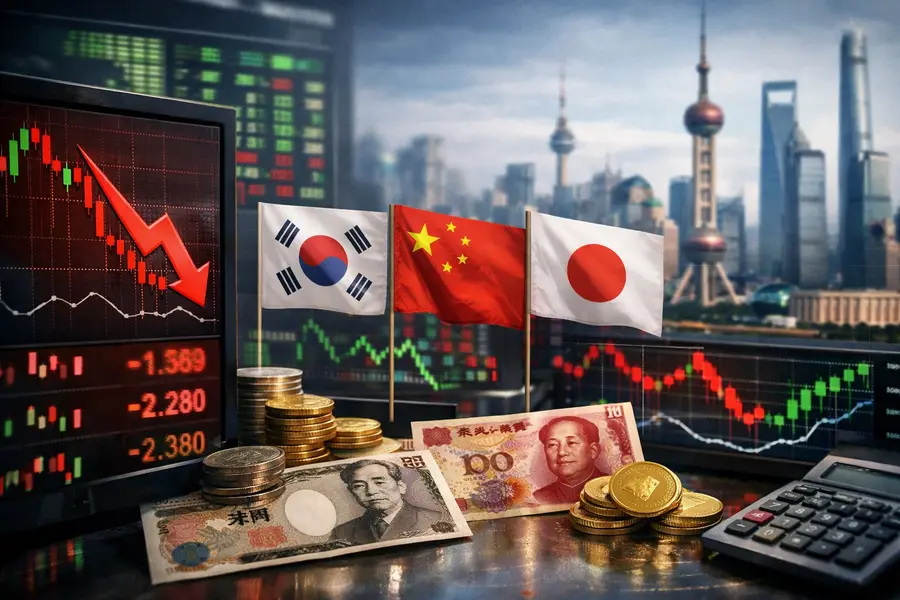
Asian equity markets are trading in divergent territory as investors take stock following one of the largest single-session value wipeouts of 2026, with the Nikkei 225 holding near multi-week lows while the Hang Seng staged a partial recovery on Beijing policy signals.
- Asia's equity markets erased close to $1 trillion in a single session on July 17, led by a 4% Nikkei collapse and an 8% Kospi plunge.
- Alphabet's delay of its Gemini 3.5 Pro AI model was the immediate trigger, amplifying AI capex concerns across Asian stock market news coverage.
- Hong Kong's Hang Seng rebounded 2.4%; Tokyo and Seoul remained under pressure, underscoring the uneven emerging markets recovery.
Lead
Asian equity markets posted mixed results Tuesday, July 21, as benchmark indexes across the region diverged following the sharpest single-session global market sell-off of 2026. Japan's Nikkei 225 held near 64,141 — close to its close on July 17, when it collapsed more than 4% and stripped an estimated $350 billion from Japanese equity values. Hong Kong's Hang Seng recovered 2.36% to 25,143.05 on Monday, while the Shanghai Composite edged up 0.85% to 3,796.28, marking fragile but uneven stabilization across the region's major Asian stock market venues.
What Happened
The epicenter of the rout was Thursday, July 17, when a wave of selling triggered in New York swept every major Asian stock market trading session. Japan's Nikkei fell more than 4%, South Korea's Kospi slumped between 6% and 8%, Taiwan's TAIEX shed more than 3%, and China's Shanghai Composite dropped approximately 1.55%. Taken together, the single-session losses for Japan ($350 billion), mainland China ($360 billion), Hong Kong ($110 billion), and Taiwan ($140 billion) totalled close to $1 trillion — one of the largest single-day regional value erasures since the 2024 global AI rerating.
The immediate catalyst was a Bloomberg report that Alphabet had encountered technical performance issues with its flagship Gemini 3.5 Pro AI model, delaying its launch by several months. Alphabet stock fell 4.4% in New York on the news. For a region that had priced in relentless AI capital expenditure — with the Kospi more than doubling in the first half of 2026 on the strength of memory-chip demand — the implied slowdown in AI model deployment proved corrosive to sentiment across Asian stock market participants.
AI Capex Concerns Mount
The Alphabet delay crystallized a concern that had been building for weeks: the gap between what major technology companies are spending on AI infrastructure and what those models are generating in commercial revenue was widening. Chipmakers bore the worst of the adjustment. South Korea's SK Hynix fell more than 11% on July 17; Samsung Electronics shed more than 7%. Leveraged single-stock ETFs tracking both companies amplified every move, forcing Korean regulators to halt new leveraged product listings and triple minimum deposit requirements — emergency measures not deployed since the 2024 volatility spike.
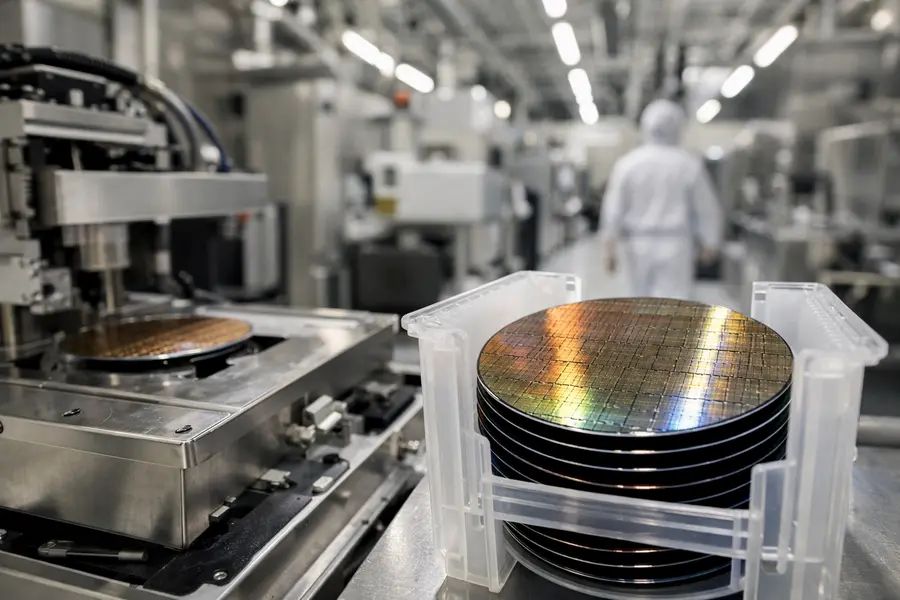
The turbulence arrived despite robust underlying fundamentals. Taiwan Semiconductor Manufacturing Company — the bellwether for the AI supply chain — raised its full-year 2026 revenue growth forecast to "slightly above 40%," up from a prior estimate of "more than 30%," citing sustained demand from hyperscale customers. TSMC's guidance underscored the distinction investors are now drawing between near-term AI capex sentiment and longer-cycle demand realities — a distinction that will define Asian equity pricing in the months ahead.
Hang Seng Outperforms on Policy Signals
Among the major regional indexes, Hong Kong's Hang Seng has shown the most resilience since the sell-off. The index climbed 2.36% to 25,143.05 Monday, making it the best-performing major benchmark in Asia during that session. The recovery was supported by signals that Beijing intends to defend domestic equity markets: two major state-backed funds disclosed fresh equity purchases, and financial regulators convened meetings with key market participants to reinforce that a policy floor remains in place.
The divergence between Hong Kong and Tokyo reflects structural differences in index composition. Hong Kong's weighting toward China consumer and technology names gave it exposure to Beijing's stabilization signals. Japan's Nikkei, by contrast, is heavily weighted toward exporters and semiconductor-adjacent equipment makers, leaving it more exposed to the global AI capex narrative and the yen's safe-haven appreciation.
Emerging Markets Under Pressure
The global market sell-off extended well beyond Northeast Asia. Emerging markets across Southeast Asia experienced capital outflows as risk appetite contracted and the U.S. dollar strengthened, with the offshore yuan advancing to approximately 6.7760 per dollar on safe-haven demand tied to ongoing U.S.-Iran military tensions. Oil prices remained elevated throughout, adding to the import-cost burden for energy-dependent Asian economies and creating headwinds for current accounts across the region.
The combination of a stronger dollar, rising energy costs, and reduced appetite for risk assets recreated conditions that have historically pressured emerging market currencies and sovereign spreads. Regional central banks entered this period with stronger reserve positions than in prior cycles, limiting the risk of disorderly currency moves, though the macro headwinds remain live.
Outlook
Asian stock market conditions are now in a holding pattern, balancing near-term anxiety about AI capital spending discipline against the durable demand picture implied by TSMC's upgraded guidance. The next decisive data points are U.S. hyperscaler earnings — results from Microsoft, Meta, and Amazon due in coming weeks — which will either validate or challenge the thesis that AI model deployment is materially slowing. For regional equity markets, the near-term direction hinges on whether Beijing's policy support stabilizes the Hang Seng at current levels, whether yen appreciation compresses Nikkei-listed exporters further, and whether emerging markets capital outflows deepen as dollar strength persists. The uneven recovery so far suggests the region is entering a period of index-level divergence, rewarding markets with domestic policy catalysts while penalizing those most exposed to the global AI trade.Mentioned tickers: ^N225, ^HSI, 000001.SS, ^KS11, ^TWII, 000660.KS, 005930.KS, TSM, GOOGL, MSFT, META, AMZN