Pomegra
Taiwan will make unlicensed shipments of AI servers and advanced chips to China a crime, a commitment under its US trade deal that cut tariffs to 15%.
- Taiwan will add AI servers and leading-edge chips to its controlled export list, with up to five years in prison for violations.
- The US cut tariffs on Taiwanese goods from 20% to 15% in exchange for Taipei aligning its export controls with Washington's.
- The change follows a $2.5 billion server diversion case involving Supermicro (SMCI) and Nvidia (NVDA) hardware.
Lead
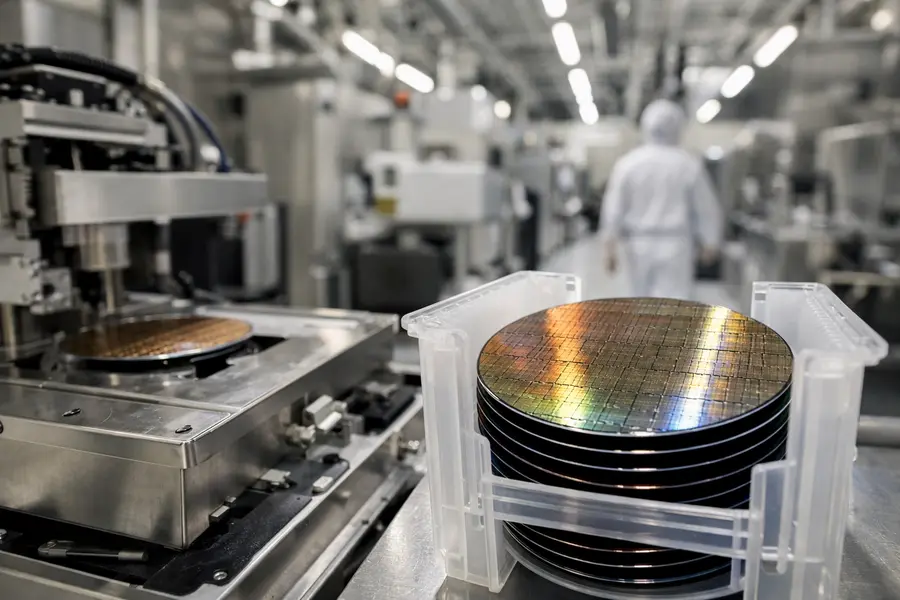
Taiwan's Economic Affairs Minister Kung Ming-hsin announced on October 16 that Taipei will add artificial intelligence servers and cutting-edge semiconductors to its controlled export list. Once the rules take effect, shipping restricted hardware to China without a license will be a criminal offense under the Foreign Trade Act. The penalty is up to five years in prison and a fine of up to NT$3 million, roughly $92,500. The step fulfils commitments in the 2026 US-Taiwan reciprocal trade agreement, which lowered the US tariff on Taiwanese goods to 15% from 20%. It puts new pressure on the global AI chip supply chain, where Taiwan assembles most of the world's advanced servers and manufactures most leading-edge processors.
What Does the New Taiwan Export Rule Do?
The rule closes a legal gap by turning unlicensed AI hardware exports to China into a direct export-control offense. Until now, Taiwanese prosecutors have had to rely on indirect charges such as breach of trust and document forgery, because China was not fully classified as a restricted destination for these goods.
The practical effect is that exporters of covered servers and accelerators, including systems built around Nvidia processors, will need a government license for Chinese-bound shipments. Without one, executives, brokers and logistics staff could face criminal exposure rather than lighter penalties for paperwork violations. The final list of controlled items and the effective date have not been published.
Why Is Taiwan Acting Now?
Taiwan is acting because of its trade commitments to Washington and a run of high-profile diversion cases. In March, US prosecutors charged Supermicro co-founder Yih-Shyan "Wally" Liaw and two others with conspiring to violate export laws, in a case alleging about $2.5 billion of servers loaded with export-controlled Nvidia chips were routed to China. The indictment describes dummy servers staged to fool inspectors.
In August, Taiwanese prosecutors indicted nine people over 74 Nvidia B300 servers that allegedly reached Chinese buyers. Two of the defendants were employees of Supermicro's Taiwan unit. Taipei first floated criminal penalties for such exports in June. The trade agreement then tied the tariff relief to alignment with US technology controls.
How Does the 15% Tariff Deal Fit In?
The tariff reduction is the commercial payoff for Taiwan's tighter controls. Cutting the US levy on Taiwanese goods to 15% from 20% lowers costs for a wide range of exporters, from electronics makers to machinery producers. In return, Taipei agreed to harmonize its export regime with US policy, which restricts the sale of advanced AI accelerators to China.
For Washington, the arrangement moves enforcement closer to the point of manufacture and assembly. Most advanced AI servers pass through Taiwanese contract manufacturers before shipping worldwide, so controls there reach a chokepoint that US rules alone cannot.
What Does It Mean for AI Stocks and Chip Supply Chains?
The rule raises compliance costs and legal risk for server makers, distributors and chip designers, which matters for investors tracking AI stocks. The most direct exposure sits with server assemblers such as Supermicro, whose Taiwan operations are already part of the enforcement record. Nvidia, whose accelerators are the main target of smuggling networks, faces closer scrutiny of its downstream channel, though the company does not sell restricted products to China directly. Taiwan Semiconductor Manufacturing (TSM), which fabricates the leading-edge chips, is exposed through its customers' shipping practices rather than its own sales.
Three effects are likely over the next 3 to 12 months:
- Tighter know-your-customer checks at distributors and system integrators, particularly in Southeast Asia and Hong Kong, the usual transshipment routes.
- Slower or more cautious order fulfilment for large server contracts with opaque end users.
- Greater regulatory alignment between Taipei and Washington, reducing the scope for arbitrage between the two regimes.
Geopolitical Dimension
The measure sharpens a structural tension. Taiwan's economy depends on the US as both a security partner and a major export market, while China remains a large customer for its electronics sector and a source of constant political pressure. Criminalizing AI hardware exports to China commits Taipei publicly to the US side of the technology divide. It also gives Beijing a fresh grievance in a relationship already strained by military activity around the island.
China's response is a variable. Chinese buyers have sought restricted hardware through intermediaries, and tighter Taiwanese enforcement may push demand toward domestic alternatives or other third-country routes.
Outlook
Taiwan's move converts a tariff concession into a binding legal change at the center of the AI hardware supply chain. The next milestones are the publication of the controlled-goods list, the effective date and the first licensing decisions. Until those details emerge, server makers and chip designers face higher compliance costs and greater legal risk, while the lower 15% tariff offsets part of the burden for Taiwanese exporters.
Mentioned tickers: NVDA, SMCI, TSM