Pomegra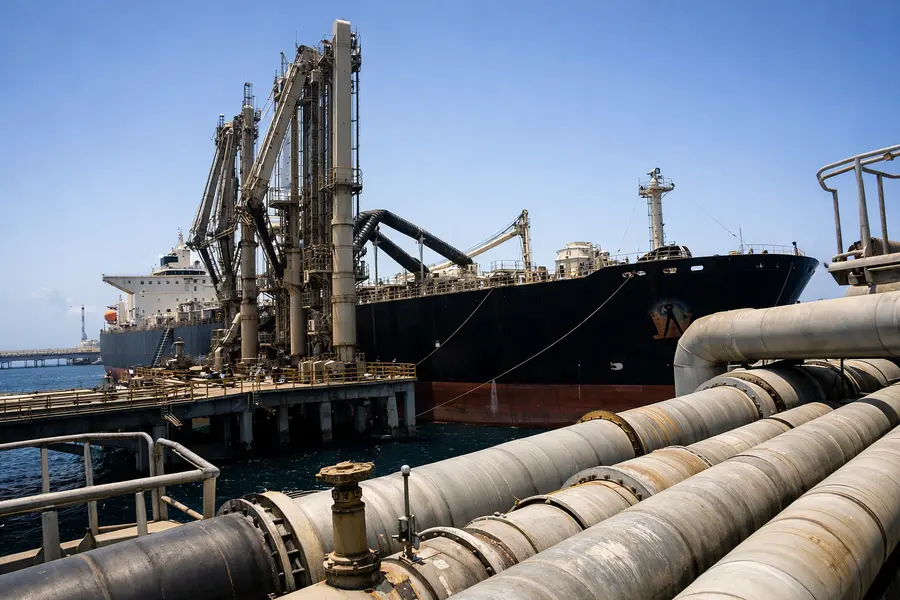
Aramco sent zero-allocation notices to European refiners following the East-West Pipeline attack, with the IEA calling the Hormuz crisis the worst oil supply shock on record as Macron seeks a coordinated G7 reserve release.
- Saudi Aramco told at least two European refining customers they will receive zero crude deliveries in October after drone strikes shut the East-West Pipeline on September 11
- The IEA formally designated the Strait of Hormuz disruption the largest supply shock in the history of the global oil market, with cumulative losses exceeding 1.3 billion barrels
- Brent crude pushed above $101 a barrel this month as French President Macron urges G7 partners to coordinate a second emergency oil stock release
Lead
Saudi Aramco (2222.SR) notified at least two European refining customers on September 18 that their October crude allocations under long-term supply agreements will be zero, according to people familiar with the matter - a direct consequence of the September 11 drone attack that shut Saudi Arabia's East-West Pipeline and removed the kingdom's last viable alternative export route around the closed Strait of Hormuz. Brent crude topped $101.21 a barrel on September 9, the international benchmark's highest close since May, as the International Energy Agency formally labeled the Hormuz crisis the largest supply disruption in the history of the global oil market. French President Emmanuel Macron responded by calling on G7 partners to convene for a second coordinated release of emergency oil reserves, warning that the bloc's first release - an unprecedented 400 million barrels authorized in March - has not been sufficient to offset the prolonged shortfall.Why Did Aramco Issue Zero-Barrel Notices to Europe?
Saudi Arabia had rerouted approximately 5 million barrels per day of crude exports through the East-West Pipeline - a 1,200-kilometer conduit stretching from the Eastern Province to the Red Sea port of Yanbu - after the Strait of Hormuz was effectively closed by the ongoing U.S.-Iran conflict that began on February 28, 2026. When Iraqi-origin drones damaged two pumping stations along the pipeline on September 11, Saudi Aramco lost its primary channel for delivering oil to Red Sea tanker terminals. With no operational western export route and Hormuz still blocked, the company had no capacity to honor its European term supply obligations for October.
Polish refiner Orlen (PKN.WA) issued more than 10 spot tenders in the days following the attack as it moved to secure replacement cargoes, illustrating the immediate procurement pressure on European refiners left without contracted Saudi barrels. Some European customers were told supply disruptions could extend through mid-November. Saudi Aramco said the pipeline is expected to resume partial operations within days and return to full capacity within approximately six weeks.
How Large Is the Hormuz Supply Shock?
The IEA's formal designation makes the Hormuz disruption the most severe in the agency's five-decade history. Flows through the strait collapsed from roughly 21.6 million barrels per day before the conflict to an average of 2.7 million barrels per day across March, April, and May - a 77-percent reduction - before recovering to approximately 4.9 million barrels per day by the second quarter of 2026. At the peak of the disruption in March, the agency calculated a loss of 10.1 million barrels per day of supply. Cumulative production losses from Middle Eastern exporters have now surpassed 1.3 billion barrels.
The crude oil price consequences have been historic. Brent recorded its highest-ever monthly price increase in March, rising approximately 65 percent, or $46 a barrel, before partially retreating. The pipeline attack has reignited that upward momentum, with the benchmark climbing back above $101 on September 9. Goldman Sachs has warned that Brent could exceed $120 a barrel in 2027 if Gulf output remains 4 million barrels per day below pre-war levels, though the bank does not treat that as its base case.
What Is Macron Proposing to the G7?
Macron wants G7 nations to reassess stock levels, export flows, and production capacity before committing to a specific release volume in what would be the second major coordinated emergency drawdown of the crisis. The IEA in March authorized member states to make 400 million barrels available to the market - the largest emergency stock release in the agency's history, with the United States contributing 172 million barrels. More than 300 million barrels have since been drawn from strategic reserves, yet global observed inventories remain approximately 507 million barrels below their pre-war level, with stocks drawing at an average pace of 2.8 million barrels per day over the past six months.
Macron described the first release as equivalent to "20 days of the volumes being exported through the Hormuz Strait" - a yardstick that underscores why strategic reserves alone cannot compensate for a sustained physical supply blockage. His G7 proposal reflects European concern that diesel and jet fuel prices are pushing into record territory as refineries compete for a shrinking pool of non-Gulf crude grades.
Geopolitical Dimension
The September 11 attack on the East-West Pipeline eliminates the buffer Saudi Arabia had constructed against Hormuz closure and exposes the full vulnerability of the kingdom's export infrastructure to a conflict it is not a direct party to. Energy security analysts note that the simultaneous loss of Hormuz throughput and Saudi pipeline capacity represents a structural escalation, not merely a temporary disruption. The IEA has consistently stated that physical reopening of the Strait of Hormuz remains the single most important variable for restoring supply and easing price pressure across the global economy - a condition that depends on the trajectory of the U.S.-Iran conflict rather than on any financial policy lever available to the G7.
Outlook
Aramco's pipeline is expected to partially resume within days, which should restore some October deliveries before the month ends - but the operational timeline leaves European refiners facing a supply gap with little margin for further delay. A second G7 emergency stock release, if agreed, would provide temporary crude oil price relief rather than a structural fix, given that observed global inventories are already 507 million barrels below pre-war levels. The IEA's designation of the Hormuz crisis as the worst supply shock on record sets a stark baseline: until the strait reopens, each additional disruption to alternative export routes compounds a shortfall that financial and logistical instruments can only partially offset.
Mentioned tickers: 2222.SR, PKN.WA