Pomegra
Global institutional real estate investment rose 37% in Q1 2026 to $55 billion, the strongest first-quarter reading since 2022, driven by Grade A commercial assets and data center demand.
- Cross-border real estate investment reached $55 billion in Q1 2026, up 37% year-over-year — the strongest first-quarter total since 2022.
- Asia Pacific posted a record $47 billion quarterly volume, up 31%, while U.S. office investment surged 61% year-over-year on near-zero new supply.
- Data center leasing revenue more than tripled year-over-year as infrastructure-led real estate emerged as the dominant capital allocation theme.
Lead
Global cross-border real estate investment closed the first quarter of 2026 at $55 billion, a 37% increase year-over-year and the strongest Q1 performance in four years, according to JLL research. Total direct real estate investment volumes reached $216 billion in Q1 2026, up from $183 billion in Q1 2025 and $135 billion in Q1 2024, confirming a sustained recovery across property market conditions worldwide.
What Happened
The 37% year-over-year surge in cross-border real estate investment Q1 2026 marks a decisive acceleration after two years of rate-driven caution. Grade A commercial assets absorbed the largest share of inflows, with Class A office space posting net absorption gains in 47 of 91 U.S. markets tracked in Q1. U.S. office investment volume rose 61% year-over-year, supported by the near-absence of new supply and intensifying corporate demand for premium space.
Industrial and logistics maintained its position as the second most-targeted sector. U.S. industrial leasing rose 24% year-over-year in the quarter, with big-box demand tripling and average asking rents recovering to $11.08 per square foot. Retail investment surpassed $15 billion — the strongest first-quarter figure since 2023 — as institutional investors rotated back into well-located, high-occupancy formats.Infrastructure-Led Real Estate Takes the Lead
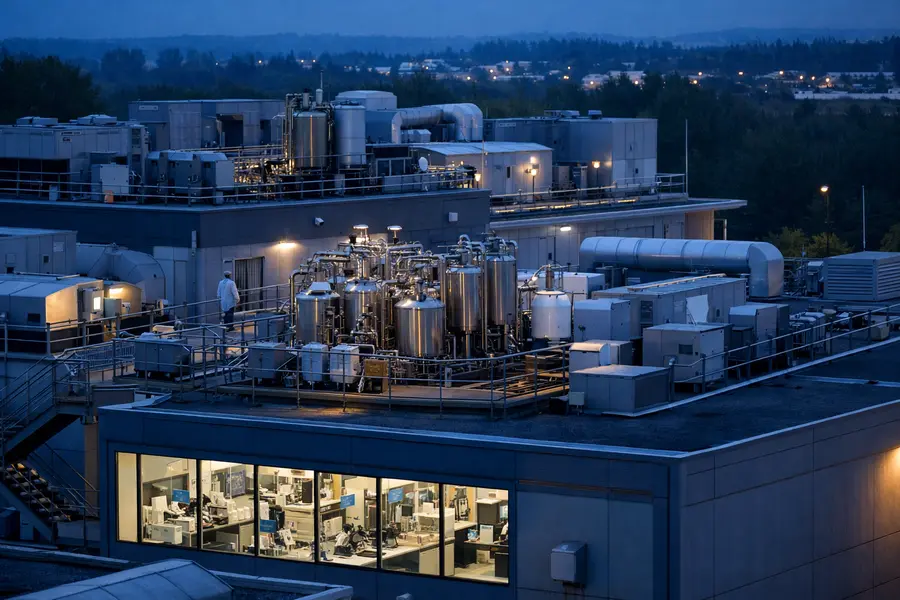
The most consequential structural shift in Q1 property market news is the rise of infrastructure-led real estate as the primary growth engine for institutional capital. Data center leasing revenue more than tripled year-over-year at CBRE Group (CBRE), propelling the firm's critical infrastructure services segment to 71% revenue growth in the quarter. CBRE's development arm, Trammell Crow Co., reported unrealized gains exceeding $900 million from data center land development alone in Q1 2026.
The AI infrastructure cycle continues to generate structural, long-duration demand for purpose-built real estate — a category that institutional allocators increasingly classify as core rather than opportunistic. CBRE raised its full-year 2026 core earnings-per-share guidance to a range of $7.60 to $7.80, implying 21% growth at the midpoint, with its data center business expected to grow above 60% for the full year. The firm's total Q1 revenue reached $10.5 billion, up 19% year-over-year, while global property sales revenues jumped 43%.
Regional Performance
The geographic distribution of cross-border capital in Q1 2026 reached its most balanced configuration on record: EMEA captured 40% of total cross-border flows, while the Americas and Asia Pacific each accounted for 30%.
Asia Pacific led absolute volume growth, with commercial real estate investment surging 31% year-over-year to a record $47 billion. Japan anchored regional liquidity, while Singapore recorded its highest quarterly investment volume in history. Structural drivers — stabilizing financing conditions, demographic tailwinds, and infrastructure-led real estate spending — are particularly pronounced across logistics corridors and data center clusters in Southeast Asia.
The Americas posted 25% year-over-year growth, driven by parallel strength in the U.S. and Canada. CBRE's U.S. commercial property sales jumped 64%, with every major property type recording double-digit transaction growth. EMEA fell a marginal 2% year-over-year from an exceptionally strong Q1 2025 base, though cross-border inflows to the region remained the highest globally at 40% — an outcome that reflects ongoing interest in core European gateway markets.
The Grade A Premium Widens
The performance gap between Grade A commercial assets and secondary stock continued to widen in Q1 2026. Institutional capital concentrated in modern, well-located, energy-efficient buildings as corporate occupiers rationalized portfolios toward higher-specification space. Older and functionally obsolete assets faced accelerating conversion and demolition pressure. The bifurcation has persisted since 2023 and is now structurally entrenched, with Grade A product commanding pricing premiums that broaden further with each quarter of constrained new supply.
Strategic Context
The Q1 2026 recovery in real estate investment reflects a broader repricing of duration risk as central bank policy rates stabilized and inflation pressures eased across major economies. Debt market liquidity improved through the quarter, with senior lending volumes expanding and financing spreads tightening — conditions that generated renewed urgency among institutional investors that had been holding capital in short-duration instruments.
CBRE's 2026 full-year projection places total commercial real estate investment at $562 billion — a 16% increase and a figure approaching pre-pandemic annual averages. With 95% of surveyed institutional investors indicating plans to deploy at least as much capital as in 2025, the structural reallocation toward real assets appears durable.
Multifamily remains the most sought-after property type among U.S. institutional investors, targeted by 74% of respondents in CBRE's latest survey, followed by industrial and logistics at 37% and retail at 27%. Office — now cited by 16% of investors — has rehabilitated itself from the bottom of preference rankings, consistent with Q1 transaction data showing selective demand for trophy and Grade A commercial assets in gateway markets.Outlook
Cross-border institutional real estate investment Q1 2026 has established a high baseline for the remainder of the year, with total direct volumes already 18% above the same quarter in 2025. Infrastructure-led real estate — particularly data centers and logistics — is the dominant demand driver, reinforcing a convergence between physical property and digital infrastructure capital. Grade A commercial assets continue to command premium pricing while secondary stock faces structural headwinds. With debt markets supportive and institutional allocations to real assets expanding, the property market recovery is on track to broaden through the second half of 2026.
Mentioned tickers: CBRE, JLL