Pomegra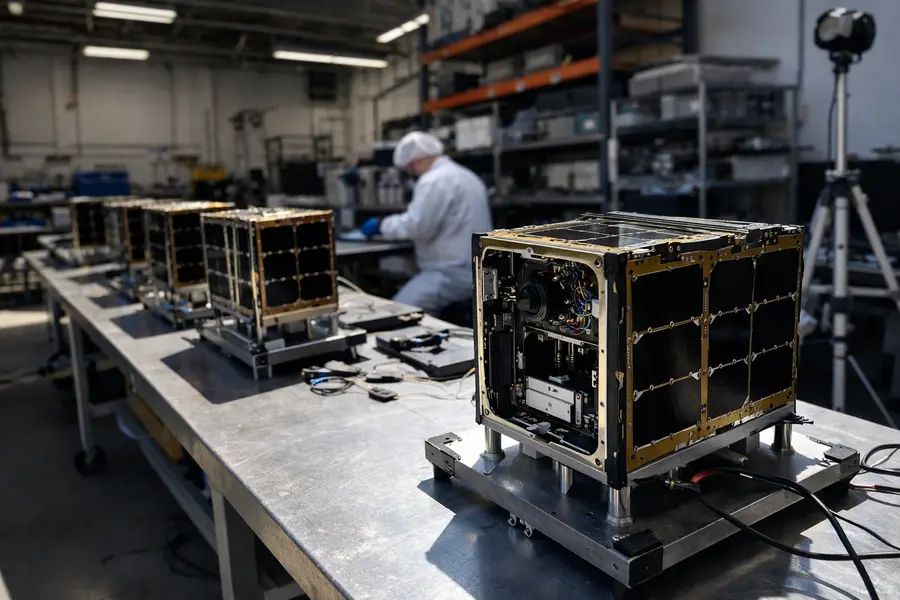
Planet Labs (PL) reported Q2 FY2027 record revenue of $116.1M, up 58% year-over-year, and posted its first-ever positive adjusted EBITDA, erasing longstanding doubts about the satellite-imagery company's business model.
- Q2 FY2027 revenue of $116.1M beat the $104M consensus by 11% and rose 58% year-over-year, a company record.
- Adjusted EBITDA of $13.9M marks Planet Labs' first-ever positive EBITDA, crushing the $1.6M estimate by a factor of nearly nine.
- Defense & Intelligence revenue surged more than 90% year-over-year, anchored by the Pelican satellite delivered to the Swedish Armed Forces.
Lead
Planet Labs PBC (NYSE: PL) reported second-quarter fiscal 2027 revenue of $116.1 million on September 3, 2026, up 58% year-over-year and exceeding the $104 million analyst consensus by roughly 11%. The satellite-imagery company posted adjusted EBITDA of $13.9 million - its first positive EBITDA in company history - versus a $1.6 million estimate, and adjusted EPS of $0.02 against an expected loss of $0.02. Shares surged as high as 11% in after-hours and early Friday trading, briefly touching $20.10, before closing down 1.3% at $18.11 as investors weighed a sequential dip in near-term guidance.What Drove the Revenue Outperformance?
Defense and sovereign government contracts propelled the Q2 beat. Planet Labs' Defense & Intelligence segment grew more than 90% year-over-year, while the Commercial segment expanded more than 15%. The most visible contract anchor was the Pelican high-resolution satellite delivered to the Swedish Armed Forces - Sweden's first sovereign satellite - launched in May 2026 aboard a SpaceX rideshare mission from Vandenberg Space Force Base just four months after the agreement was signed. The rapid deployment transitions Sweden into an operational space power with 50-centimeter-class resolution imagery across six multispectral bands, providing the Arctic and strategic-region monitoring capability the country had originally targeted for 2030. The Pelican platform's on-orbit edge computing capability, powered by NVIDIA (NVDA) Jetson AI processors, has become a differentiating factor in competitive government procurement.
Why Does Positive EBITDA Matter for PL?
Adjusted EBITDA has long been the threshold the market applied to determine whether Planet Labs was a durable business or a capital-consumption story. The $13.9 million posted in Q2 FY2027 - 117% above the prior-year period and nearly nine times the analyst estimate - signals a structural shift in revenue mix toward higher-margin defense and sovereign contracts rather than a one-quarter accounting artifact. Non-GAAP gross margin held at 59%, representing a 200 basis-point year-over-year compression as the company scales constellation infrastructure. Adjusted free cash flow for the quarter reached $28.8 million.
The contracted revenue pipeline reinforces the durability argument. Total backlog stands at approximately $814.9 million, with remaining performance obligations of roughly $753.1 million - providing multi-quarter revenue visibility that the company lacked at its SPAC listing.
Market Reaction
PL shares gapped up in after-hours trading on September 3 and extended gains into Friday morning, hitting $20.10 in early trading - roughly 10% above the prior close - before selling emerged as investors assessed Q3 guidance. The stock finished at $18.11, down 1.3%, reflecting caution around the sequential revenue step-down rather than rejection of the underlying results. The opening rally confirmed that the fundamental inflection - first positive EBITDA, record top line, defense backlog growth - was broadly recognized as a qualitative turning point for ai stocks in the geospatial intelligence segment.
Full-Year Guidance and Strategic Context
Planet Labs raised its FY2027 revenue outlook to $430 million-$441 million, with adjusted EBITDA guided to $3 million-$10 million for the full year. Q3 FY2027 revenue is guided to $101 million-$105 million, a sequential step-down from Q2's peak that management attributed to contract timing and revenue recognition schedules rather than demand softening. Non-GAAP gross margin is projected at 55%-57% for the year, with capital expenditures planned at $100 million-$115 million to fund continued constellation expansion.The defense pivot reflects a broader structural shift in the geospatial intelligence market, where NATO governments are accelerating sovereign space programs in response to geopolitical disruptions across Eastern Europe and the Arctic. Planet Labs' demonstrated ability to deliver operational satellite capability within four months of contract signing positions it competitively against traditional aerospace primes that operate on multi-year build cycles.
Outlook
Planet Labs' Q2 FY2027 results close the chapter on the company's most persistent investor question. Record revenue, the first positive adjusted EBITDA, a near-$815 million backlog, and the Swedish Armed Forces Pelican delivery collectively validate the business model. The near-term debate shifts to whether the Q3 sequential revenue dip is seasonal noise or a sign of lumpy defense contract cadence. Full-year guidance of $430 million-$441 million and the depth of the contracted pipeline suggest the EBITDA inflection is structural. The Q3 FY2027 print will serve as the first test of whether positive EBITDA is a sustained operating condition or a high-watermark quarter.