Pomegra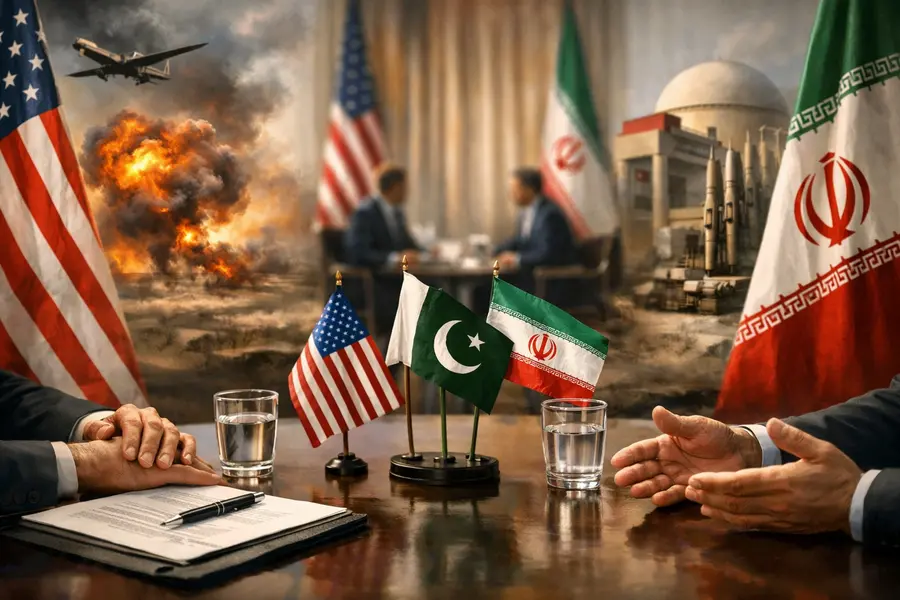
Tehran confirms ongoing talks with Pakistan, Qatar, and Oman to prevent wider escalation as six consecutive nights of U.S. strikes and retaliatory Iranian attacks imperil the Islamabad peace deal.
- Iran's Foreign Ministry confirmed July 14 that talks with Pakistan, Qatar, and Oman remain active, aimed at preventing further US-Iran war escalation.
- The Islamabad MoU, signed June 17–18, collapsed within four weeks as US and Iran resumed strikes over Strait of Hormuz control.
- Brent crude rose more than 4% on renewed fighting, reaching $78.82/barrel — roughly 9% above pre-war levels — as Hormuz crossings fell to three ships per day.
Lead
Islamabad, July 17, 2026 — Iran's Foreign Ministry confirmed this week that active diplomatic channels with Pakistan, Qatar, and Oman remain open to prevent broader US-Iran war de-escalation from collapsing entirely, even as the United States completed its sixth consecutive night of strikes on Iranian territory and Tehran launched retaliatory missile and drone salvos across the Gulf. The statement underscores the durable but fragile role of Pakistan US Iran mediation, which produced the landmark Islamabad Memorandum of Understanding in June but has so far failed to hold the two sides to its terms.What Happened
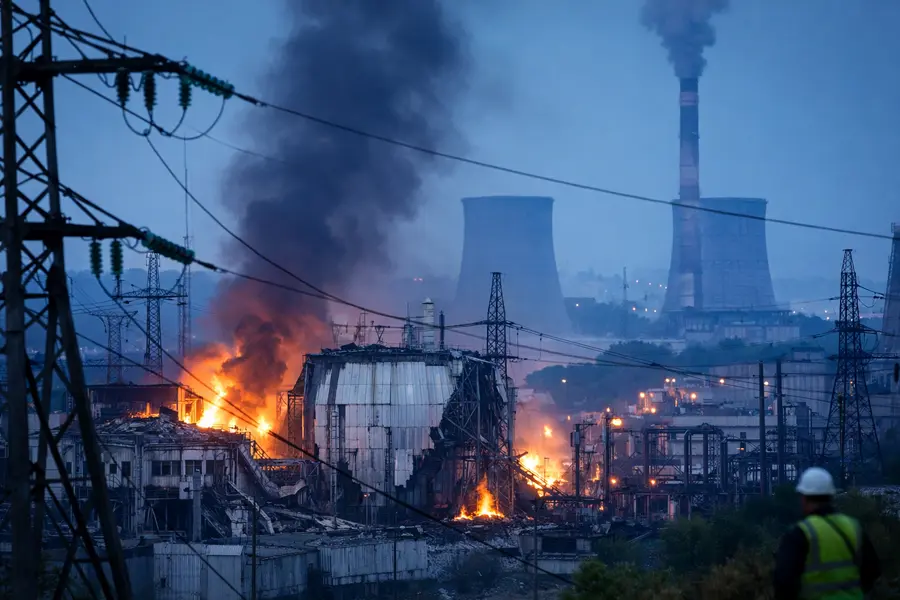
The immediate crisis began July 8, when Tehran struck multiple commercial vessels in the Strait of Hormuz, prompting the U.S. Central Command to reinstate a naval blockade and launch a fresh round of precision strikes. Iranian forces responded with waves of missiles and drones targeting American military assets in Kuwait, Bahrain, and Jordan, as well as civilian infrastructure across several Gulf states. Iran's Health Ministry reported at least 35 deaths and more than 300 injuries since fighting resumed.
On July 14, Iranian Foreign Ministry spokesperson Esmaeil Baghaei stated publicly: "The role of the mediators is to continue their efforts to prevent an escalation of tensions. In recent days, we have been in contact with Qatar and Oman, with whom we held a meeting, as well as with Pakistan, and these discussions are ongoing." The confirmation signals that even as bombs fall, the architecture of Middle East diplomacy built around Islamabad has not fully disintegrated.
The Road to and From the Islamabad MoU
The current crisis is the latest rupture in a conflict that began in late February 2026, when the United States and Israel launched strikes on Iranian nuclear and military sites. Pakistan emerged as the pivotal back channel almost immediately, with Field Marshal Asim Munir traveling to Tehran during the war's early weeks and Prime Minister Shehbaz Sharif coordinating directly with both Washington and Gulf capitals.
On April 8, Pakistan announced a two-week ceasefire. The Islamabad Talks followed on April 11–12, bringing a 300-member U.S. delegation — led by Vice President JD Vance alongside special envoys Steve Witkoff and Jared Kushner — and a 70-member Iranian team headed by parliamentary speaker Mohammad Bagher Ghalibaf and Foreign Minister Abbas Araghchi. The talks lasted 21 hours and ended without agreement, stalled on Iran's nuclear program and the fundamental question of Strait of Hormuz control.
Pakistan pressed on through May and into June, eventually brokering the Islamabad Memorandum, a 14-point interim agreement signed remotely by President Donald Trump and Iranian President Masoud Pezeshkian on June 17–18. The MoU established a 60-day ceasefire extension, reopened the strait, and removed the U.S. naval blockade. Less than four weeks later, it lay in tatters.
The Hormuz Impasse
The singular obstacle to durable global security in the Gulf is sovereignty over the Strait of Hormuz, through which approximately 25% of the world's seaborne oil and 20% of its liquefied natural gas transited before the conflict. Iran insists the MoU conferred authority over vessel passage through Iranian territorial waters. Washington disputes that reading categorically, declaring publicly that Iran "does not control" the strait.
Oman has drafted a tentative framework to resolve the impasse: a dual-corridor system under which a Southern Corridor through Omani territorial waters would permit free navigation under pre-war conditions, while a Northern Corridor through Iranian waters would require prior approval from Tehran — though no tolls would be imposed. The proposal remains under review by both parties, with Iranian Foreign Minister Araghchi meeting his Omani counterpart over the weekend to discuss its terms.Economic and Energy Channels
The market reaction has been swift. Brent crude futures for September delivery rose more than 4% on the renewed fighting, reaching $78.82 per barrel on July 13 — the highest level since June 22 and approximately 9% above the price before initial U.S. and Israeli strikes in late February. Shipping traffic in the Strait of Hormuz has collapsed from an average of 18–22 daily crossings earlier this month to just three vessels in the 24-hour period ending July 16. Analysts expect Brent to hold in the upper $70s through August and September, barring a rapid diplomatic breakthrough.
Pakistan's Structural Constraints
Islamabad's leverage is diplomatic rather than coercive. Pakistan has no military capacity to enforce the agreements it helps broker and limited economic leverage over either Washington or Tehran. Critics note this is at least the third occasion since April 8 that the ceasefire framework has appeared to collapse. Pakistan's Ministry of Foreign Affairs issued two statements this week expressing "deep concern" over renewed hostilities and calling on all parties to uphold the Islamabad MoU. Prime Minister Sharif held separate calls with his Iranian and Qatari counterparts, warning that "hard-earned" peace gains were at risk.
The credibility of Pakistan US Iran mediation nonetheless rests on a track record: Islamabad succeeded in brokering the April ceasefire and the June MoU when most analysts considered a deal impossible. Both Washington and Tehran have continued to use the channel even after the latest breakdown — suggesting neither side is ready to declare the diplomatic path closed.
Outlook
The immediate trajectory depends on whether the Oman dual-corridor proposal can provide both sides a face-saving resolution to the Hormuz sovereignty dispute. Iran's acknowledgment of active multilateral talks — with Pakistan, Qatar, and Oman simultaneously — is the clearest signal since July 8 that Tehran has not foreclosed a return to negotiations. The Islamabad MoU, however bruised, retains formal status as the agreed framework. A return to its terms, even partially, would require the U.S. to accept some form of Iranian notification rights over northern strait transits — a concession the Trump administration has so far declined to make publicly. Until that gap narrows, Pakistan remains indispensable as a conduit, even if its ability to translate diplomacy into durable Middle East diplomacy continues to face hard structural limits.
Mentioned tickers: BNO, USO, XLE, LNG, TAN