Pomegra
undefined
- Jensen Huang confirmed Vera Rubin is in production with "giant amounts incoming," directly rebutting third-party delay reports.
- The Vera Rubin NVL72 system delivers 5x greater inference performance and 10x lower cost per token compared to Blackwell.
- Nvidia projects at least $1 trillion in cumulative demand for its Blackwell and Rubin platforms through the end of 2027.
Lead
Nvidia (NVDA) CEO Jensen Huang has confirmed that the company's next-generation Vera Rubin AI chips are in full production and scaling rapidly to meet what the executive called insatiable demand for AI compute. Speaking at the most recent developer event and reiterating statements made during the GTC Taipei 2026 keynote in June, Huang said Vera Rubin will "power AI agent factories around the world" — a direct signal that the platform is no longer a roadmap item but an active production ramp. NVDA stock has traded between $203 and $212 in recent weeks, with the company having posted record quarterly data-center revenue of $75.2 billion in Q1 fiscal year 2027.What Happened
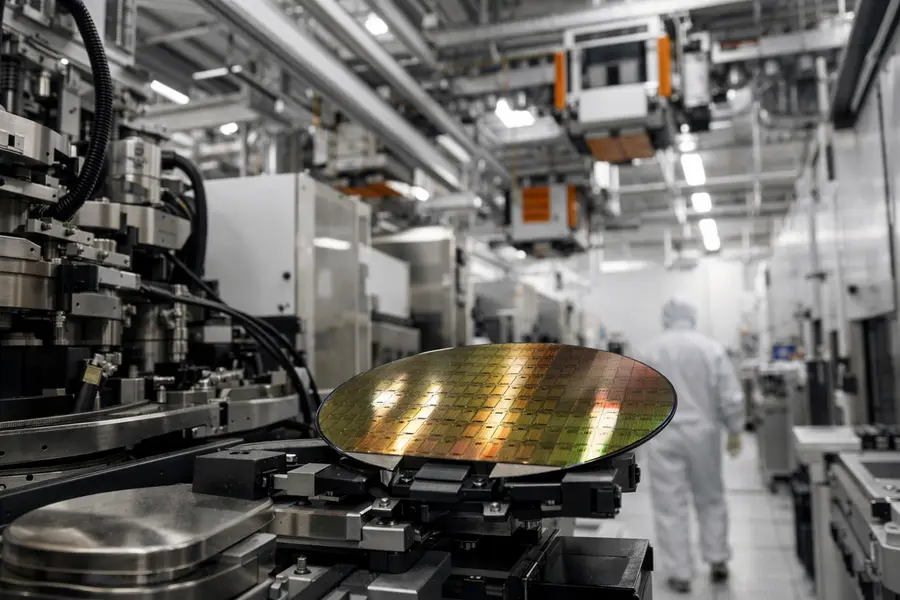
Nvidia placed Vera Rubin in mass production following multiple milestones across the first half of 2026. The timeline began in January, when Huang used his CES 2026 keynote to announce initial full-production status — six months ahead of the original schedule. In June, Huang used the GTC Taipei stage to expand that message, declaring "useful AI has arrived" and positioning the Rubin architecture as purpose-built for the agentic era of AI computing.
Most recently, Huang dismissed circulating reports of hardware delays in the Kyber NVL144 rack-scale configuration — a larger multi-rack version of the Rubin system — stating flatly: "Vera Rubin is already in production. Giant amounts of production incoming." A thermal lid manufacturing issue, identified by analysts at KeyBanc, has since been resolved and left annual shipment projections of 1.7 million to 1.8 million units intact.
Technology and Performance
The Vera Rubin NVL72 is Nvidia's first extreme co-designed, six-chip AI supercomputer platform and the direct successor to the Blackwell architecture. Each Rubin GPU delivers 50 petaflops of NVFP4 inference performance and 35 petaflops of NVFP4 training throughput — representing 5x and 3.5x the performance of Blackwell, respectively. On a cost basis, the platform promises 10x lower cost per inference token versus its predecessor, a metric that directly targets the economics of running large-scale AI models in production.
Memory suppliers Samsung, SK Hynix, and Micron have all been confirmed as partners supplying HBM4 memory for the platform, a sign that the broader supply chain has coalesced around the Rubin ramp.
Market Reaction and NVDA Stock
NVDA has held in a relatively narrow band throughout the Vera Rubin production narrative. The stock rose 4.1% to an intraday high of $211.80 following Huang's most forceful rebuttal of delay reports in mid-July before settling back near $203. On a year-to-date basis through mid-July, NVDA stock was up approximately 7.8%.
Wall Street has remained constructive on the name. At least one major institution raised its price target on NVDA to $330 from $310, maintaining an Overweight rating, while noting that the resolved manufacturing challenge does not change the volume outlook for the year.
Strategic Context
Huang has framed the AI chip production race in explicitly demand-driven terms. At Nvidia's GTC 2026 conference in March, he put forward an industry-wide demand figure of $1 trillion in AI chip orders through 2027 — roughly doubling the $500 billion estimate shared just months earlier. Nvidia's own revenue trajectory supports that trajectory: the company reported full-year fiscal 2026 revenue of $215.9 billion and saw its data-center segment — the primary home of AI chip revenue — generate $75.2 billion in a single quarter.
The Vera Rubin platform, with partner-built systems beginning to roll out across the second half of 2026, is positioned to extend that run. Early real-world deployments include rack-scale Rubin installations at Nebius's facility in Finland, providing a proof-of-concept for the agentic AI factory model Huang has championed.
Outlook
The Vera Rubin production ramp places Nvidia in a strong position heading into the second half of 2026. With delay concerns addressed at the CEO level, a resolved supply-chain constraint, and demand for AI infrastructure described by Huang as insatiable, attention now shifts to the pace at which major hyperscalers and frontier AI model developers begin receiving and deploying Rubin-based systems at scale. The company's Q2 fiscal year 2027 revenue guidance of $91 billion, if met, would mark yet another quarterly record and underscore that the AI chip production cycle remains in full acceleration.
Mentioned tickers: NVDA, AMD, INTC, MU