Pomegra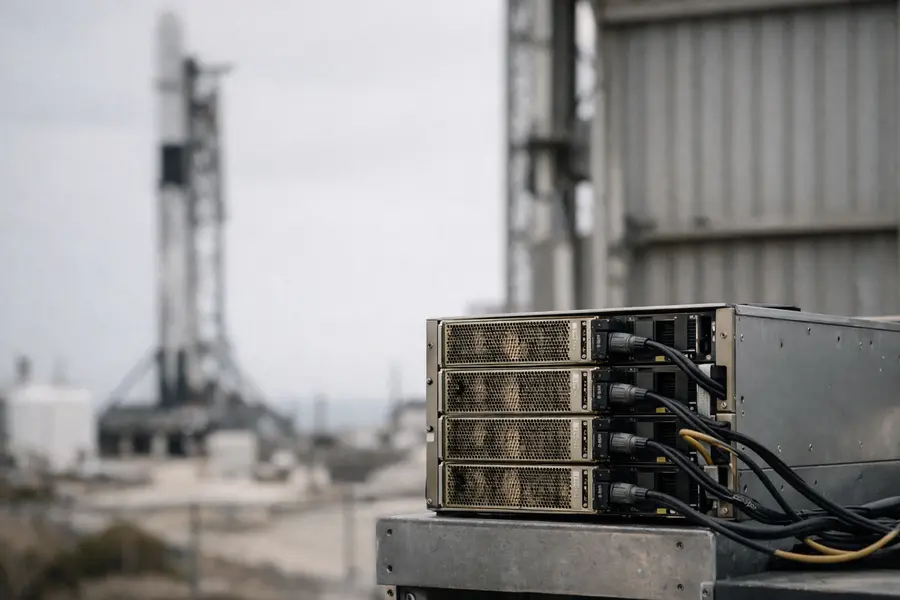
SpaceX CEO Elon Musk declared during the company's Q2 earnings call that all future AI infrastructure will be built exclusively on Nvidia chips, sending NVDA up roughly 2% in premarket trading.
- Elon Musk said SpaceX will build exclusively with Nvidia, citing the Vera Rubin architecture as "the best AI computer."
- SpaceX targets 2 GW of AI compute capacity by year-end 2026, scaling to 10 GW by end of 2027.
- NVDA gained approximately 2% premarket Wednesday; rival AMD fell roughly 9% despite beating quarterly estimates.
Lead
Nvidia (NVDA) shares rose approximately 2% in premarket trading on Wednesday, August 5, 2026, after SpaceX CEO Elon Musk told investors during the company's second-quarter earnings call that SpaceX would deploy all future artificial intelligence infrastructure exclusively on Nvidia hardware. The declaration — made on SpaceX's inaugural public earnings call on August 4 — immediately widened the divide between Nvidia and its semiconductor rivals, lifting NVDA while peers sold off sharply.What Happened
On the Q2 call, Musk stated that SpaceX has committed to building exclusively on Nvidia going forward, citing the Vera Rubin chip architecture as the superior platform. "We think the Vera Rubin architecture is the best architecture. We think it's the best AI computer," Musk said. The vehicle for that buildout is the Nvidia Vera Rubin NVL72 rackscale system — internally codenamed Kyber — which will anchor SpaceX's terrestrial AI data centers.
The ambition extends beyond Earth. SpaceX announced a collaboration with Nvidia to design the Starmind AI1 satellite compute payload, with each spacecraft carrying Nvidia's next-generation Rubin GPUs paired with Vera CPUs. The Starmind program marks one of the first commitments to deploying high-density Nvidia GPU clusters in orbit, opening a new frontier for space-based inference workloads.
Market Reaction
The announcement cut sharply across the chip sector. NVDA bucked a broad semiconductor selloff, trading up around 2% ahead of the opening bell. The move came as a contrasting signal to weakness elsewhere: AMD slid roughly 9% in premarket despite posting quarterly revenue and profit that exceeded Wall Street consensus, underscoring how Musk's exclusive endorsement effectively repositioned demand expectations in real time. Intel and Micron also declined in pre-session trading.
Strategic Context
SpaceX's compute targets are substantial. The company plans to install 2 gigawatts of AI compute capacity by the close of 2026, with that figure scaling to 10 GW by end of 2027. At those volumes, the exclusive reliance on Nvidia GPU supply chains carries significant implications for Nvidia's order book and production planning. SpaceX expects to receive a meaningful allocation of Nvidia's next-generation chips in 2026, adding a large hyperscale-class buyer to Nvidia's existing roster of cloud and enterprise customers.
AI and Technology Angle
The Vera Rubin NVL72 platform, Nvidia's successor to the Blackwell architecture, integrates high-bandwidth memory and an NVLink fabric designed to accelerate large-scale AI training and inference. SpaceX's commitment validates the platform at an infrastructure scale comparable to major cloud providers, while the space deployment adds a novel use case: low-latency AI inference from orbit through the Starmind satellite constellation. This dual land-and-space deployment strategy positions SpaceX as both an AI infrastructure operator and a potential provider of space-based compute to third parties.
Outlook
The exclusive Elon Musk–backed commitment to Nvidia GPU silicon cements Nvidia's position as the dominant AI hardware supplier heading into the second half of 2026 and beyond. With 10 GW of SpaceX compute slated for 2027 and a new orbital compute program in development, demand visibility for Nvidia's Vera Rubin line extends well into the next product cycle. AMD faces a tougher task re-engaging large infrastructure buyers, having lost a flagship win despite solid quarterly results.
Mentioned tickers: NVDA, AMD, INTC, MU, SPCX