Pomegra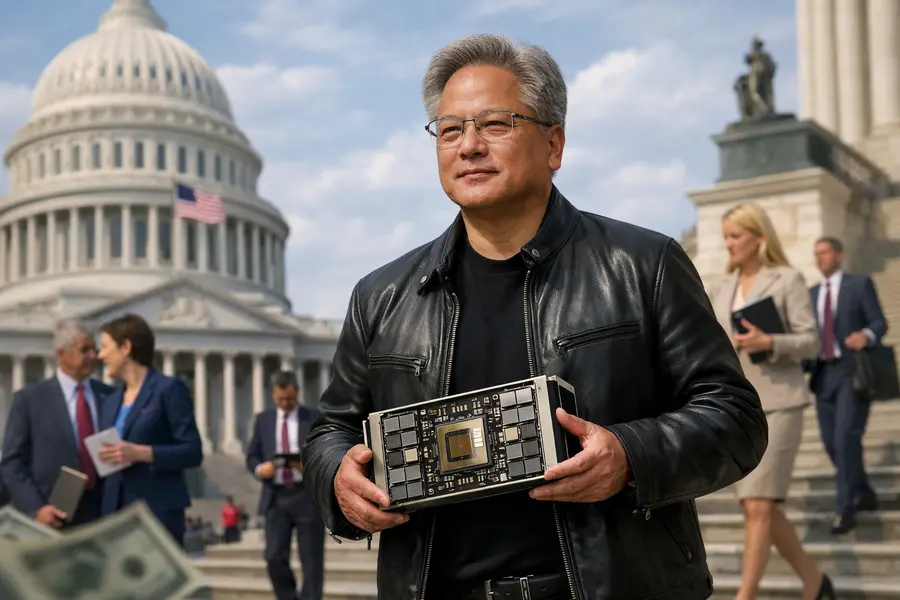
After three decades of deliberate distance from Washington, Nvidia CEO Jensen Huang spent late July 2026 walking the Senate corridors, pitching a $500 billion domestic AI infrastructure program and pressing lawmakers to keep their hands off open-weight artificial intelligence models.
- Huang met with Senators Mark Warner (D-VA), Adam Schiff (D-CA), and Ted Cruz (R-TX) to advocate for federal-level AI oversight and open-weight model access.
- Nvidia has committed to producing up to $500 billion in U.S. AI infrastructure over four years, with AI chip factory facilities in Arizona and Texas already operational or under construction.
- NVDA closed at $195.04 on July 30, down from $209.60 on July 23, as tightened China export controls and compliance restrictions weighed on near-term revenue expectations.
Lead
On July 28–29, 2026, Nvidia CEO Jensen Huang held a series of meetings on Capitol Hill with senior lawmakers including Senator Mark Warner (D-VA), the ranking Democrat on the Senate Intelligence Committee, Senator Adam Schiff (D-CA), and Senator Ted Cruz (R-TX). Huang arrived carrying a concrete offer: Nvidia and its partners will build up to $500 billion in domestic AI infrastructure over four years — encompassing chip fabrication, packaging, and supercomputer assembly — and the company wants Washington's regulatory framework to match the ambition of that investment.
What Happened
The Capitol Hill appearances followed a coordinated policy offensive that began the previous week. On July 24, Huang broke a lifetime silence on social media to sign and promote a letter from a coalition of 25 technology companies — including Microsoft, Meta, OpenAI, and Y Combinator — urging Congress to resist restrictions on open-weight AI models. "Open models strengthen safety and cybersecurity, accelerate innovation and diffusion, and enable sovereignty," Huang wrote in the post.
His core legislative ask has two pillars. First, AI regulation should be handled at the federal level, not by individual states. A patchwork of 50 competing rule sets, he argued, would introduce national security vulnerabilities and suppress the innovation needed to keep the United States ahead of China. Second, open-weight models — which users can download and run independently at far lower cost than closed frontier systems from companies like Anthropic and OpenAI — should remain accessible, not subject to licensing walls or kill switches that could push development offshore.
The $500B Domestic AI Chip Factory Plan
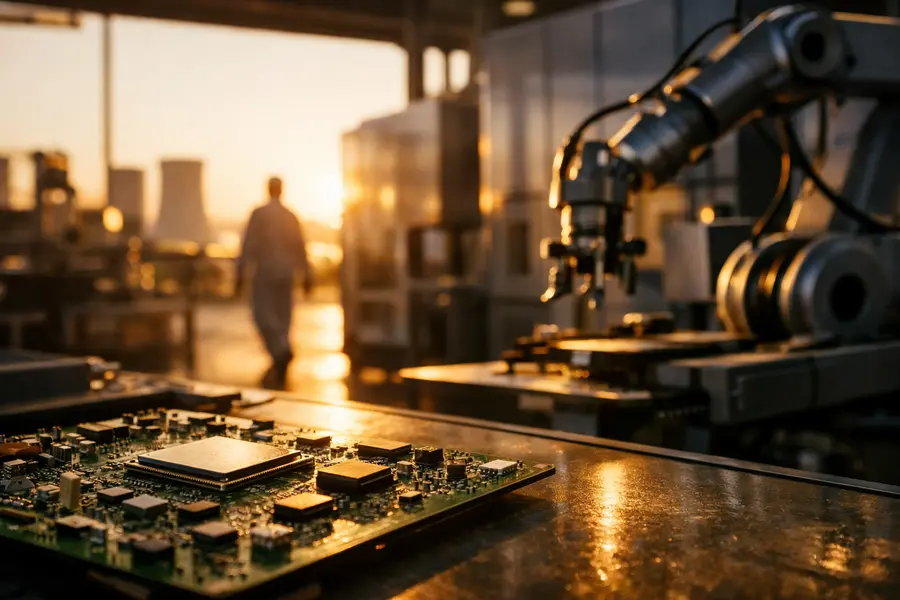
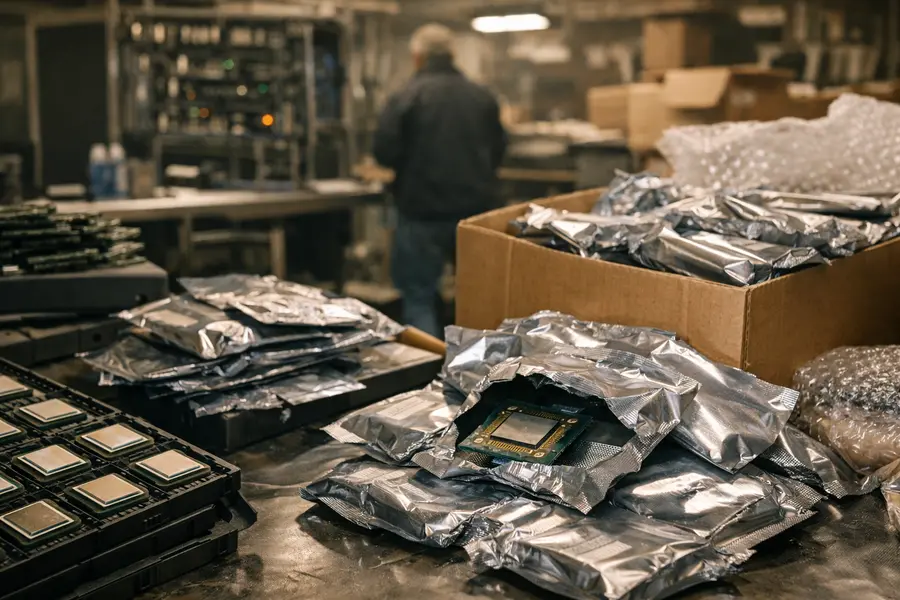
The investment figure Huang cited on Capitol Hill is not a pledge alone — it is partly already in progress. Blackwell-generation chips are currently in production at TSMC's Phoenix, Arizona facility, while supercomputer assembly plants are under construction in Houston with Foxconn and in Dallas with Wistron. Amkor and SPIL are handling packaging and testing operations in Arizona. Mass production at the Texas facilities is scheduled to ramp within 12 to 15 months, with Nvidia planning to manufacture everything from chips to fully assembled supercomputers on U.S. soil by year-end.
The scale of the buildout extends beyond factory walls. Nvidia-driven AI demand is projected to contribute $485 billion to U.S. GDP in 2026 alone and support more than 100,000 jobs tied to AI infrastructure, according to the company's own estimates.
China Export Controls: The Complicating Variable
Huang's Washington visit unfolded against a deteriorating export control backdrop. Rules announced in late May 2026 require export licenses for any transfer of Nvidia's most advanced processors — including Blackwell — to entities headquartered in China or Macau. On July 14, Nvidia announced a new compliance "whitelist" system for Asian customers that has already eliminated more than half of its previously eligible buyers.
The China question framed nearly every meeting Huang held on the Hill. Warner and Schiff, both with deep ties to the intelligence community, pressed the company on security risks associated with open-weight models that could be downloaded and fine-tuned by state-linked actors. Huang countered that restricting access to open models would benefit closed-source Chinese alternatives that face no such constraints at home, effectively handing Beijing a competitive advantage.
Strategic Context: Why Now
For three decades, Nvidia competed in Washington through hired lobbyists and industry associations while Huang stayed at arm's length. The company's transformation into the de facto infrastructure layer of the global AI economy — NVDA has traded above $190 as recently as July 23 at $209.60 — has changed the calculus. Nvidia's chips sit at the center of policy debates over national security, export controls, antitrust, and AI safety simultaneously. No surrogate can carry that weight.
The July meetings also came as Sam Altman, CEO of OpenAI, joined Huang for the Warner session — a pairing that underscored how the AI sector's leading hardware and software figures are now moving in coordinated policy lockstep.
Outlook
The $500 billion domestic AI buildout gives Nvidia a durable policy argument: the company is already creating American manufacturing jobs and supply-chain resilience without a congressional mandate. Whether that argument moves Washington toward a lighter regulatory touch on open-weight models — or forestalls tighter export controls — will define the operating environment for the AI chip sector through the remainder of the decade. Huang's first Washington week has put Nvidia at the center of that negotiation, exactly where its market position already places it.
---