Pomegra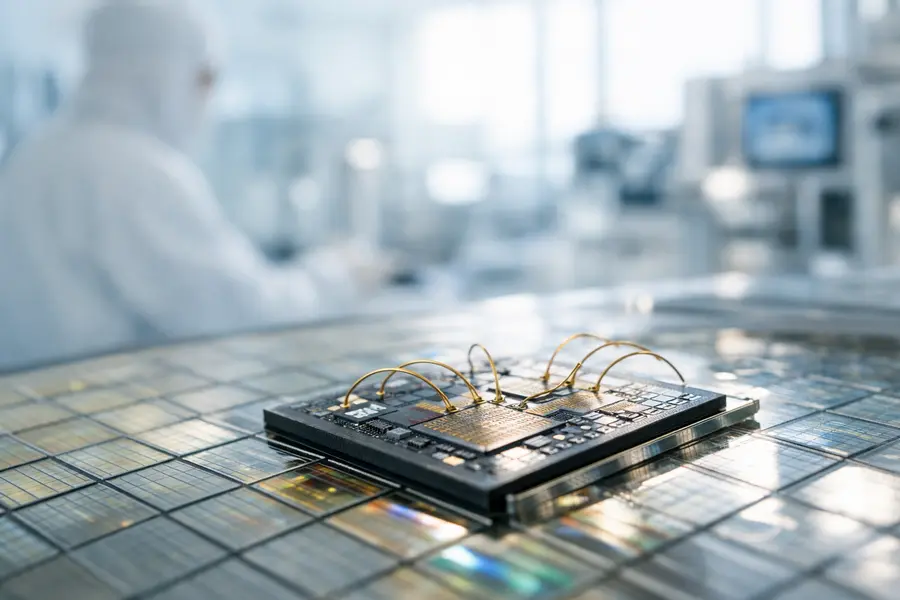
Dutch chip-security firm Fortaegis closed a $50M Series A led by Serendipity Capital to bring silicon-embedded, quantum-resistant encryption to commercial production by 2027.
- Serendipity Capital led the oversubscribed $50M round; backers include Tokyo Electron's venture arm, ASML, TNO, and Prodrive Technologies.
- Fortaegis derives encryption keys from physical silicon imperfections - no static key is ever stored, eliminating a foundational class of cryptographic theft.
- Commercial chip manufacturing begins in 2027 via Prodrive in Eindhoven, targeting military, drone fleet, and NATO network deployments.
Lead
Amsterdam-based Fortaegis raised $50 million in an oversubscribed Series A on September 13, 2026, to move its silicon-rooted security architecture into commercial production. The round was led by returning investor Serendipity Capital, the Singapore-based firm that backed the company at an earlier stage. Founded in October 2023, Fortaegis is now capitalizing on a convergence of two pressures: the widening attack surface created by AI infrastructure and the approaching viability of quantum computers capable of breaking conventional encryption.
What Does Fortaegis Actually Build?
The core product is a Secure Compute architecture that derives encryption keys from physical imperfections inherent to each chip's manufacturing process. No two chips sharing the same design are microscopically identical. Fortaegis extracts that natural variance to generate a unique, unreproducible digital fingerprint per chip. That fingerprint produces encryption keys which are never statically stored - reconstructed on demand from silicon physics, then discarded.
The practical consequence is direct. Conventional cryptographic systems must write keys somewhere: a file, a secure enclave, or a hardware security module. Physical extraction, firmware exploits, and supply-chain interference can expose a static key once, permanently. When there is no persistent key to steal, that attack surface does not exist. The approach also sidesteps the quantum decryption problem, because key generation is grounded in physical entropy rather than mathematical computation that a quantum machine could reverse.
Fortaegis currently ships in FPGA form. Custom ASICs are on the development roadmap. Commercial manufacturing is set to begin in 2027 through Prodrive Technologies, a Dutch contract electronics manufacturer in Eindhoven.
Why Does This Cap Table Command Attention?
The investor roster is the most revealing signal in the announcement. TEL Venture Capital, the corporate venture arm of Tokyo Electron, and chip-equipment giant ASML both participated - two companies anchoring the global semiconductor supply chain. TNO, the Dutch national applied-research organization, was also in. Together they suggest the round carried strategic logic alongside financial return: investors with direct exposure to silicon manufacturing chose to back a company whose value proposition is inseparable from the physics of that manufacturing.
The individual investors sharpen the picture further. Ilyas Khan, founder of quantum computing firm Quantinuum and Fortaegis chairman, joined the round. Ian Fujiyama, who heads Global Aerospace, Defense and Government at Carlyle, also participated, as did Oxford historian Peter Frankopan. A quantum computing founder, a major alternative-asset firm's defense practice lead, and supply-chain heavyweights in a single early-stage cap table is not a common configuration.
NP-Hard Ventures, NovaCapital, Access Ventures, and Coalition Capital rounded out the syndicate. Serendipity Capital's CEO cited expectations that hardware-embedded security demand would expand as both AI adoption and quantum computing advance - two trends that simultaneously create new attack surfaces and new attacker capabilities.
What Markets Is the Capital Targeting?
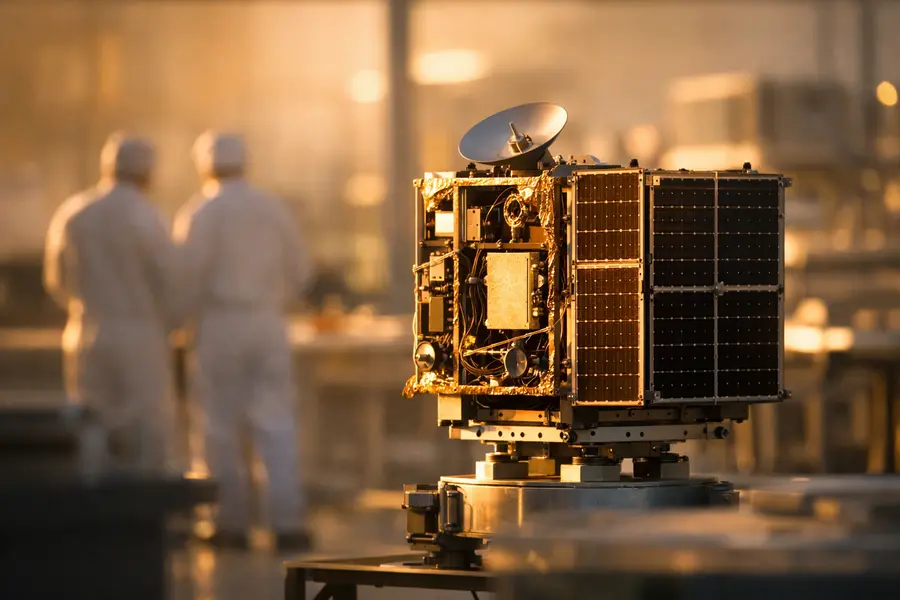
Fortaegis has named military networks, drone fleets, NATO systems, satellite communications, and AI infrastructure as its primary deployment contexts. These are settings where software attestation of hardware trust is structurally insufficient: software can be compromised, covertly updated, or reversed. The company has expanded since founding to offices across Europe, the United States, and Asia.
The $50 million will fund engineering and commercial team growth alongside the manufacturing buildout. Moving from FPGA deployments to ASIC production is standard for silicon companies as volume requirements climb, but it requires significant upfront capital. ASICs carry non-recurring engineering costs that only justify themselves at scale.
Outlook
Fortaegis enters its production phase in an environment where hardware-level cryptographic trust has become an active procurement requirement across defense and critical infrastructure, not a niche specification. The company's trajectory will depend on whether it can convert technical differentiation into volume sufficient to absorb ASIC development costs, while navigating the certification timelines inherent in NATO and defense supply chains.
Valuation for the round was not disclosed. The oversubscription indicates investor demand exceeded what the company chose to take, reflecting either deliberate dilution management or confidence that $50 million covers the path to 2027 manufacturing. Whether that confidence is warranted depends in large part on how quickly the quantum threat materializes and how aggressively AI infrastructure operators move to harden the hardware layer beneath their systems.