Pomegra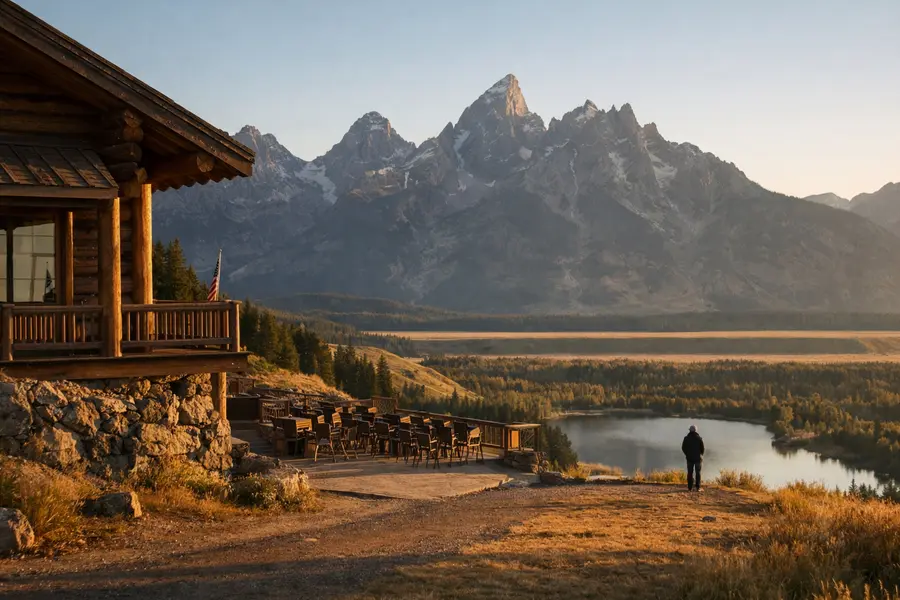
Fed Chairman Kevin Warsh steps to the podium at Jackson Hole on August 28 as markets have cut September rate-hike odds to 30.6% from 82% in mid-July, making his keynote the most consequential macro event before the next FOMC decision.
- The Fed held rates at 3.5%–3.75% in July by a 9-3 vote, with three regional bank presidents dissenting in favor of an immediate hike.
- September hike probability collapsed more than 20 percentage points in a single week after weak retail sales and unexpected job losses.
- Warsh, who has curtailed traditional Fed forward guidance, arrives at Jackson Hole with his speech described as "a blank piece of paper."
Lead
Jackson Hole, Wyoming - The Federal Reserve's annual economic symposium opens August 27-29, 2026, with Chairman Kevin Warsh scheduled to deliver the keynote address on the second day, handing markets their last clear window into central bank thinking before the September Federal Open Market Committee meeting. With the federal funds rate parked at 3.5%–3.75% after a divided July hold, and with macroeconomic data rapidly softening the case for additional tightening, Warsh's remarks are being treated as the primary rate-setting signal remaining on the calendar.Why Did September Hike Odds Collapse So Sharply?
Three data releases hit rate expectations in rapid succession. U.S. retail sales declined in July for the first time in nine months. Payrolls registered an unexpected net loss. And headline inflation came in milder than consensus forecasts. Taken together, the trio of prints moved futures markets to price the probability of a September increase at just 30.6%, down from 52.2% a week prior and as high as 82% in mid-July. The shift reflects growing doubt that the economy can absorb another quarter-point without tipping into contraction.
The July FOMC outcome deepened uncertainty rather than resolving it. The 9-3 vote to hold was unusually fractious by recent historical standards, with the three dissenters - Dallas Fed President Lorie Logan, Cleveland's Beth Hammack, and Minneapolis's Neel Kashkari - arguing that inflation had not cooled enough to justify a pause. Governor Christopher Waller similarly signaled openness to tightening if price data does not continue to moderate.
What Will Warsh Say at Jackson Hole?
The chairman himself described his speech, in remarks following the July decision, as "a blank piece of paper right now," an unusually candid signal that no policy direction has been locked in. That ambiguity is itself a policy stance. Since taking the chair, Warsh has systematically wound down the Fed's long-running transparency project: post-meeting statements have been shortened, forward guidance has been curtailed, and press conference answers have grown less prescriptive.
Analysts entering the symposium expect Warsh to address the relationship between the bond market and Fed credibility, the trajectory of the central bank's balance sheet - task forces are due to report findings in coming months - and how the Fed interprets the recent divergence between a slowing real economy and still-elevated longer-dated Treasury yields. Yields on longer-dated Treasuries have continued to drift higher, pressured in part by the Treasury Department's extended debt repurchase program and mounting concerns over the national debt trajectory. That divergence complicates the inflation narrative and sets up potential tension with Treasury Secretary Scott Bessent, whose moves in bond markets have increasingly intersected with the Fed's own monetary transmission channels.
Market Reaction Heading Into Jackson Hole
Softer rate-hike bets have had clear cross-asset effects. Precious metals have rallied on the receding tightening outlook, with GLD gaining ground as real yields stabilized. Equities measured by SPY have absorbed the macro uncertainty without significant directional conviction, oscillating in a range as investors await the Warsh address for clearer guidance on the policy path. Longer-dated Treasury yields, however, have bucked the trend, rising rather than falling - a signal that term premium concerns over fiscal deficits are competing with the rate-cut narrative in bond markets.
How Does Jackson Hole Change the September Calculus?
Any explicit signal from Warsh endorsing a September hike would likely push futures pricing back above 50%, reversing much of the recent softening. A neutral-to-dovish tone, or continued deliberate ambiguity, would reinforce the current ~30% probability and potentially begin pricing the first cut. A third scenario - in which Warsh focuses on structural topics like the balance sheet and Fed independence without commenting directly on the near-term rate path - would leave September entirely data-dependent and could itself generate volatility as markets scramble to interpret the silence.
Outlook
The Jackson Hole symposium arrives at a pivotal inflection point. The economy is sending conflicting signals: labor markets are softening, consumer spending is retreating, and inflation appears to be easing - yet long-term bond yields and fiscal pressures point in the opposite direction. Warsh's willingness to deliver a direct policy signal, or to withhold one, will define the contours of the September FOMC debate. With the federal funds rate at 3.5%–3.75% and market conviction fragile, the speech represents the most consequential central bank communication moment of the third quarter.
Mentioned tickers: GLD, SPY