Pomegra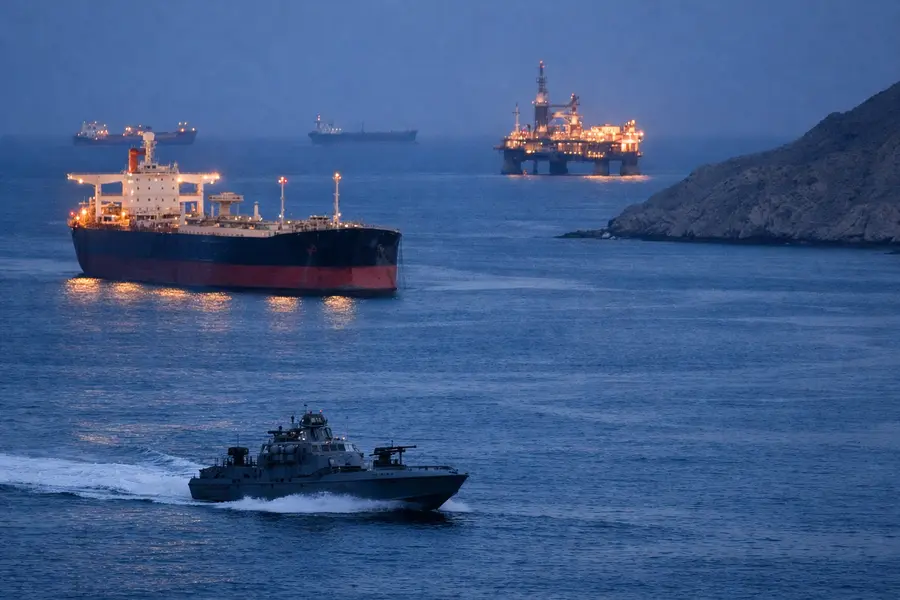
Iran adopted an offensive military posture after the 60-day Hormuz ceasefire lapsed August 17, pushing Brent crude above $90 as Strait of Hormuz supply risk resurfaced.
- The June 18 Memorandum of Understanding expired August 17 with no successor deal; Tehran announced offensive operations near the strait within hours.
- Brent crude settled at $90.87 per barrel on the session, up 2.65%, with WTI at $84.50, as markets repriced prolonged Hormuz disruption risk.
- Trump ruled out a ceasefire extension and threatened Oman, the lead mediator, closing the primary diplomatic back-channel.
Lead
The 60-day U.S.-Iran Memorandum of Understanding, brokered in Islamabad and signed June 18, expired August 17 with no replacement agreement in place, collapsing a fragile truce that had briefly stabilized energy markets. Tehran announced within hours that it would shift to a fully offensive military posture and reassert contested control over the Strait of Hormuz, the narrow passage through which roughly 20 million barrels of oil and petroleum products flowed daily before hostilities erupted in late February. Brent crude settled at $90.87 per barrel, while West Texas Intermediate futures rose $2.10 to close at $84.50, as traders moved quickly to reprice the probability of prolonged supply disruption in one of the world's most critical energy corridors.
Why Did the MOU Fall Apart?
Deliberate ambiguity in the June agreement -- not active bad faith at signing -- ultimately doomed the deal. The MOU required Iran to use "its best efforts for the safe passage of commercial vessels, with no charge for 60 days only," language Tehran interpreted as preserving its post-truce right to impose transit fees and exert sovereign authority over vessel routing. Iran began targeting ships it deemed non-compliant with its protocols; the U.S. responded with intensive airstrikes on Iranian military positions. Formal negotiations never began. Iran's Foreign Ministry cited "gross and widespread violations by the United States just a few weeks after signing" as grounds for withdrawing from further talks. The 60-day window expired without a single formal negotiating session having taken place.
What Happens to Crude Oil Prices Now?
The crude oil price trajectory since the conflict began has been defined by sharp escalation followed by brief ceasefire relief -- a pattern now resetting to its conflict baseline. Brent crude peaked at $126 per barrel in the weeks following February's opening offensive, approximately 75% above pre-war levels, before retreating on MOU optimism. With the truce expired, Brent traded back to $94.39 by August 21, recovering lost ground within days. Roughly 8 million barrels per day of effective supply are estimated to have been removed from global markets since fighting began, against a pre-conflict Hormuz throughput of 20 million barrels per day. European diesel prices have surged 70% since late February; U.S. gasoline prices have climbed 60% over the same period, compounding inflation pressures across major importing economies.
Hormuz: The Chokepoint That Cannot Be Rerouted
The Strait of Hormuz, narrowing to roughly 21 miles at its tightest point between Iran and Oman, carries approximately 25% of the world's seaborne crude and petroleum trade and about 19% of global liquefied natural gas volumes -- throughput levels recorded as recently as 2025. There is no viable alternative route for Persian Gulf producers at comparable cost or speed. Iran's return to an offensive posture effectively re-designates the waterway as a contested military zone, triggering a reassessment of tanker insurance rates, route economics, and strategic reserve drawdown plans among major importers. Shipping traffic through the strait had already fallen to multi-month lows in the days before the MOU's expiration, a leading indicator the agreement was disintegrating.
How Does This Affect the Broader Energy Supply Balance?
The loss of Hormuz normalization removes what had been the primary downward pressure on crude oil prices since June. OPEC members reliant on the strait for export -- including Saudi Arabia, the UAE, Kuwait, and Iraq -- face compounded logistical and pricing difficulties. Rerouting cargoes around the Cape of Good Hope adds roughly two weeks and significant cost to voyages bound for Asia. Strategic petroleum reserve drawdowns in the United States and coordinated releases among International Energy Agency member states offer a partial buffer, but cannot substitute for sustained throughput disruption of this scale.
Trump Rules Out Extension
President Trump confirmed he would not pursue a ceasefire extension, answering "No" when asked directly by reporters. Separately, Trump threatened military action against Oman if the Gulf state "got in the way," a significant escalation directed at the one country that had maintained productive communication with both Washington and Tehran throughout the conflict. The threat effectively neutralized the back-channel that Gulf states and European governments had relied on to keep a diplomatic track alive. Iran's president, who had signaled days earlier that Tehran "wanted the war to end sooner rather than later," simultaneously described the now-collapsed MOU as "a victory for the Islamic Republic" -- framing incompatible with the conditions Washington had sought as the basis for any new agreement.
Outlook
With the MOU expired and both governments publicly foreclosing immediate re-engagement, the Strait of Hormuz returns to a contested military environment with no agreed timeline for resolution. Brent crude has oscillated between $88 and $126 since February, and each failed negotiation round has raised the effective price floor. Energy-importing economies face renewed pressure on fuel inflation, current-account balances, and consumer purchasing power. Markets will focus on whether Iran follows through on offensive operations against commercial vessels -- a step that would test the resolve of U.S. and allied naval escorts already operating in the Gulf -- and whether any third-party mediator can restore a communications channel after Trump's threats toward Oman.
Mentioned tickers: USO, XLE, OIH, BNO