Pomegra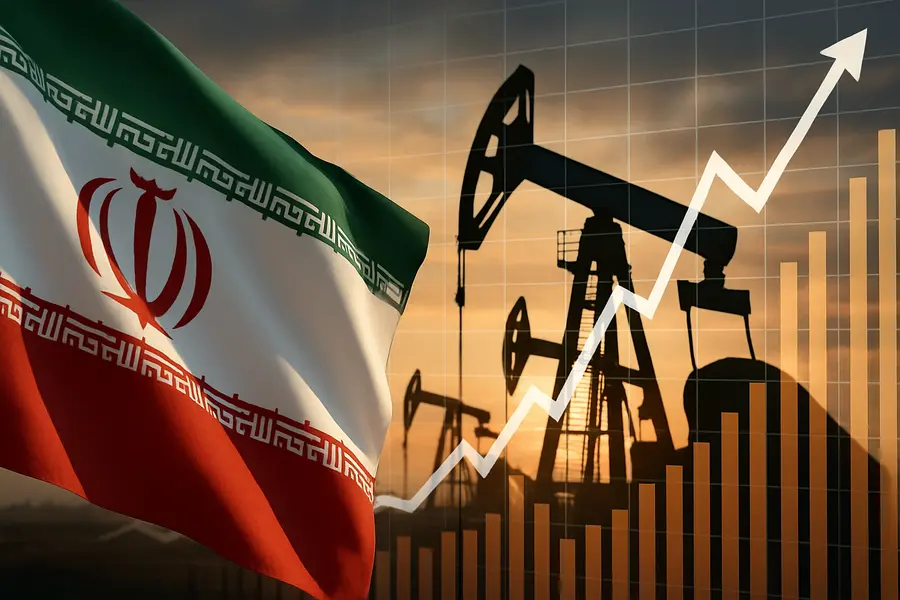
Iran declares an end to its first missile attack on Israel since April, pulling Brent crude back from an intraday peak above $96 as Trump insists Middle East peace talks are still advancing.
- Brent crude settled +1.39% at $94.38/barrel after spiking to $96.15 intraday; WTI added 1.17% to $91.60
- Iran fired three ballistic missile waves at Israel on June 7 before Tehran declared a halt — the first exchange since April's ceasefire
- Trump says final peace negotiations are "proceeding" while the U.S. naval blockade of Iranian ports remains in force
Lead
Tehran — Iran declared an end to its missile campaign against Israel on Monday, capping a volatile session that pushed Brent crude to an intraday high of $96.15 per barrel — up more than 5% — before gains tapered as markets absorbed Tehran's de-escalation signal. Brent settled 1.39% higher at $94.38, while West Texas Intermediate gained 1.17% to $91.60. Both benchmarks remain approximately 40% above their levels before the Iran-Israel conflict erupted in late February, reflecting a structural supply premium that has yet to fully unwind.What Happened
On the evening of June 7, Iran launched at least three waves of ballistic missiles at the Israeli mainland in direct retaliation for Israeli airstrikes on the southern suburbs of Beirut. The Israel Defense Forces confirmed responding with strikes against military targets in western and central Iran. The exchange marked the first direct military confrontation between the two countries since an April ceasefire — the first formal pause after more than 100 days of fighting that began when the United States and Israel launched a joint air campaign against Iran on February 28.
Hours after the barrages, Iran's Foreign Ministry declared that Tehran had ceased strikes against Israel, issuing a warning that hostilities would resume if Israel continued military operations in Lebanon. Notably, Iran refrained from targeting U.S. military installations — a deliberate restraint interpreted as a signal that Tehran does not seek a return to full-scale open war.
Market Reaction
Oil prices spiked more than 5% when futures markets reopened Sunday evening, with Brent peaking at $96.15 before retreating as Iran's cessation announcement filtered through trading desks. The eventual settle at $94.38 still represented the highest close in several weeks, a reminder that energy markets remain acutely sensitive to any breakdown in the fragile ceasefire architecture.Since Iran closed the Strait of Hormuz to commercial shipping in late February — choking an estimated 20% of global crude oil supply and creating a shortfall of approximately 14.5 million barrels per day — Brent has traded persistently above pre-war norms. At the height of hostilities, Brent spot prices exceeded $120 per barrel. Prices subsequently retreated roughly 20% from that peak as ceasefire optimism grew through May, before Monday's exchange reversed a portion of those gains. Elevated energy costs have contributed directly to broader inflation: the U.S. consumer price index reached a 3.8% annual rate in April, with jet fuel prices in some markets more than doubling from pre-conflict levels. The UAE's withdrawal from OPEC during the conflict removed one of the cartel's more flexible producers, though that exit has had limited immediate market effect given the Strait's ongoing restricted status.
Trump and Middle East Peace Talks
President Donald Trump, whose administration has maintained a naval blockade of Iranian ports throughout the conflict, called on both nations to "immediately stop shooting" and stated that "final negotiations on 'Peace' are proceeding, subject to ignorance or stupidity getting in its way." Trump has continued to insist U.S.-Iran diplomatic channels remain active even after Tehran briefly suspended talks in late May following new Israeli operations near Beirut.
Secretary of State Marco Rubio noted that Iran had agreed to negotiate aspects of its nuclear program that it previously refused to put on the table — a shift cited as substantive progress in back-channel exchanges. Pakistan, serving as a mediating party in the broader conflict, urged all sides to exercise restraint and preserve conditions for a deal. The core obstacles to a final agreement remain the scope of Iran's nuclear capabilities and the terms governing the Strait of Hormuz — a waterway whose reopening is expected to trigger a significant correction in oil price today premiums.
Geopolitical Dimension
Monday's exchange represented the most serious rupture of the April ceasefire. Israel's decision to strike Beirut suburbs appears to have crossed a red line for Tehran, which frames its relationship with Lebanese Hezbollah as a non-negotiable strategic commitment. Hezbollah separately rejected a proposed Lebanon-Israel ceasefire framework in early June, further complicating U.S. efforts to reach a broader regional settlement. Iran's restraint in not targeting American bases during this latest round of fire suggests Tehran is managing escalation carefully — signaling resolve without inviting a resumption of direct U.S. strikes on Iranian territory. That calculation has so far contained the oil price upside relative to the conflict's peak, as traders price a lower probability of full reignition.
Outlook
The pace of oil price gains has slowed markedly from peak conflict levels, reflecting incremental diplomatic progress alongside residual uncertainty over the Strait of Hormuz. Should Middle East peace talks produce a preliminary agreement that reopens the waterway, analysts anticipate a substantial price correction given the scale of geopolitical risk premium currently embedded in crude. A breakdown — particularly if renewed Israeli operations in Lebanon trigger additional Iran Israel conflict escalation — would likely push Brent back toward the $100 threshold. The current equilibrium is fragile: active diplomacy, a conditional ceasefire, and a structural supply constraint that keeps global energy costs well above pre-war norms.