Pomegra
Intel (INTC) fell about 4% after Elon Musk confirmed talks with TSMC to join the Terafab chip project, raising questions over Intel's foundry comeback.
- Intel fell as much as 4% on Oct. 5, to about $114.50, after Musk confirmed TSMC talks on Terafab.
- Intel joined Terafab in April 2026 and was its only named manufacturing partner.
- Musk called the talks "just discussions," and Intel cut its losses during the session.
Lead
Intel (INTC) shares dropped about 4% in early trading on Monday, Oct. 5, 2026. The sell-off followed Elon Musk's confirmation that Taiwan Semiconductor Manufacturing Co. (TSM) is in talks to take part in Terafab, the Texas chip manufacturing venture tied to Tesla, SpaceX and xAI. Intel had been the project's only named manufacturing partner since April. TSMC shares rose about 3% in Taiwan on the news.What Did Musk Say About TSMC and Terafab?
Musk confirmed the talks in a post on X over the weekend, writing: "Just discussions, but something may come of it." The comment followed an industry newsletter report on Oct. 2 that TSMC was exploring a role in the project.
The likely structures put TSMC in a stronger position than a simple supplier. One has TSMC owning and operating the fab, with Terafab as an anchor customer, similar to its joint ventures in Japan and Germany. Another has Terafab holding majority ownership while TSMC supplies the process technology. No binding agreements have been signed with any party, Intel included.
Why Did Intel Shares Fall?
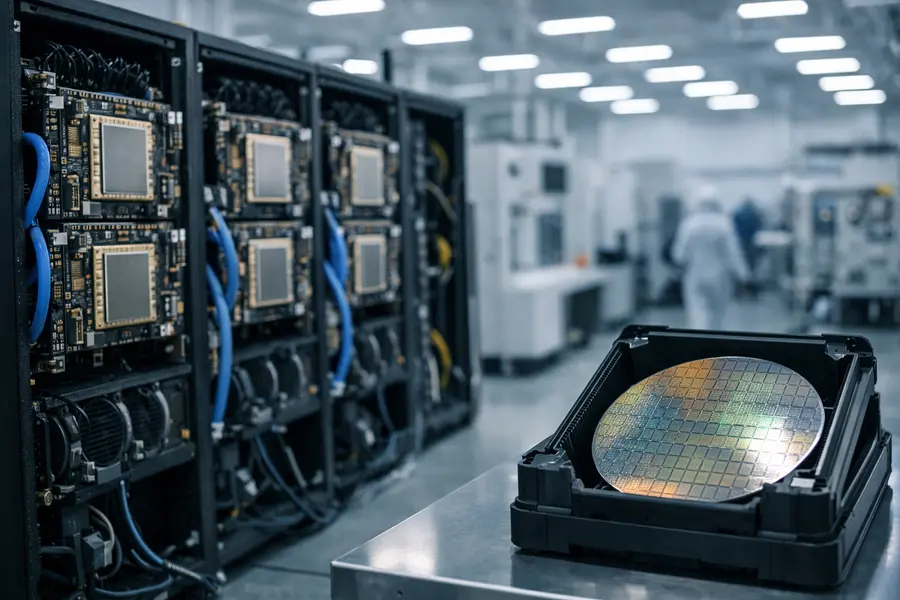
Intel shares fell because Terafab was the highest-profile external endorsement of its foundry strategy. Intel Foundry builds chips for outside customers, and it needs large clients to show it can compete with TSMC. The next-generation 14A process was the only technology named for Terafab. Sharing the site with the world's largest contract chipmaker weakens that showcase.
The financial gap is wide. Intel Foundry posted second-quarter revenue of $5.8 billion and an operating loss of $2.1 billion. External foundry revenue was only $293 million. The stock trades at about 63 times forward earnings, which leaves little room for doubts about customer wins.
How Did the Rest of the Chip Sector React?
The reaction was contained. AMD (AMD) slipped about 0.8%, while Nvidia (NVDA) gained about 0.5%. The iShares Semiconductor ETF (SOXX) fell about 0.7%. Among AI stocks, the move was specific to Intel rather than a broad sector sell-off.
Intel recovered much of its early loss as the session went on. Investors focused on the lack of a signed deal and on Musk's cautious wording. The consensus view is that the initial drop priced in the worst outcome before any terms were known.
What Comes Next for Intel's Foundry Comeback?
The next test for Intel's foundry plans is technical and sits on the calendar. Intel plans to release version 0.9 of its 14A process design kit this month. CEO Lip-Bu Tan is targeting risk production on 14A in the first quarter of 2027. TSMC's competing A14 node could begin pilot production as early as the same quarter.
TSMC reports third-quarter results on Oct. 15. The company has guided to revenue of $44.6 billion to $45.8 billion and a gross margin of 65% to 67%. Any comment on Terafab or on capacity in Texas would be the first formal signal of how far the talks have progressed.
Strategic Context
Terafab is designed to secure chip supply for Musk's companies, including Tesla (TSLA). A multi-vendor approach reduces dependence on any single manufacturer. For Intel, that makes the project a source of volume and credibility that is no longer exclusive.
Intel's advanced packaging business remains a separate bright spot. Its EMIB-T technology is competing with TSMC's CoWoS for AI accelerator orders. That gives Intel another route to external revenue that does not depend on Terafab.
Outlook
Intel's early 4% drop reflected concern that a TSMC role in Terafab would dilute its flagship foundry endorsement, even as the stock recovered much of the loss. Near-term direction depends on TSMC's Oct. 15 earnings, the 14A design kit release and any definitive Terafab agreement. Until terms are signed, Intel's position as the named partner stands, but it is no longer assured as the sole one.
Mentioned tickers: INTC, TSM, TSLA, AMD, NVDA