Pomegra
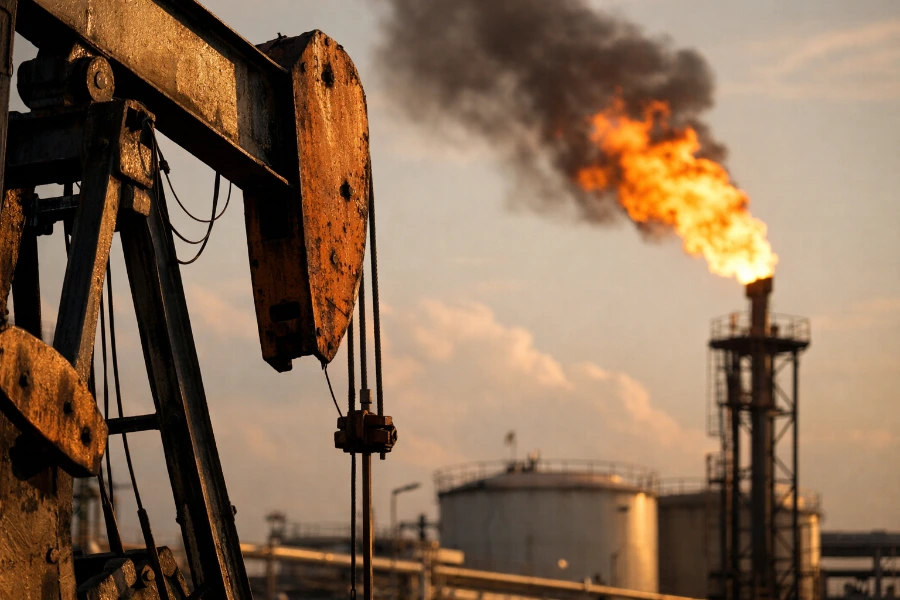
Congressional Democrats plan probes of the $100B Venezuela oil deal that gives Alejandro Betancourt's NABEP 100-year rights to 17 fields and the US a 35% stake.
- Democrats on at least six committees are preparing investigations into the 100-year concessions over 17 fields holding about 65B barrels.
- The Pentagon holds 35% of NABEP, and the US has the right to buy 20% of its output at cost.
- Subpoena power arrives when the new Congress convenes in January, and the contract text remains unpublished.
Lead
Congressional Democrats are preparing a series of investigations into the Trump administration's $100 billion Venezuela oil agreement. The deal, announced in August 2026, gives North American Blue Energy Partners (NABEP), a company owned by Venezuelan businessman Alejandro Betancourt, 100-year concessions on 17 oil fields. The fields hold roughly 65 billion barrels of proven reserves. The Pentagon takes a 35% equity stake in the company. Subpoena powers become available to Democrats when the new Congress sits in January, which would let them demand documents and testimony that are now out of reach.
What Are the Terms of the Venezuela Oil Deal?
The agreement grants NABEP 100-year concessions over 17 fields in the Lake Maracaibo and Orinoco Belt regions, and Venezuela's interim authorities issued the grants. The Pentagon's Office of Strategic Capital takes a 35% stake in the company, which the White House says costs taxpayers nothing. The State Department also holds a guaranteed right to buy 20% of NABEP's output at the cost of production.
NABEP has said it could invest up to $100 billion in new oil infrastructure. The company produced about 170,000 barrels a day before the deal and has since lifted output to roughly 223,000. Its stated targets are 275,000 barrels a day by the end of 2026, 350,000 in 2027 and 1.015 million by 2033. The 2033 figure is the level it must pass before paying stock dividends. The company says it will overtake Chevron (CVX) as Venezuela's largest producer by early 2027.
Which Committees Are Planning Investigations?
Democrats on the House Oversight Committee, the Senate Armed Services Committee, the Senate Permanent Subcommittee on Investigations, the Senate Energy Committee, the House Natural Resources Committee and the Senate Foreign Relations Committee have been laying groundwork. Oversight Democrats had already opened an inquiry in January into the administration's communications with oil companies around the takeover of Venezuela's oil sector.
The central complaints are that the contract text was never made public and that the stake was structured outside normal procurement channels. Democrats also question why a newcomer to the largest fields was chosen over operators with decades of Venezuelan experience, such as Chevron. The administration has called the agreement a major win for both the United States and Venezuela.
Why Is Betancourt's Role Controversial?
Betancourt has faced investigations in the US, Spain and Switzerland over money-laundering allegations. A NABEP spokesperson says he has never been charged with a crime, and Betancourt denies wrongdoing. Democrats say the history raises questions about due diligence on the counterparty and about whether the arrangement favored a politically connected operator.
The oil-money question sits alongside the deal. The administration has controlled Venezuelan oil exports through a US Treasury account since January 3, 2026. A State Department report released November 12 showed $12.1 billion passed through the account from January through September. Watchdog groups say the report offers only a thin narrative of how funds were spent and omits which entities were involved. The role of private oil trading companies is a likely focus of the probes.
Geopolitical Dimension
The deal ties energy policy to security policy. A Pentagon equity stake in a foreign oil producer is without recent precedent, and critics argue it blurs the line between a military operation and a resource acquisition. Democrats on the armed services panel have said that if Nicolas Maduro's removal was a pretext for securing oil, the policy is wrong.
For Washington, the strategic case rests on reserves. Venezuela holds some of the largest proven oil reserves in the world, and a US-aligned operator controlling 65 billion barrels over a century would reduce the room for rival powers such as China and Russia in the country's energy sector. The risk is that a contract seen as opaque or politically tainted becomes harder to defend in court, in Caracas or with foreign partners.
What Comes Next for the Crude Oil Price?
The probes are unlikely to move the crude oil price in the near term. Brent traded around $92 a barrel and WTI near $83 on November 19, with surplus concerns weighing on the market. NABEP's output of about 223,000 barrels a day is small against global demand of around 100 million barrels a day. The longer-term effect depends on whether Venezuelan output can approach 1 million barrels a day by 2033, which requires heavy capital spending, a legal framework that survives scrutiny and stable operations.
Three scenarios stand out over the next 3 to 12 months:
- Democrats release documents and testimony in early 2027 that expose weaknesses in due diligence, creating pressure to renegotiate or restructure the stake.
- The inquiries stall against executive-branch resistance, and the administration relies on the executive's control of the revenue account and the concessions.
- Investors and oil majors hold back capital until the contract's legal standing is clearer, slowing the ramp-up NABEP has promised.
Outlook
The Venezuela oil deal pairs a 100-year concession over about 65 billion barrels with a 35% US government stake in a company led by a businessman facing foreign money-laundering investigations. Democrats gain subpoena authority in January, and the fight will center on the unpublished contract, the selection of NABEP and the handling of $12.1 billion in oil revenue. For oil markets, the immediate impact is limited. The longer-term stakes are the credibility of the legal framework and whether NABEP can raise production at the pace it has promised.